Photographing a Vietnamese craft workshop: agree before recording
Visit Vietnamese craft workshops respectfully by agreeing on portraits, recording and publication, keeping workspaces clear and accepting limits without pressure.
 Cat Ba Connect3 min read
The short answer
At a Vietnamese craft workshop, permission to visit or join a class does not automatically mean permission to record every person, process or design. Ask the host before photographing and distinguish a private souvenir from public or commercial publication. UNESCO’s heritage ethics emphasise informed dialogue with the people maintaining a tradition. Use that principle practically: explain what you want to record, accept limits and keep the working environment clear. A workshop purchase should support the encounter, not be treated as ownership of someone’s image.
Explain the photograph you want
Before raising a camera close to an artisan, ask whether a portrait or process photograph is welcome and explain where it may appear. A nod to a quick personal photo is not necessarily agreement to an interview, a promotional video or publication to a large audience. If language is a barrier, ask the host to help communicate the specific request. Keep the question simple enough to answer freely, and accept a refusal without requiring the person to justify why they prefer not to be recorded.
Respect a working environment
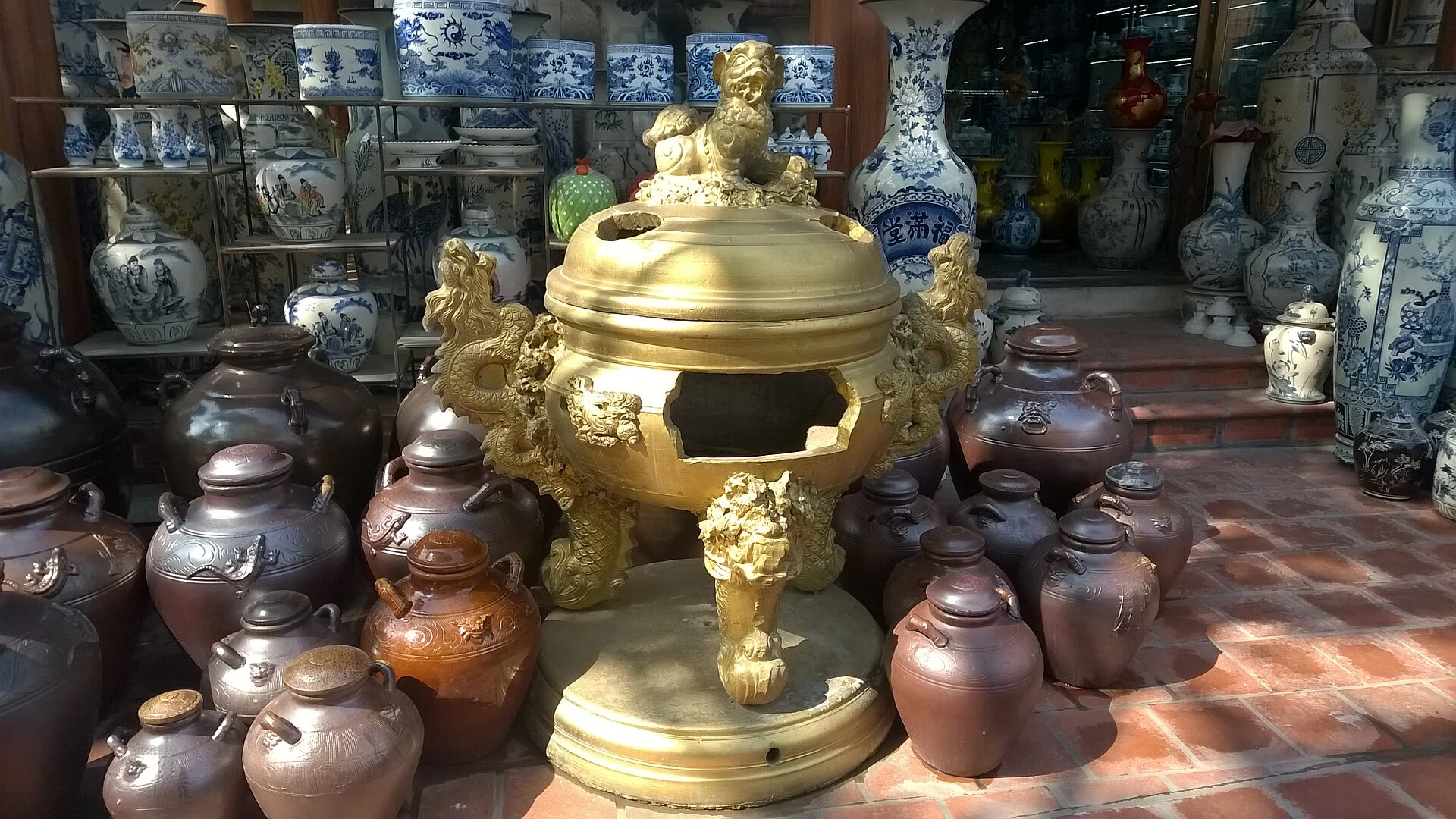
Vietnam Tourism presents Bat Trang as a living pottery destination with products, craft history and visitor experiences. A workshop is also a place where people work, not merely a backdrop. Stay on the route the host indicates and ask before moving tools, touching unfinished pieces or arranging objects for a better image. Leave access clear for people carrying materials. If a demonstration is underway, observe first; interrupting each movement for another camera angle can prevent the activity you came to understand from happening naturally.
Ask separately about designs and detailed processes
A host may welcome broad photographs while limiting close recording of a particular design, commission or technical step. Ask before filming a long continuous sequence or copying a pattern for later reuse. Do not infer ownership or confidentiality rules from a general village label; follow the workshop’s stated conditions and seek clarification when needed. The practical goal is a mutually understood visit, with enough space for the artisan to decide what can be shared without turning every boundary into a dispute.
Keep participation and image use separate
Paying for a class or buying a handmade object compensates the agreed product or experience. It should not be assumed to purchase unlimited rights to the maker’s portrait or a group of other visitors. Ask about recording rules before the class if photography is essential to your purpose. For children or people who have not been part of the conversation, obtain the appropriate adult or individual agreement rather than treating their presence in an open workshop as automatic consent to a public post.
Represent the encounter accurately afterwards
When sharing, use the workshop’s correct name if permission is given and describe only what you actually observed. Do not claim a staged demonstration represents every household or the whole craft tradition. If the host requested limits on publication, honour them after leaving as well as while holding the camera. A useful photograph can show attention to a material or a maker’s explanation without an invented story of personal friendship. Let the people and their work remain more than a decorative proof that you visited.
Questions travellers ask
Does buying a class automatically permit commercial filming?
No. Agree on recording and intended use separately.
Should I accept a request not to photograph?
Yes. Respect the person’s or host’s stated limit.