Hội An cao lầu: chewy noodles and a story to tell carefully
Explore Hội An cao lầu through noodle texture, urban food history and carefully attributed origin stories, with a thoughtful comparison to mì Quảng.
 Cat Ba Connect3 min read
The short answer
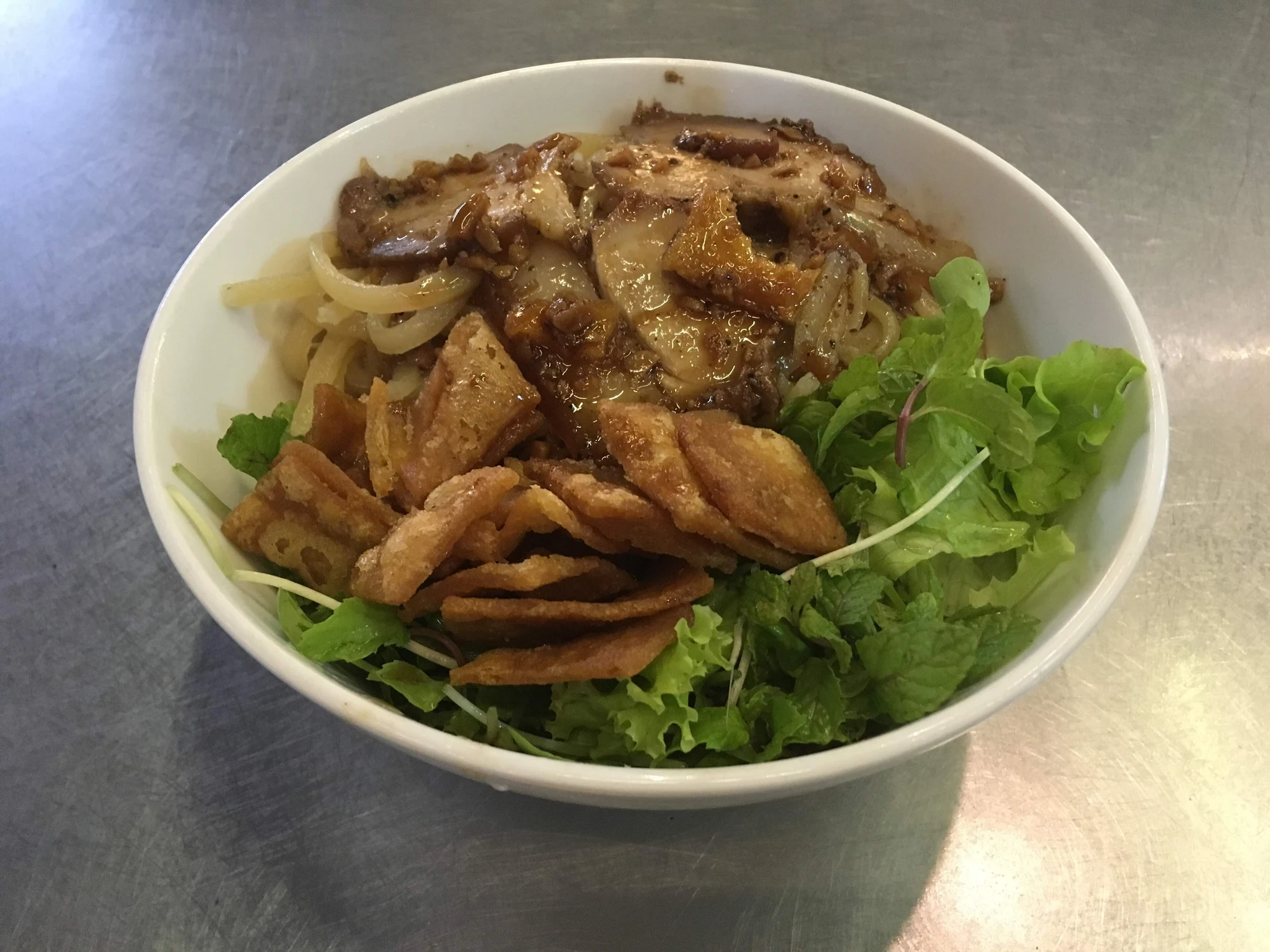
Cao lầu commonly combines firm noodles, pork, herbs and crisp pieces with a small amount of liquid. It is not simply a bowl of phở served in Hội An. The texture of the noodle is central to the experience, while the modest liquid coats rather than submerges the ingredients. Particular toppings and preparations still depend on the kitchen.
Begin with texture and proportion
A cao lầu serving invites you to notice what remains above the liquid. The firm noodles and crisp garnish retain visible form instead of disappearing beneath a large ladle of stock. Pork and herbs complete the arrangement. Before tossing the bowl, compare one noodle with a piece of the crisp topping. That gives you a practical reference for the texture, which is more useful during the meal than debating which famous well every kitchen must use.
Use documented memory before a romantic legend
Hội An’s heritage conservation centre connects cao lầu with urban food life and records recollections of older shops, including its established presence in the early twentieth century. That is more useful evidence than confidently assigning a single foreign inventor. Stories about wells, ash and trading influences should be attributed to specific local accounts rather than repeated as universal proof.
Mix enough to understand the bowl
Try a noodle first, then combine some herbs, pork and liquid. Add crisp pieces gradually if you want to compare their dry texture with the texture after they soften. Ask how the shop makes or obtains its noodles if someone has time to answer. It is a practical question about craft, not a test of a vendor’s authenticity.
Read the old town through a meal
A cao lầu break fits naturally within a walking visit to Hội An’s urban heritage. Notice the relationship between a food stall, shop-house and street rather than assuming the town’s story is only architecture. Keep eating and photography respectful around working shops and homes; living streets do not become stage sets because a food has cultural interest.
Keep a second noodle bowl distinct
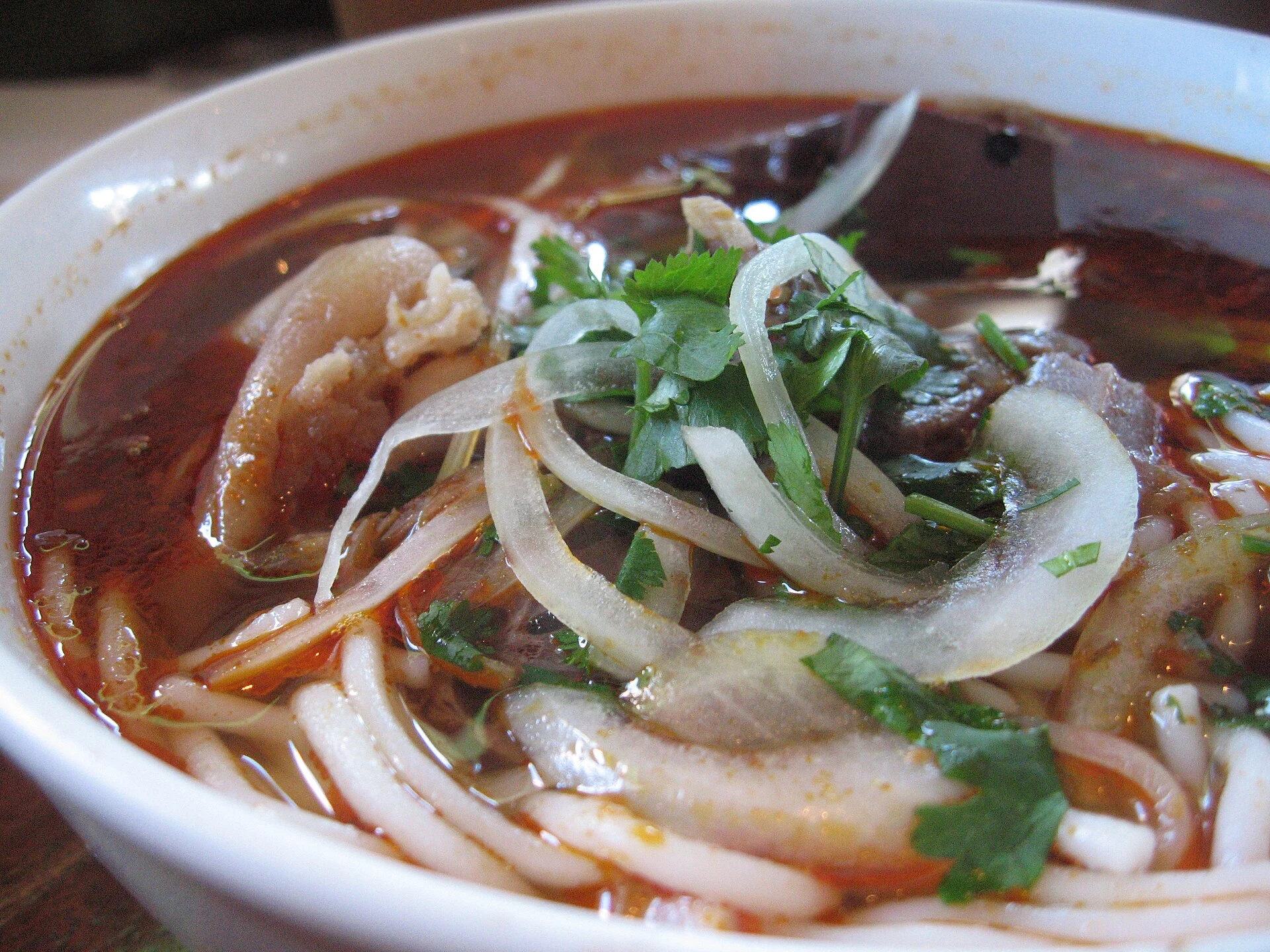
If Da Nang is part of your route, compare cao lầu with mì Quảng at separate meals. Both may use little liquid, yet their noodle textures and associations differ. That comparison gives the journey continuity without erasing regional distinctions. Record what you actually ate and what the cook explained, leaving uncertain origin stories marked as uncertain.
Heritage publications, a noodle maker’s explanation and oral memory provide different kinds of evidence. Ask which supports a detailed origin account if the distinction matters to you. None needs to interrupt enjoyment of the meal. The noodles, herbs and pork can be appreciated directly while a claim about wells, ash or trading influences remains attributed to the person or publication that actually makes it.
Questions travellers ask
Do well-water stories prove one fixed recipe?
No. Attribute such accounts to their sources; ask how the noodles you are eating were actually made.
Is cao lầu simply Hội An phở?
No. Noodle texture, liquid proportion and preparation are different.