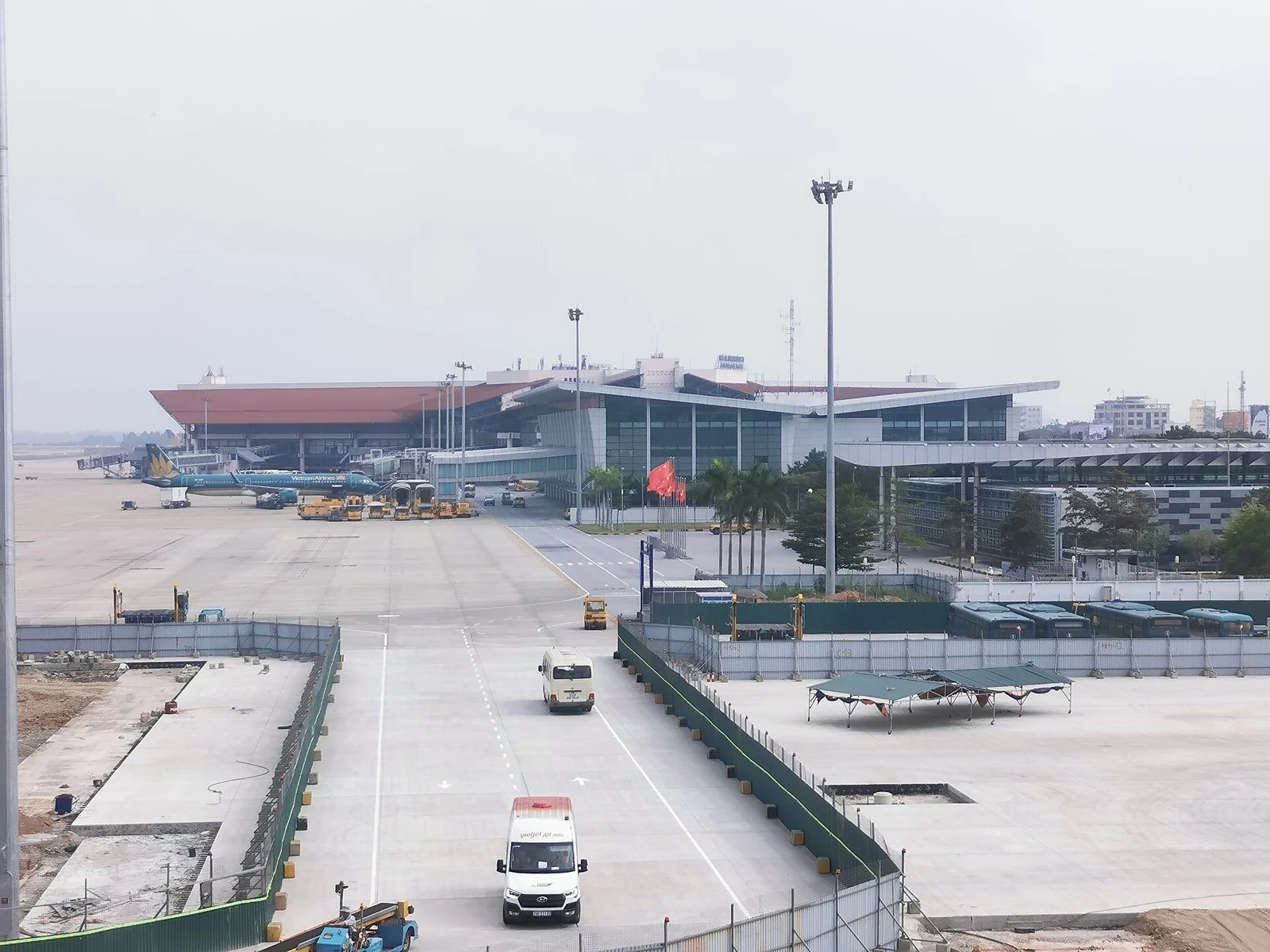
Noi Bai international to domestic: collect, clear, change terminals
Plan a Noi Bai international-to-domestic connection with T2 arrivals, baggage collection, the T1 transfer and the actual airline check-in deadline.
 Cat Ba Connect3 min read

The short answer
An international arrival connecting to a domestic flight at Noi Bai requires more than walking to another gate. The airport identifies T2 for international services and T1 for domestic services, with arrival formalities, baggage collection and a terminal transfer in between. Confirm the baggage handover arrangement for your actual ticket. A through destination on a bag tag should not be interpreted as permission to skip instructions at the first Vietnam arrival.
Identify both terminals before departure
Look at the arrival and onward departure together. A ticket showing Hanoi on both sectors can conceal the fact that the journey crosses between international T2 and domestic T1. Put the terminal names beside the flight numbers in your itinerary. If the onward flight changes, check the terminal again with the carrier rather than relying on a previous screenshot. This turns an abstract connection time into a sequence of airport tasks you can actually assess.
Follow the baggage instructions at arrival
Noi Bai’s published international-to-domestic procedure requires retrieving baggage and completing the relevant arrival formalities before proceeding to the domestic terminal. Vietjet’s connecting-flight guidance also makes the arrival and baggage process important for its eligible international-to-domestic journeys. At the first check-in counter, ask where you must physically collect the bag and where to hand it over again. Do not settle for an answer that only repeats the final airport printed on its tag.
Allow for the public terminal transfer
The airport publishes a free shuttle between the terminals, with pick-up points outside the passenger arrival areas. It is a transfer stage, not an airside connection that eliminates entry procedures. Check the current service information and follow airport signs after you reach the public area. Leave room for waiting, moving luggage and finding the next counter. Do not interpret a short driving distance between terminal buildings as the full time needed for the connection.
Use check-in closure as the next deadline
The next flight’s take-off time is not your arrival deadline at its check-in counter. Ask the operating carrier for the applicable counter and baggage-drop closure, then work backwards through terminal transport and arrival formalities. If you have separately issued tickets, ask what happens if the international sector arrives too late. A connection that looks possible on a timetable may still leave no reasonable room for queues, a delayed bag or a changed first flight.
Choose a fallback before buying
For a non-urgent onward journey, compare a later domestic departure or an overnight in Hanoi with the tightest connection offered by a search result. Consider the change conditions and the first hotel’s arrival policy rather than only the flight fare. This is planning guidance, not an airport minimum-connection rule. The appropriate buffer depends on the booking, passenger needs and the consequences of missing the next leg; a single fixed number cannot answer all of those questions.
Questions travellers ask
Are international and domestic flights in the same terminal?
Noi Bai identifies T2 for international and T1 for domestic flights.
Does a final-destination bag tag settle collection?
Ask where physical collection and re-handover are required at the first Vietnam arrival.