Mì Quảng in Da Nang: a small amount of broth, a wide regional story
Understand mì Quảng in Da Nang through noodles, a modest amount of broth and crisp toppings, then compare its regional identity with Hội An cao lầu.
 Cat Ba Connect3 min read
The short answer
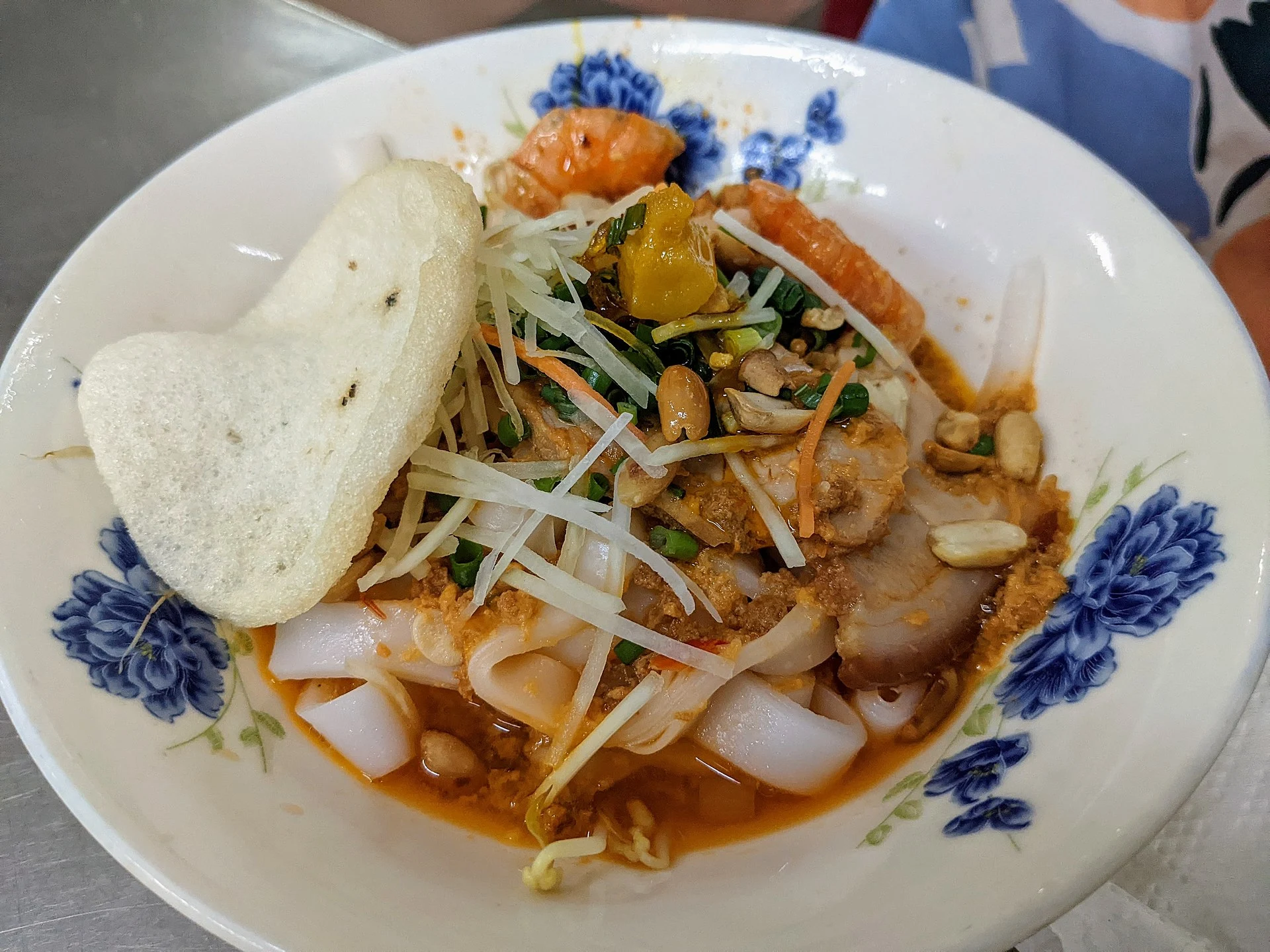
Mì Quảng centres broad rice noodles with a relatively small amount of seasoned liquid and a changing selection of toppings. Herbs, peanuts and rice crackers often contribute their own textures. A bowl with less liquid than phở is not missing a ladle of soup: the arrangement invites mixing the noodles with a concentrated base.
Do not judge it as an incomplete soup
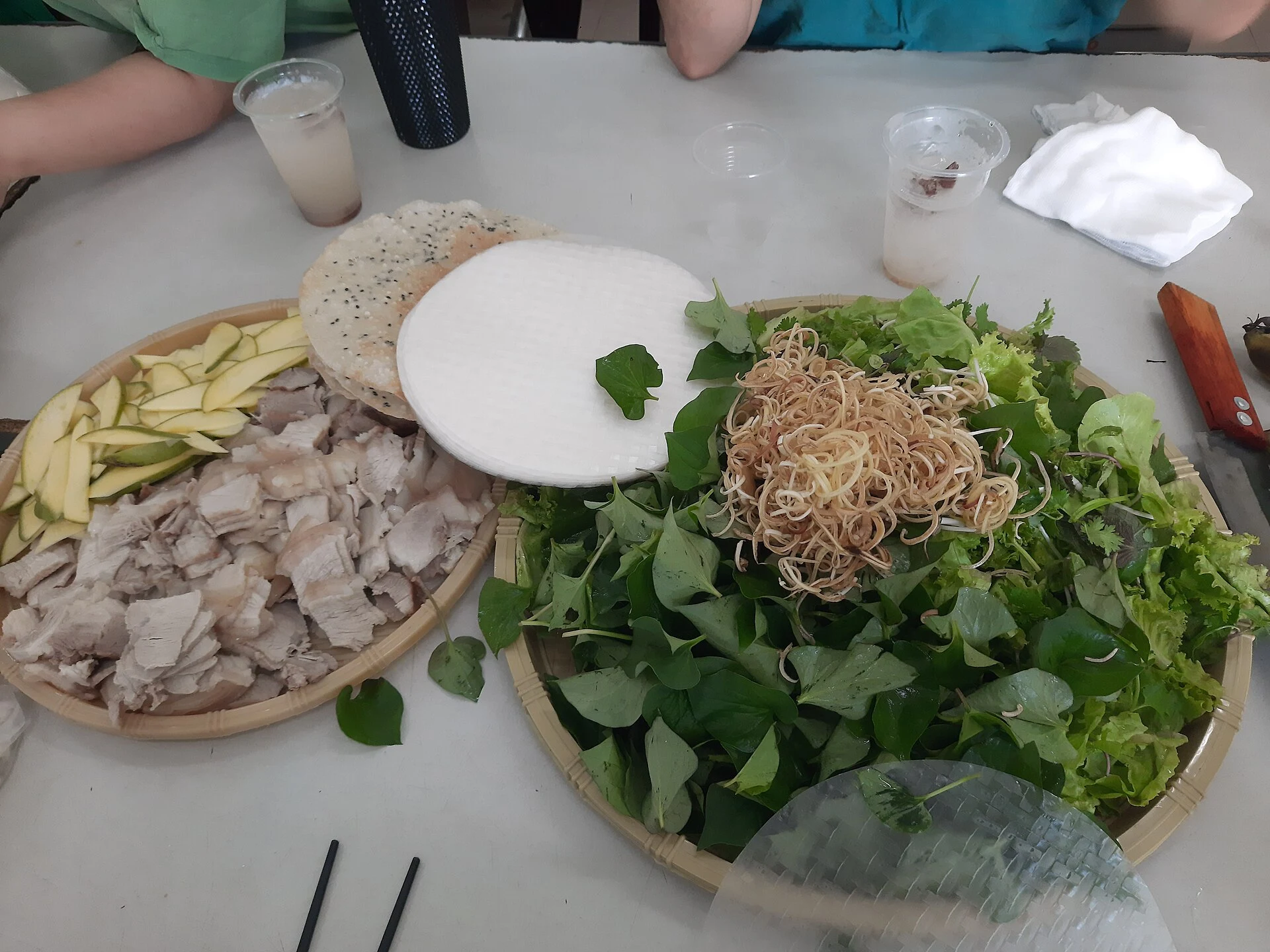
The bowl is designed around contact between noodles and a limited amount of nước nhưn, not around a deep pool of stock. Crackers and peanuts, when included, create contrast with the softer rice noodles. Herbs may arrive beneath or beside the serving. Before mixing, take a moment to identify these elements. Their separate roles explain why changing the topping alone does not fully describe the difference between two kitchens’ versions of mì Quảng.
Keep Quảng Nam in the name
The Da Nang tourism portal identifies the dish with Quảng Nam and Da Nang. That regional relationship is worth retaining even when eating in the city. It is more accurate to describe a shared culinary landscape than to assign every bowl to one city’s exclusive invention. Different cooks may emphasise chicken, pork, shrimp or another protein.
Choose a version before mixing
Ask which main topping is available and whether the bowl includes egg or peanuts. Taste the noodles and liquid before breaking in all the cracker. Then add herbs gradually, keeping some crunch for later bites if you prefer. If a menu gives several meat options, clarify whether the broth changes as well or only the visible topping.
Give lunch a place between activities
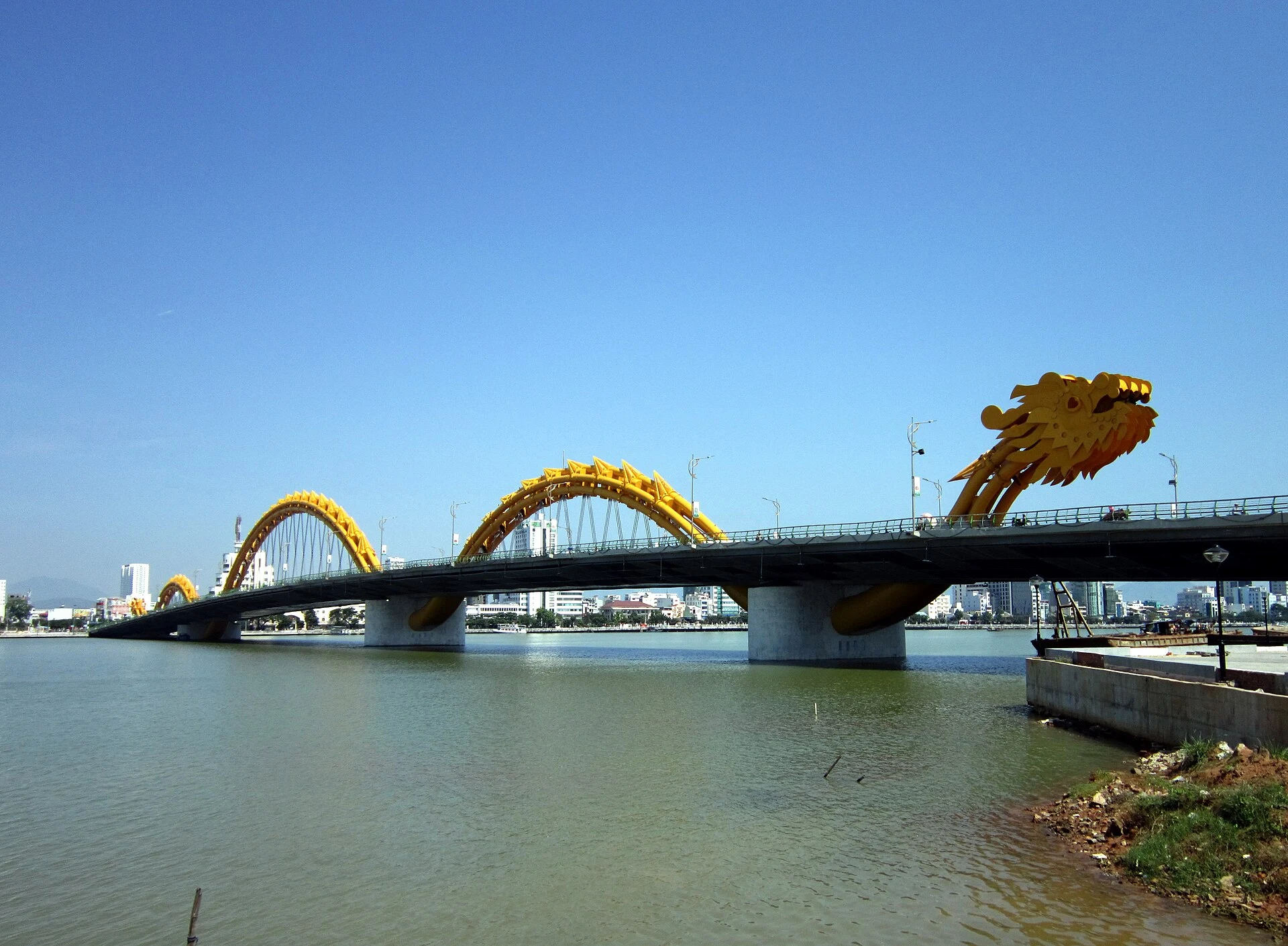
A seated mì Quảng lunch fits between a morning cultural visit and a later riverside or beach walk. Keep a real break for the meal rather than using it as a checkpoint before a tightly timed transfer. If you plan to continue to Hội An, allow the journey its own time and compare foods over separate meals.
Compare it with cao lầu without merging them
Hội An’s cao lầu also uses a relatively small amount of liquid, but that does not make the two dishes interchangeable. Notice noodle texture, toppings and the role of crackers in each bowl. Following this comparison gives a practical reason to explore both places while preserving the distinct names and histories that regional food deserves.
Changing the protein may change only the visible topping, or it may mean a different cooking liquid as well. Ask the kitchen which applies before comparing two bowls. Keeping that distinction makes a chicken, pork or shrimp choice more intelligible without requiring one combination to be declared the oldest. A regional dish can remain recognisable while individual cooks organise their menus differently.
Questions travellers ask
Should mì Quảng be filled with soup?
It is commonly served with a smaller amount of concentrated liquid; the exact style varies by cook.
Does changing the meat change the broth?
It may or may not; ask how that kitchen prepares its menu options.