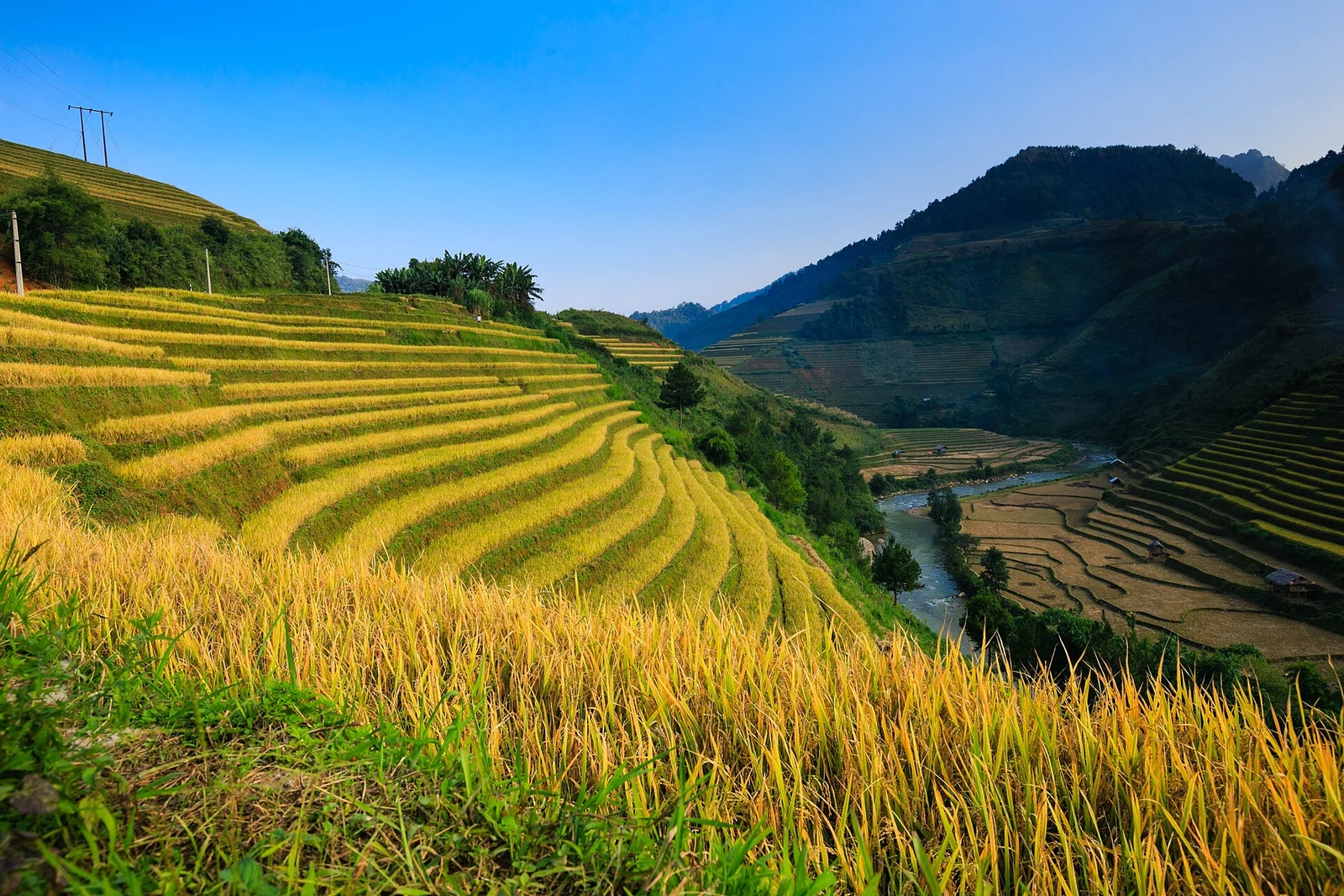
Sapa harvest season: choose a valley, not a guaranteed golden date
Plan Sapa’s rice harvest around valley conditions, suitable walks and flexible weather days, with realistic expectations about crop colour and visibility.
 Cat Ba Connect3 min read

The short answer
Sapa’s harvest scenery is best understood as a changing patchwork of fields. Early autumn is a useful planning window, but crop colour varies by valley and cutting date. Choose a walk suited to the actual ground and keep spare time for mist or rain.
Choose the valley experience you want
Vietnam Tourism’s rice-terrace guide identifies Sapa as a base for exploring the cultivated mountain landscape. Decide whether you want an accessible village walk, a longer guided trek or a view from near your accommodation. These are different experiences with different effort levels. A famous panorama does not automatically suit someone with knee pain or a child who dislikes long walks. Describe the group’s needs before selecting a route so the landscape remains enjoyable rather than a test of endurance.
Treat early autumn as an approximate window
The national tourism autumn guide highlights September and October across the northern highlands. This does not mean every Sapa field remains golden throughout both months. One slope can be cut while the next is still ripening, and the time of a scenic photograph matters. Ask about the specific valley you plan to visit, using recent observations. If colour is the main goal, keep several possible walking days rather than only one non-changeable outing.
Build in a weather decision each morning
Mist can hide a broad view even when the ground nearby is pleasant, while rain can make a steep path unsuitable. Choose a shorter route or a village-based day when visibility is limited. Carry a layer for changes in temperature and protect your phone without making it hard to use for navigation. A forecast is a planning input, not permission to ignore the guide’s assessment of a muddy stream crossing or unstable section of trail.
Keep off the crop and narrow bunds
Terraces are productive land, with edges that hold soil and water. Stay on the route your guide identifies, ask before entering private fields and do not step into rice for a portrait. Let workers carrying tools or harvested bundles pass first. Photography is more rewarding when it shows a real relationship with the landscape; a small payment for a managed viewpoint should not be confused with permission to wander through every neighbouring plot.
Combine harvest scenery with local context
A guided explanation of irrigation, transplanting and harvest work can make the visit valuable even after the brightest gold has passed. Plan a village meal or a craft-related stop where visitors are welcomed, instead of racing to a second valley solely because its fields look yellower online. Keep return transport realistic and leave time to rest. The strongest harvest itinerary has one well-chosen walk and room to observe, with seasonal colour adding interest rather than carrying the whole trip.
Questions travellers ask
Can I guarantee golden fields by booking September?
No. Confirm the current crop stage in the chosen valley.
Are terrace walks suitable after heavy rain?
Some may not be. Let current ground conditions and local guidance decide the route.