Which Hue Royal Tombs Should You Visit? Compare Three Styles
Choose Hue royal tombs by comparing Minh Mang’s landscape, Tu Duc’s gardens and Khai Dinh’s decoration against your interests and mobility.
 Cat Ba Connect3 min read
The short answer
Choose Hue’s royal tombs for contrast: consider Minh Mang for a composed landscape, Tu Duc for its garden setting and Khai Dinh for elaborate decoration. A selective visit can be more rewarding than trying to see them all.
Compare experiences rather than rankings
Each tomb expresses a different architectural and landscape approach. The most useful choice depends on what you enjoy: a spatial composition, a contemplative garden atmosphere or close attention to decorative detail. Avoid relying on a universal most beautiful ranking. Look at the site layout and ask what walking is involved, then choose examples that create variety within the time you have.
Minh Mang: read the landscape composition
Approach Minh Mang’s tomb with attention to the relationship between buildings, water and ordered space. Move slowly enough to see how one view frames the next. This is a different kind of interest from concentrating only on interior decoration. If using a guide, ask how the site’s arrangement communicates ideas about the royal setting rather than requesting only dates and construction facts.
Tu Duc: give the gardens time
Tu Duc’s tomb is associated with a more garden-like experience, making it a useful contrast to the urban imperial centre. Leave room to walk and pause instead of treating the visit as one quick entrance photograph. The setting can reward travellers who prefer landscape and atmosphere, but it still requires appropriate footwear and a realistic assessment of the group’s comfort with outdoor movement.
Khai Dinh: look closely at detail
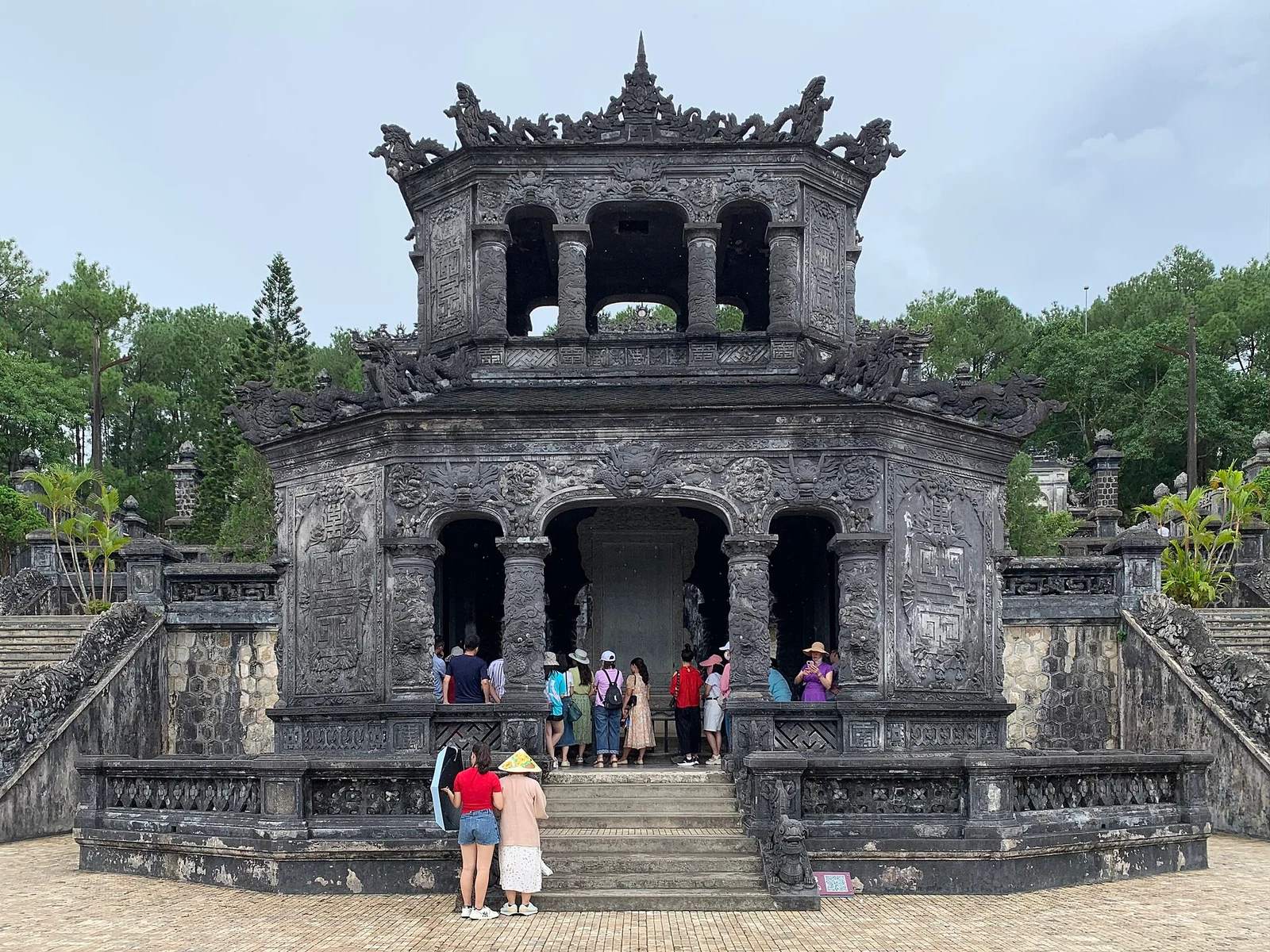
Khai Dinh offers a different visual vocabulary, including elaborate decorative work and a mixture of architectural influences. Ask about steps and access if these are a concern. A close look at material and ornament can make the visit distinctive even after another tomb. Avoid comparing it only by size; the reason to include it is the contrast in what you observe.
Build a sensible route
Choose two sites if that leaves time for interpretation, rest and transport. Add a third only when it serves a real interest. Confirm the route and current admission arrangements directly, especially if combining tickets. Keep a meal break in the day and resist adding distant sites simply because a driver can technically reach them before the end of the afternoon.
Match the choice to the previous day
If you spent the preceding day walking extensively inside the Imperial City, consider a more selective tomb outing with longer pauses. If you are especially interested in decorative arts, leave enough time at the site that serves that interest. The best pairing is not necessarily the two names most frequently placed together in a brochure. It is the combination that adds contrast while respecting the energy, mobility and curiosity of the people travelling.
Questions travellers ask
Which tomb is best for everyone?
There is no universal answer. Choose by landscape, decorative interest and access requirements.
Can I visit only one tomb?
Yes. One well-explained visit can fit a shorter Hue stay better than a rushed circuit.