Nha Trang bún cá sứa: reading a coastal breakfast bowl
Explore fish, prepared jellyfish and clear broth in Nha Trang bún cá sứa, with seasoning tips and a coastal breakfast plan before the day’s activities.
 Cat Ba Connect3 min read

The short answer
Cá means fish and sứa means jellyfish. In Nha Trang, the combination sits with rice vermicelli and a relatively clear broth. Fish cake or other prepared fish toppings may accompany it. The contrast matters: noodles give softness, fish contributes substance, and prepared jellyfish adds a distinctly different bite. Ask what a particular bowl includes rather than expecting one fixed garnish.
Recognise two ingredients in the name
A mixed bowl can contain several marine textures that should not be merged into the word seafood. Identify the prepared jellyfish separately from a piece of fish cake or another fish topping, then notice how the thin noodles sit in the broth. This gives you a vocabulary for the next order. If a shop offers different combinations, ask which one actually contains sứa rather than assuming every fish-noodle bowl includes it.
A coastal identity without a grand legend
Vietnam Tourism identifies bún cá sứa as a notable Nha Trang breakfast. Its relationship to the sea is visible in the ingredients, so an elaborate origin tale is unnecessary. Compare it with a generic seafood platter: the soup makes different marine ingredients parts of one composed everyday meal rather than presenting the catch as separate luxury items.
Season after the first spoonful
Taste the broth before adding lime or chilli. Then change one element at a time so you can notice what acidity or heat contributes. Prepared jellyfish is not something visitors should collect from the beach and put into a bowl themselves. Ask the restaurant about ingredients and preparation, particularly when choosing between fish-only and mixed versions.
Leave room before a water excursion
Place the breakfast on a morning when the boat departure allows an unrushed meal, or keep it for a land day if timing is tight. A shoreline walk afterwards offers a change of perspective without assuming the fish in your bowl came from the boats you see. Landing places are working areas, so observe from public paths.
Continue with a different coastal technique
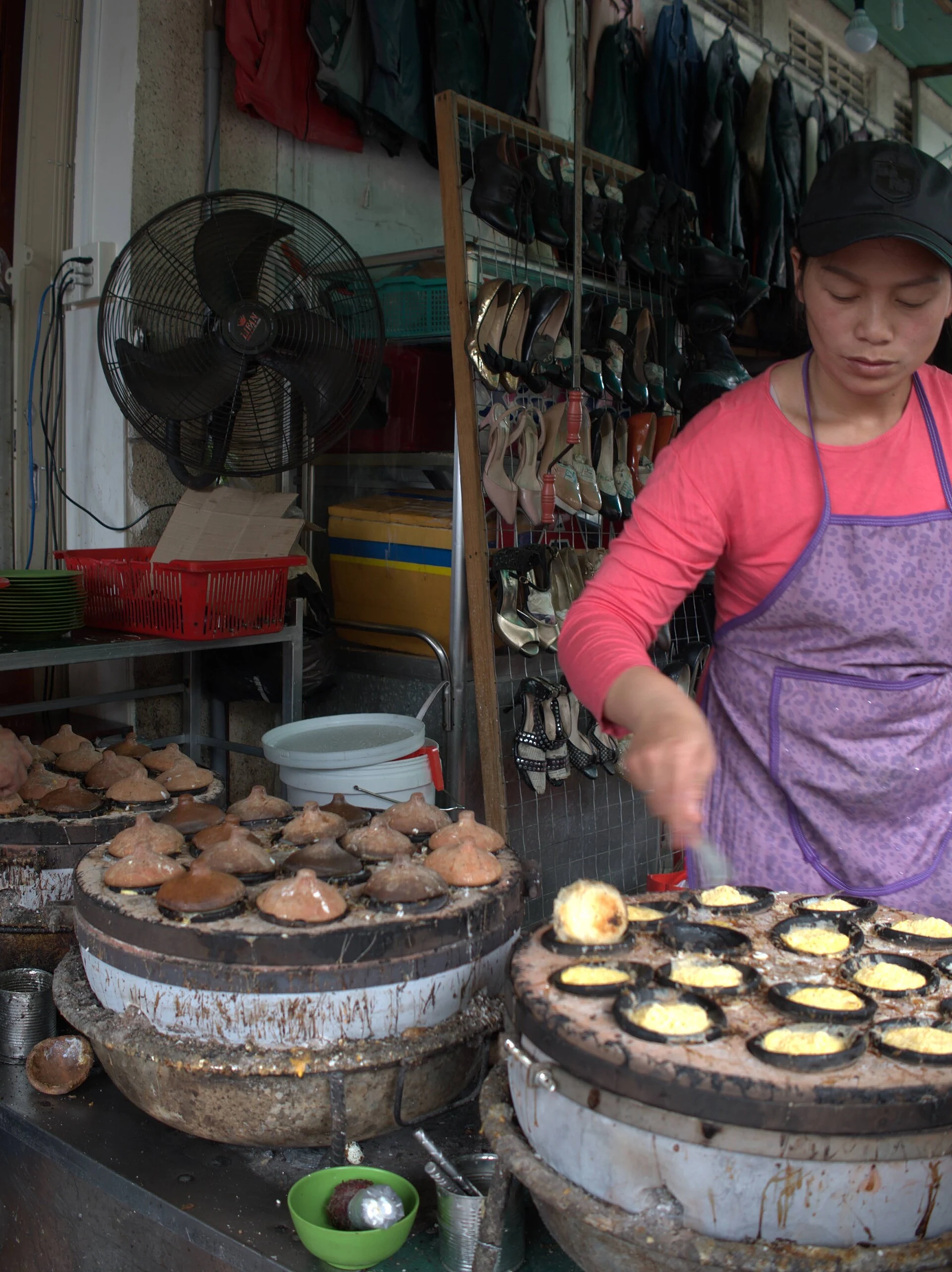
On another meal, try bánh căn to compare a broth-based breakfast with small cakes cooked in moulds. The difference is technique, not a competition over which is more local. A later market visit can help you identify fish cakes and dried products, but names and sources still need asking rather than guessing from shape or colour.
Prepared jellyfish contributes texture, while the broth supplies much of the surrounding flavour. Ask whether a mixed serving contains fish cake, another fish preparation or both. A fish-only option can be a sensible choice if that better suits your preferences. Choosing specific components is more useful than accepting an oversized mixed bowl solely because it appears to contain the greatest number of toppings.
Questions travellers ask
Can I order it without jellyfish?
Ask for a fish-only version and confirm the toppings; individual shops organise their menus differently.
Should I add lime immediately?
Taste the broth first, then adjust acidity a little at a time.