Yen Tu from Ha Long: a forest pilgrimage landscape for a day off the water
Yen Tu is now part of a UNESCO World Heritage complex. How to read Truc Lam Zen, the forest path and the cable-car choice for a day away from Ha Long Bay.
 Cat Ba Connect4 min read
The short answer
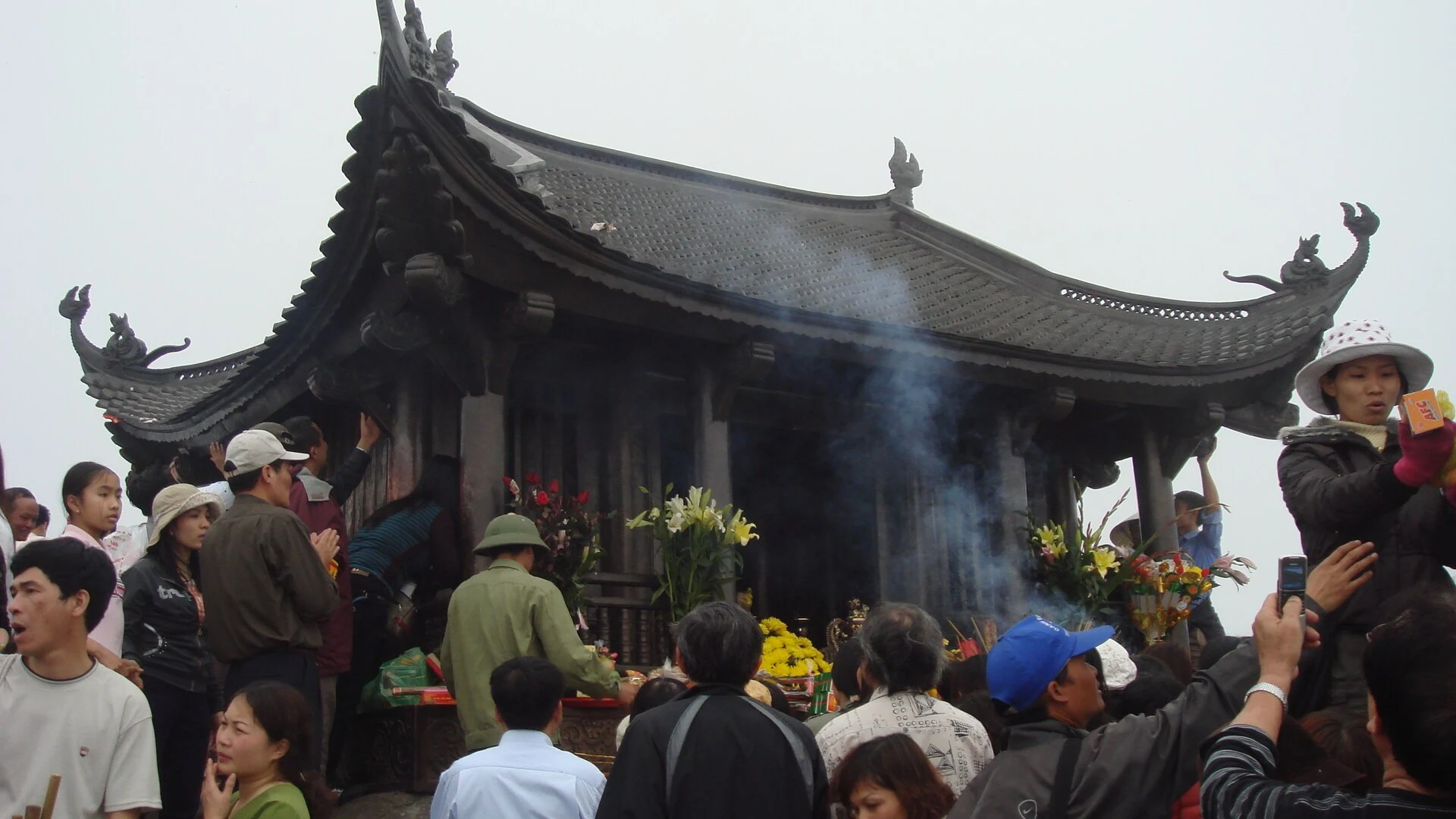
Yen Tu makes a strong day from Ha Long if you want forest and history after the bay. It is part of a 12-site complex inscribed by UNESCO in July 2025, centred on Truc Lam Zen, founded under the Tran dynasty. A two-stage cable car runs from Giai Oan towards An Ky Sinh, and the bronze Dong Pagoda sits near the summit at about 1,068 metres. Walk at least part of the path, since the journey is the point, and avoid festival crowds.
First, what UNESCO actually listed
On 12 July 2025, at its 47th session, the World Heritage Committee inscribed the Yên Tử, Vĩnh Nghiêm, Côn Sơn and Kiếp Bạc complex. It is a serial site of 12 locations, with a core of 525.75 hectares and a buffer of more than 4,380, according to Viet Nam News. So Yên Tử is one part of a wider landscape. Vietnam’s tourism board calls it the birthplace of Trúc Lâm Buddhism and the place where the king-monk Trần Nhân Tông took up monastic life.
Provinces have merged since the dossier was written, so sources may say Bắc Giang and Hải Dương or Bắc Ninh and Hải Phòng for the same sites. A listing does not make the mountain a museum: worship continues, and that sets the tone of a visit.
Why a king would climb this mountain
Trúc Lâm is the idea that gives the climb its meaning. Quảng Ninh’s provincial account says King Trần Nhân Tông founded the school at Yên Tử, drawing Buddhist traditions together with Confucian and Daoist ideas, folk belief and attention to nature, and that it grew over some seven centuries through temples, stupas, hermitages and retreats.
Hold that on the path. The surprising fact is that a ruler stepped away from power and walked up here. Look for stupas and for monks and lay pilgrims moving at their own pace. A guide’s account of what Trúc Lâm meant is one interpretation among several.
Reading the route as a sequence
The usual order runs from Suối Giải Oan and Giải Oan Pagoda to Hoa Yên, then towards the stone An Kỳ Sinh statue, at over 900 metres, and Chùa Đồng, the bronze pagoda at about 1,068 metres. Heights and step counts vary by source, so use them loosely. The pilgrim route itself is part of what is protected, and the provincial account mentions old-growth forest and medicinal gardens tended by monks.
So do not treat the lower mountain as something to skip, and use Hoa Yên as a natural pause. Dress as you would for any active temple, speak softly in pagoda courtyards, and ask before photographing anyone at prayer. Carry water and rain protection, because the summit can differ from the valley.
Cable car or stone steps?
Báo Văn Hóa reported in 2018 that two new cable lines run from Giải Oan to Hoa Yên and from Hoa Yên to An Kỳ Sinh, cutting the walk to Chùa Đồng from nearly 1,000 metres to about 500. It also recalled waits of two to three hours at peak times on the old system. Check the current timetable and fares with the operator, because this guide could not confirm them.
A sensible compromise is to walk one section and ride another. Stone steps are hard on knees, particularly coming down, and can be slippery after rain. If you have only half a day, go up by cable and spend your time at the top.
Making it work from Ha Long
Treat Yên Tử as a whole day, not an add-on to a cruise. Leave the bay after breakfast, and do not plan a transfer to Cát Bà or an evening boat on the same day unless you have checked timing with care. Confirm the road transfer with your driver, because the route and time depend on where you are staying in Hạ Long.
Timing matters more than anything else. The spring festival brings huge crowds, and Vietnam Tourism says Yên Tử draws millions of worshippers and visitors each year, so if you want a forest instead of a queue, avoid festival dates and weekends. Côn Sơn, Kiếp Bạc and Vĩnh Nghiêm are other parts of the same story, and they deserve their own trip.
Questions travellers ask
Is Yen Tu a UNESCO World Heritage Site?
Yes. It is part of the Yên Tử, Vĩnh Nghiêm, Côn Sơn and Kiếp Bạc complex, inscribed in July 2025. The listing covers 12 locations, not just one mountain.
Can I do Yen Tu without climbing?
Mostly. A two-stage cable car reaches An Kỳ Sinh, but the final section to Chùa Đồng is on foot, reportedly about 500 metres. Confirm that with the operator if mobility is a concern.