Van Long’s limestone cliffs: watching Delacour’s langurs without crowding them
How to watch Delacour’s langurs at Van Long from a hand-poled boat: what to scan on the cliffs, how far to stay back and what to ask before leaving the bank.
 Cat Ba Connect4 min read

The short answer
Watch Van Long’s langurs from the boat, at whatever distance your rower and the reserve rules allow, and never ask anyone to close the gap, call the animals or offer food. Delacour’s langur is Critically Endangered and Van Long holds most of the known population, but a sighting is never promised. Scan the cliff bands rather than the water, bring binoculars, keep voices low, and treat a quiet trip past empty rock as a normal result. The wetland birds, reed beds and limestone walls give the outing its value either way.
The numbers explain the manners
Delacour’s langur is listed as Critically Endangered and survives only in a small part of northern Vietnam. A 2018 survey quoted in the reserve’s IUCN Green List profile counted 176 to 184 animals in 21 groups inside Van Long, plus 31 to 38 in four groups just outside it. Mongabay, reporting in 2021, put the wild total at roughly 234 to 275. Those figures are several years old, so read them as scale rather than a current census. From one small boat you may be looking at a real share of a whole species.
Mongabay also credits a patrol unit of farmers and a few former poachers with ending poaching after protection began in 2001, when the population stood near 50. People built this quiet. Your rower may know that story better than any sign does.
Look at rock, not water
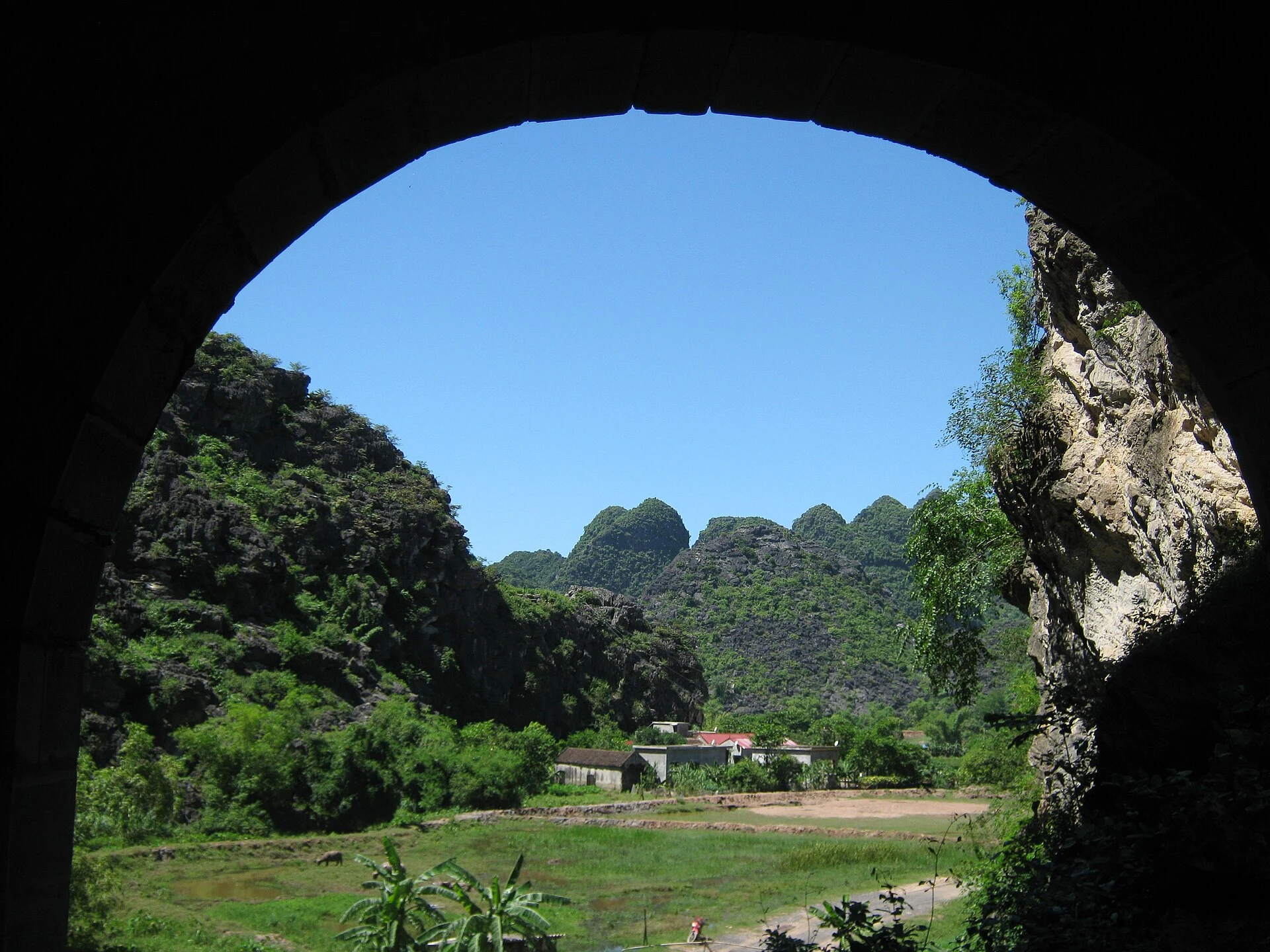
First-time passengers tend to watch the reeds. The Green List profile describes the reserve as roughly three-quarters limestone forest and one-quarter wetland, so the animals’ home is the larger part of the view, not the smaller. Mongabay describes langurs moving along the limestone outcrops. Work each cliff in horizontal bands: the scrubby top edge, the ledges across the middle, the forest patches near the base. A bush moving on a windless morning, or a shape that does not match the grey rock, deserves a second look through binoculars.
Ninh Binh’s tourism department says the langurs come down towards the water at dusk to feed and drink. Read that as a description, not a timetable. The page offers no data behind it, and boat operating hours should decide your plan, so ask when the last boat returns before building an evening around the idea.
Settle three things before the boat leaves
No published minimum viewing distance for Van Long turned up in the sources checked for this guide, so ask at the ticket point rather than assume one. The Green List profile says a tourism cooperative runs the trips on routes agreed with the management board. That matters: asking a rower to leave the agreed line for a better angle means asking someone to risk an arrangement their income depends on. Before you sit down, ask which route you are on, whether stopping to watch is allowed, and what the rower would like you to do if animals appear.
For your own floor, borrow from primate guidance. The Pan African Sanctuary Alliance summarises IUCN great-ape advice as at least seven metres and applies the same gap to wild primates met while travelling. Langurs high on a cliff will sit far beyond that. The rule earns its place at the foot of a rock or under an overhanging branch.
Sound, snacks and the telephoto temptation
A hand-poled boat is quiet, and that is its whole advantage. One phone speaker or a shouted “over there” cancels it. Keep food sealed; the same PASA guidance says never to touch or feed wild primates, however close they come. Do not clap, whistle or imitate calls to make an animal turn. If a langur stops feeding to stare at you, you have become the event, so ask the rower to drift on.
Photographers should make peace with small figures. A wide frame showing a speck on a huge wall asks nothing of the boat. When you share it, say the sighting was luck.
A good trip with no langur in it
Plan for the likely outcome. Van Long became Vietnam’s ninth Ramsar site, covers 2,736 hectares by the provincial count, and holds plenty that does not hide on a ledge. Happy Vietnam, published by the national news agency, reports migratory waterbirds there in winter, naming mallards and lesser whistling ducks, and the Green List profile records 56 fish species. Bring a bird list, not only a langur hope.
One more thing to carry away. Mongabay reports quarrying pressing on limestone used by a smaller langur group about five kilometres north of the reserve, which makes these untouched walls look less like scenery and more like a decision still being made.
Questions travellers ask
Will I definitely see Delacour’s langurs at Van Long?
No. They are wild animals on large cliffs, and an honest operator will not promise them. Book the trip for the wetland and the limestone, and count any langur as a bonus.
Is there an official viewing distance at Van Long?
None was found in the sources checked for this guide. Ask the reserve staff or your rower for the current rule, and use the seven-metre floor from primate guidance as a personal minimum.