Trà Quế’s herbs: how Hoi An’s garden village feeds them with river weed
Trà Quế’s growers line their beds with rong gathered from lagoon and river. See what the method does, which herbs grow there and what a visit involves.
 Cat Ba Connect4 min read
The short answer
Trà Quế’s reputation for fragrant herbs rests partly on rong, an aquatic weed that growers collect from the Trà Quế lagoon and the Để Võng river, dry and work beneath the soil as a base fertiliser. The village, about three kilometres from Hoi An’s Ancient Town, was listed as national intangible heritage for its vegetable farming in 2022 and named a UN Tourism Best Tourism Village in 2024. A visit means working plots, so go early, ask first and keep off the beds.
What rong does under the soil
The method that makes Trà Quế worth explaining is unusually physical. Sài Gòn Giải Phóng described it in 2015: growers level the soil, gather rong from rivers and ponds, spread it to dry on the ground, then bury it beneath the surface before planting. As one grower put it, without that layer the plants will not stay green. Báo Văn hóa names the sources as the Trà Quế lagoon and the Để Võng river, and treats this seaweed-like base dressing as the secret of the village’s scented greens.
A note on translation. Rong gets rendered as seaweed or algae in English, but the sources describe plants skimmed from fresh or brackish water, without a species name. River weed is the safest term here. Ask a grower what they call it and where it comes from.
The herbs in the rows, and the cao lầu question
Báo Văn hóa lists what is actually grown: lemongrass, garlic, chives, scallions, rau tần, rau húng mint, coriander, fish mint, pennywort and bitter herb. Some have folk medicinal uses. That list is useful when you arrive, because a bed of herbs looks like plain green until a grower crushes a leaf for you. Ask to smell rather than picking one yourself.
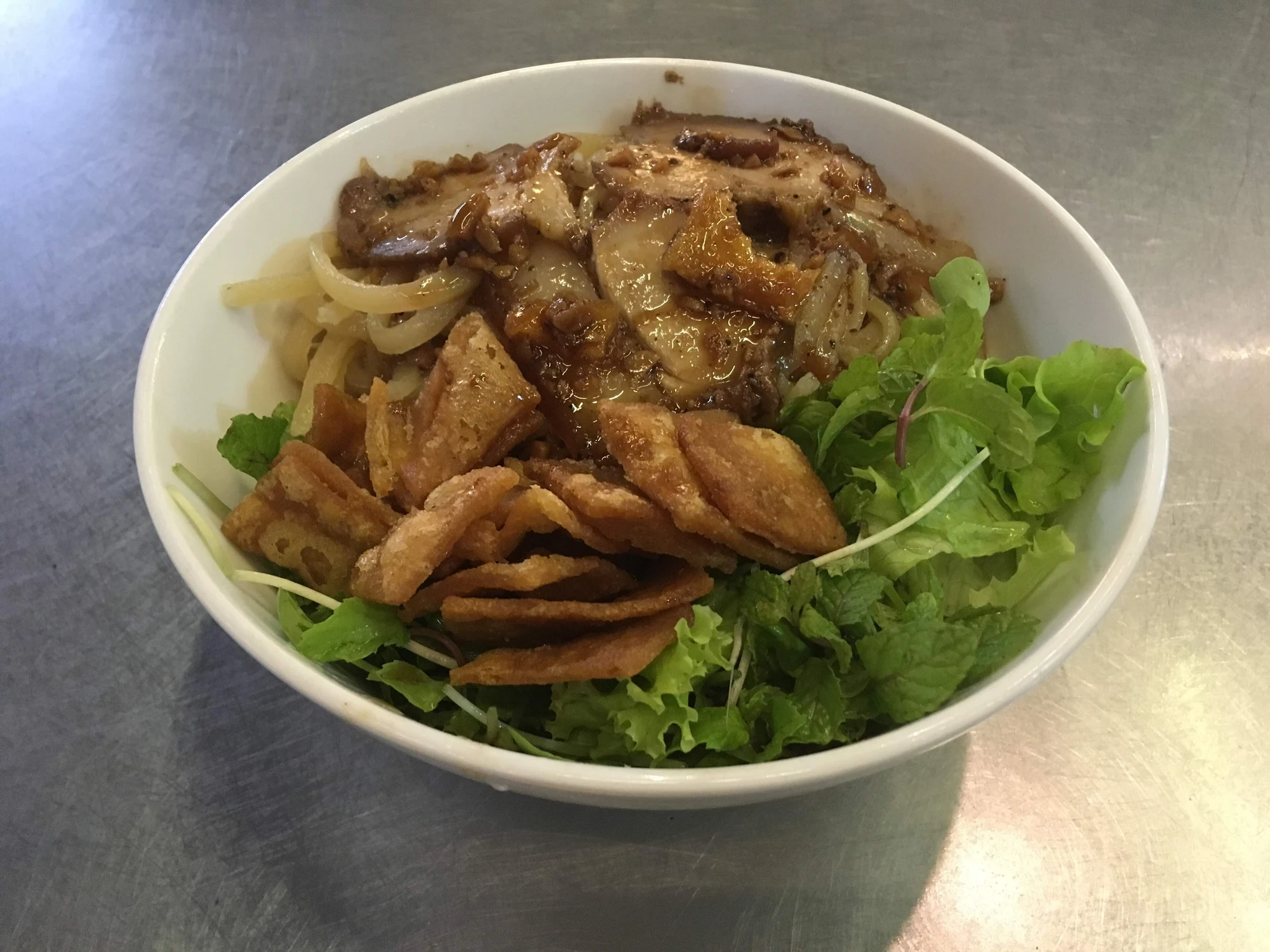
You will often hear that Trà Quế supplies the herbs for Hoi An’s cao lầu. Cao lầu does carry herbs, as this site’s cao lầu article notes, and Trà Quế is the town’s known herb village, so the link is plausible. But the sources we opened do not establish it for any restaurant, so ask a kitchen directly rather than repeating it.
Old village, two ages, one recognition that counts
Age claims around Trà Quế differ. Báo Văn hóa’s 2023 piece says the craft has developed over more than 300 years, another of its reports says the village is over 500 years old, and SGGP dates the village to the 16th century. Those are different things being measured, and none should be quoted as exact.
The recognitions are clearer. The culture ministry listed Trà Quế’s vegetable farming as national intangible heritage in April 2022. UN Tourism’s Best Tourism Villages programme named it in November 2024, from more than 260 applications across 60 countries, and it is one of three Vietnamese villages on that list, with Thái Hải and Tân Hóa. The village is modest in size: 202 households on 18 hectares.
What organic means here, and what it does not
SGGP and Báo Văn hóa both describe Trà Quế’s growing as organic, and the latter says it combines traditional and modern practice with fertiliser free of chemicals. Those are press descriptions. We did not find a certificate for individual growers, so treat organic as a claim to ask about. Ask whether a plot uses anything other than rong and compost, and whether what you are buying came from it.
The practical upside for a food traveller is seasonal awareness. Herbs and greens are field crops, so what you see depends on weather and the plot’s rotation. If low-lying Hoi An has just flooded, as it did in late October 2025, do not assume the fields look like the brochure. Check conditions before you set a morning aside.
Visiting without trampling the point
Báo Văn hóa describes a day programme in which visitors till soil, plant cuttings, fertilise, harvest and cook, and a later report counts 23 places to stay and 16 restaurants in the village, so food and farm stops are both available. Compare what a package includes, and ask how much time is in the field, how much is in a kitchen and how much is a photo stop.
If you come on your own by bicycle, remember these are livelihoods. Stay on the paths, ask before photographing a person at work, and do not pick anything. The village is about three kilometres from the Ancient Town. The Cầu Bông festival, on the seventh day of the first lunar month, honours those who cleared the land, and it needs a date check each year.
Questions travellers ask
Is Trà Quế really fertilised with seaweed?
Vietnamese press describes growers using rong, gathered from the Trà Quế lagoon and Để Võng river, as a base dressing. English often says seaweed, though river weed is closer. The species is not named in those reports.
Do Hoi An’s cao lầu herbs come from Trà Quế?
It is often said and plausible, but we could not confirm it for particular restaurants. Ask a kitchen where its herbs come from.