Son Tra’s red-shanked doucs: distance, noise and feeding conduct for visitors
How to watch Son Tra’s red-shanked doucs well: why feeding harms them, what night lights and imitation calls do, and what the peninsula’s road means for wildlife.
 Cat Ba Connect4 min read
The short answer
If you meet red-shanked doucs on Son Tra, stay back, stay quiet and never offer food. GreenViet’s stated principles are simple: do not feed animals, do not approach them, and limit noise and night lighting. A sighting is not guaranteed, because these Critically Endangered primates live high in the canopy. No fixed legal viewing distance was found, so treat seven metres as a minimum and follow current instructions from the peninsula’s management board. Slow down on the roads too, since vehicles have injured doucs.
A city’s rare neighbour
Son Tra sits at the edge of a large city, which is what makes it unusual and what puts it at risk. The red-shanked douc is listed by IUCN as Critically Endangered, and Wikipedia’s species account says Son Tra holds the largest population in Vietnam, estimated at roughly 700 to 1,300. Numbers vary widely by source and date; VietnamPlus cites more than 700 from a 2019 count, and a 2017 Dan Tri report mentions about 500. Use “several hundred or more” in conversation, and be wary of anyone who sounds exact.
SGGP reported in 2022 that visitors at times numbered several thousand a day on the peninsula. That contrast sets the whole etiquette question: a wild, canopy-living primate, and a road full of cars and scooters a short drive from the beach.
Feeding is the one rule with no exceptions
SGGP’s 2022 report says some visitors have fed doucs fruit along the road, and that the animals are gradually losing their foraging instinct and moving down towards places such as Ho Xanh and the road to Ban Co peak. Their diet explains why this is a bad idea. Wikipedia’s account describes a specialised leaf-eater, mostly buds and young leaves, with figs eaten year-round. Fruit from a tourist’s bag does not fit that.
Macaques on the same peninsula show where it ends. SGGP reported in 2021 that fed monkeys were coming onto the road, grabbing bags, and causing traffic accidents and injuries to children. Human food may also carry disease. The management board ran a “do not feed the monkeys” campaign, and at that time said no specific law covered this, only advice. Rules may have changed since, but your behaviour should not depend on that. Keep food in the car and away from view when near monkeys.
Distance and noise: what the sources support
GreenViet’s Tran Huu Vy, quoted by SGGP, sets out the basics: do not feed animals, do not approach them, and limit noise and light at night. No published minimum distance specific to Son Tra turned up in this research, so ask the management board or GreenViet. In the meantime, use the seven-metre floor from primate guidance, and more if animals change their behaviour.
Doucs give clear signals. Wikipedia describes them as peaceful and notes that a fixed stare can be a threat, while disturbed groups flee silently through the canopy. So if you see the group stop feeding and watch you, or begin to move away, you are too close or too loud. Do not follow.
The photographers’ problem
Son Tra’s doucs are famously photogenic, which brings its own pressure. Dan Tri reported in 2017 that photographers were going after dark with headlights to shoot doucs, and that many imitated calls to lure animals or went very close. GreenViet’s deputy director warned that light and sound would seriously affect the animals and could alter their habits. Up to dozens of photographers were said to visit each day.
Set your rules before you raise the camera. No night visits for doucs, no spotlights, no flash, no playback or imitation calls, no shaking of branches. Use a long lens, and leave when your subject leaves. Be careful about posting exact locations, and avoid paying any guide who offers to “guarantee” a close-up by those means.
The road is part of the habitat
Tuoi Tre reported in 2023 that new roads have split the forest, and that doucs crossing them have been hit and injured. Staff and volunteers have fitted rope “green bridges” across the canopy, with nine reported by the management board at the time and two more built by a resort; animals can take four to five months or longer to use one. If you are driving, go slowly, watch the canopy edges, and never stop in a bend for a photograph. A bridge overhead is a good thing to look for, even if empty.
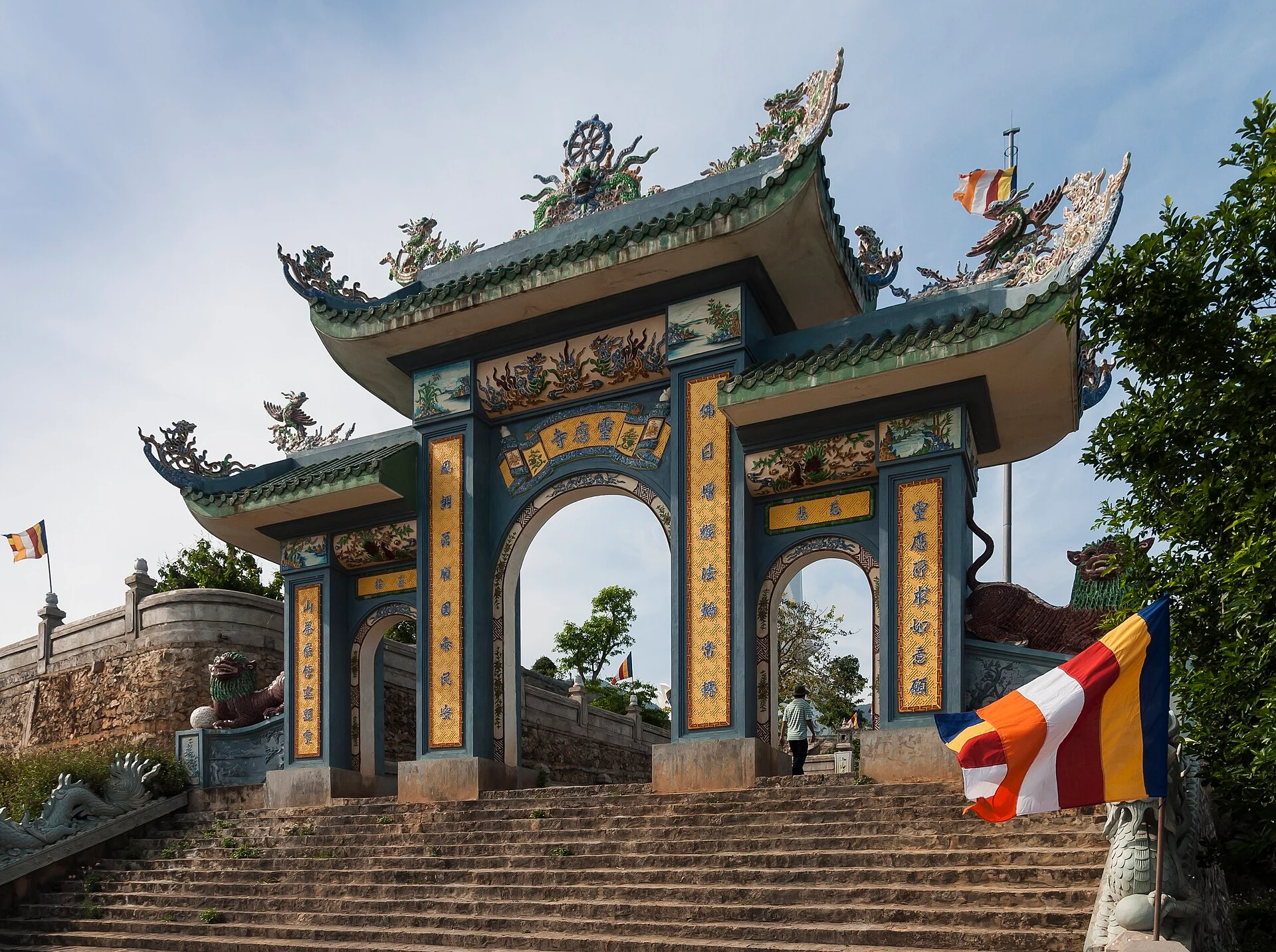
Access changes, so confirm which roads are open to which vehicles before you go, and ask whether guided douc-watching walks are operating. Pair the outing with the pagoda or a beach, so a quiet forest with nothing visible still leaves you a good day.
Questions travellers ask
Is there an official viewing distance for doucs on Son Tra?
This research found none. Ask the management board or GreenViet for current guidance. Keep at least seven metres, and more if the group changes its behaviour.
Can I feed the monkeys at Linh Ung pagoda?
Please do not. Reports describe macaques losing natural foraging, grabbing bags, causing road accidents and injuring children. The management board has run a campaign against feeding them.