The Cafe Apartment on Nguyen Hue: a vertical market of small shops in an old block
42 Nguyễn Huệ began as a 1960 apartment block and became a stack of cafés and small shops. Learn its history, how the stairs and lift work, and what to confirm.
 Cat Ba Connect4 min read
The short answer
The Cafe Apartment at 42 Nguyễn Huệ is a nine-storey block from 1960, now mostly cafés, shops and small restaurants, with little of its residential life left. It works like a market turned on end: you pick a floor, not a street. One guide reports a small lift fee refunded by venues, and worn stairwells are the alternative. Tenants change often, so choose by what you find at the door. We found no recent safety report, so ask about exits if that concerns you.
A block that changed its job
Nothing about this building was planned for coffee. Voice of Vietnam dates it to 1960, a nine-storey concrete apartment block that outlasted most of its neighbours. MIA’s guide says it was once home to Trương Bửu Khanh, an interpreter for President Ngô Đình Diệm, and that after 1975 many low-income Ba Son shipyard workers lived here. Treat those biographical details as one guide’s account.
The change came with the street outside. The pedestrian Nguyễn Huệ opened in 2015, and land values climbed, according to MIA. Balconies became shop signs. By 2022, Sài Gòn Giải Phóng described the block as having almost no households. A photograph shared on National Geographic’s Facebook page in 2020 did the rest, with Voice of Vietnam citing its coffee building label.
Think of it as a market turned on end
The useful way to read 42 Nguyễn Huệ is the way you would read a market. Each balcony is a stall, advertising to the street with neon, wood or glass. Each floor is a lane with a mix of trades: cafés, fashion, restaurants and coworking spaces, in Voice of Vietnam’s listing. As in any market, businesses come and go, so a floor plan from an old blog may already be out of date, including any list you find here.
So stand across the street first. The façade is the directory, and you can pick a floor by the sign that suits you. Then check what is actually open when you reach the landing. This also makes a sensible evening stop, because you can see which balconies are lit before you commit to the climb.
Lift or stairs: what is reported, and what is not
MIA reports a lift at the entrance charging 5,000 đồng per person, collected by a guard, and says cafés and restaurants in the building refund it to their customers. This is one travel guide’s claim, not a posted tariff we could confirm, so bring small change and ask at the door. If you are not buying anything upstairs, assume the fee is yours.
Voice of Vietnam describes the alternative: worn concrete stairwells with light through hallway vents, shared by residents and tenants. For many visitors, this is the point of the place. For anyone with limited mobility, nine storeys of old stairs is not a realistic plan, so check that the lift is working before committing to a high floor. Motorbike parking at street level is reported by MIA, but capacity is small.
Questions an old block should prompt
Sources cover charm far more fully than safety. We searched for a recent inspection report or fire-safety notice on this building and did not find one, either reassuring or alarming. That is a gap, not a clean bill of health. In a 1960 block with many small businesses on upper floors, it is reasonable to notice the basics for yourself.
Look for where the stairs are in relation to your table, whether corridors are blocked by stock or chairs, and whether you could leave quickly on foot. Ask staff if you are unsure. If a floor feels overcrowded on a holiday evening, choose another. These are ordinary precautions for any older building, and they do not imply a known problem here.
Using it well on a downtown evening
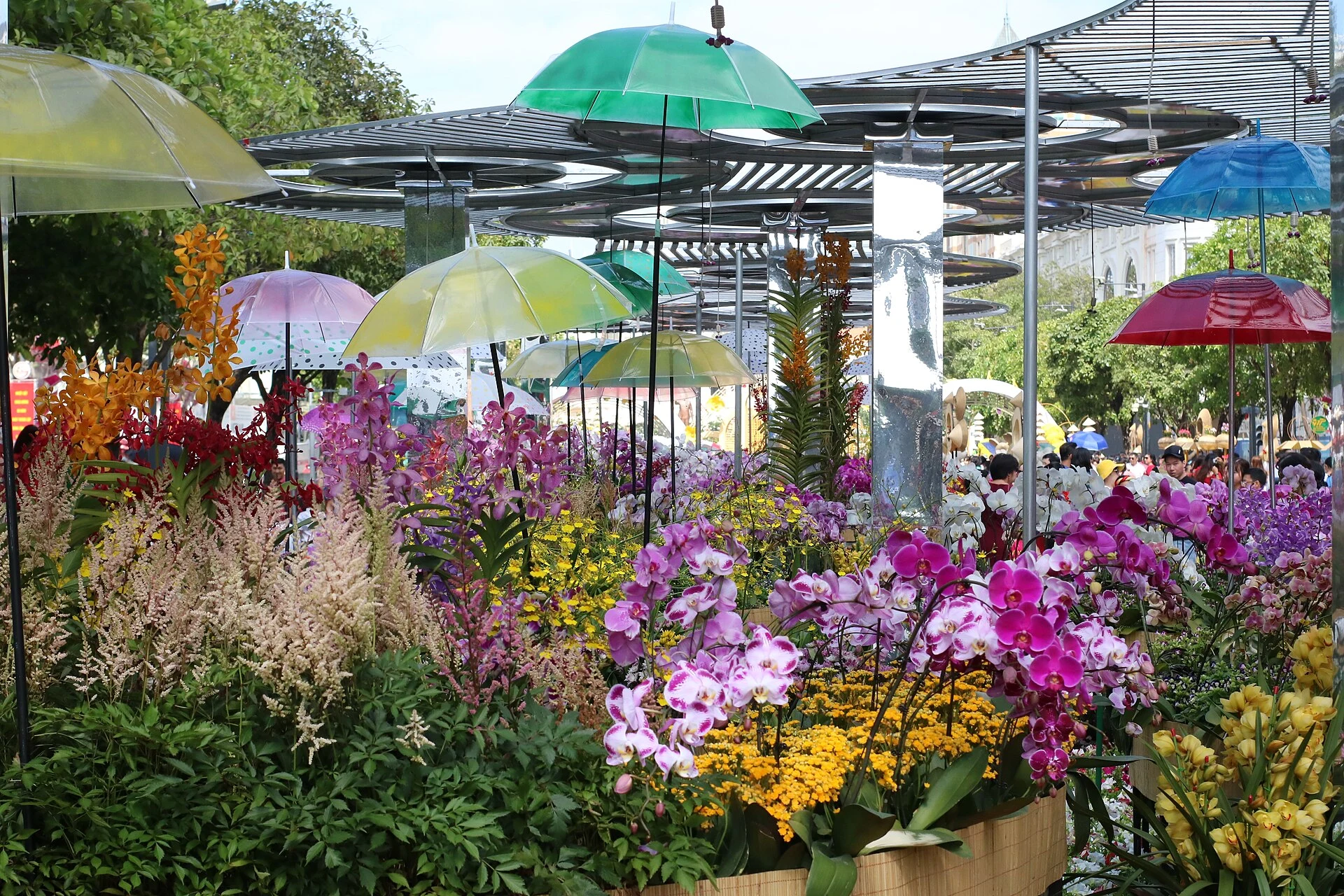
MIA lists venue hours running from about 7:00 to 23:00, varying by tenant, so check the one you want. Treat the view as the product: a balcony seat over the pedestrian street is what you are paying for. Holidays are a different proposition, since Nguyễn Huệ’s Tết flower street draws crowds and this site’s guide to it covers what to expect.
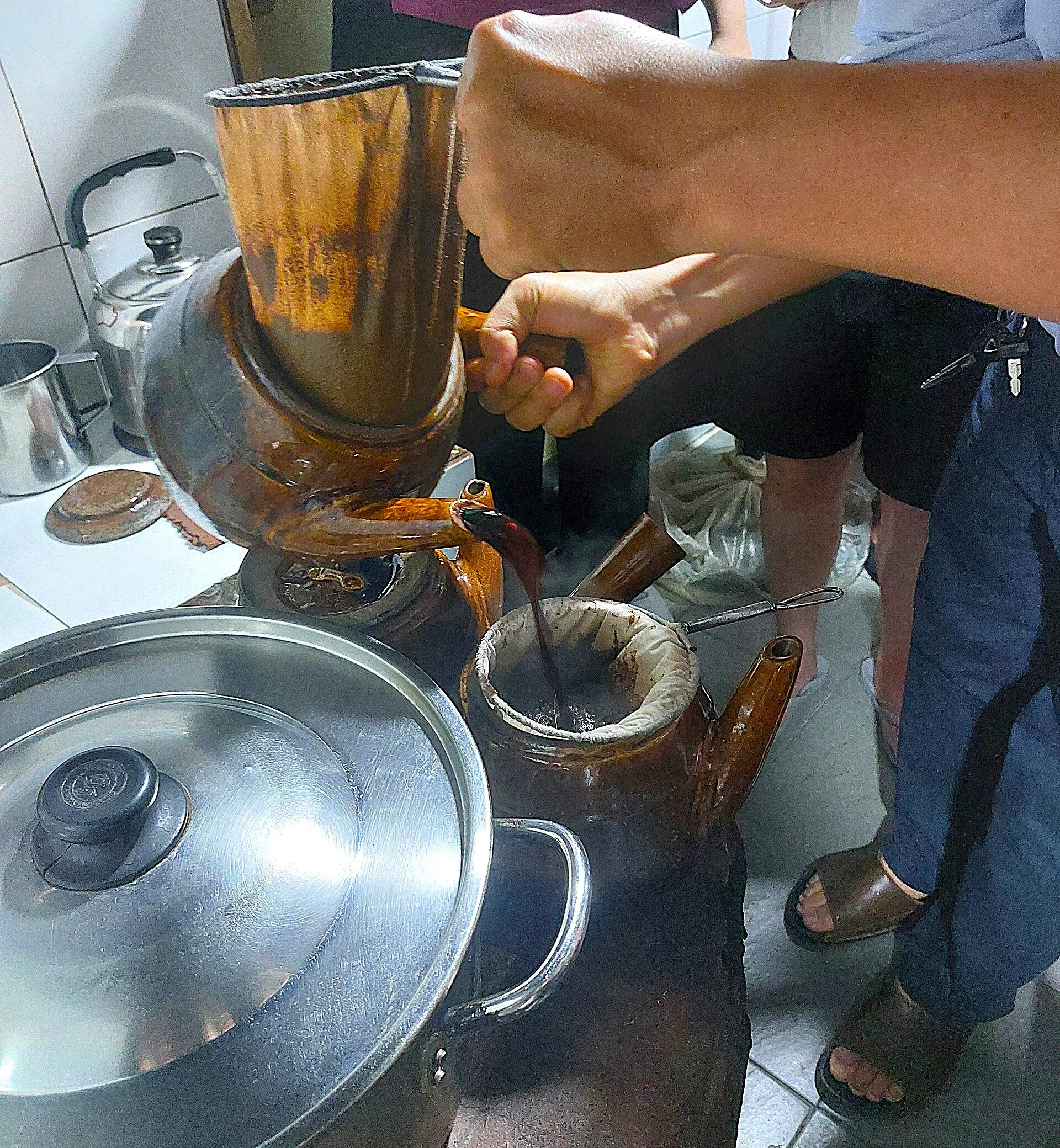
A good plan is to walk the street first, then pick one floor and stay. Hopping between cafés for pictures adds to the corridor crush and costs more in drinks. If you want a stronger coffee story than a view, Saigon’s cà phê vợt is a contrast worth seeking out at street level.
Questions travellers ask
Is there a fee for the lift at 42 Nguyễn Huệ?
One guide reports 5,000 đồng per person, refunded by venues in the building. We could not confirm a posted tariff, so bring change and ask at the entrance.
Do people still live in the Cafe Apartment?
Very few. A 2022 report said the building had almost no households, although Voice of Vietnam still describes residents and tenants sharing stairwells.