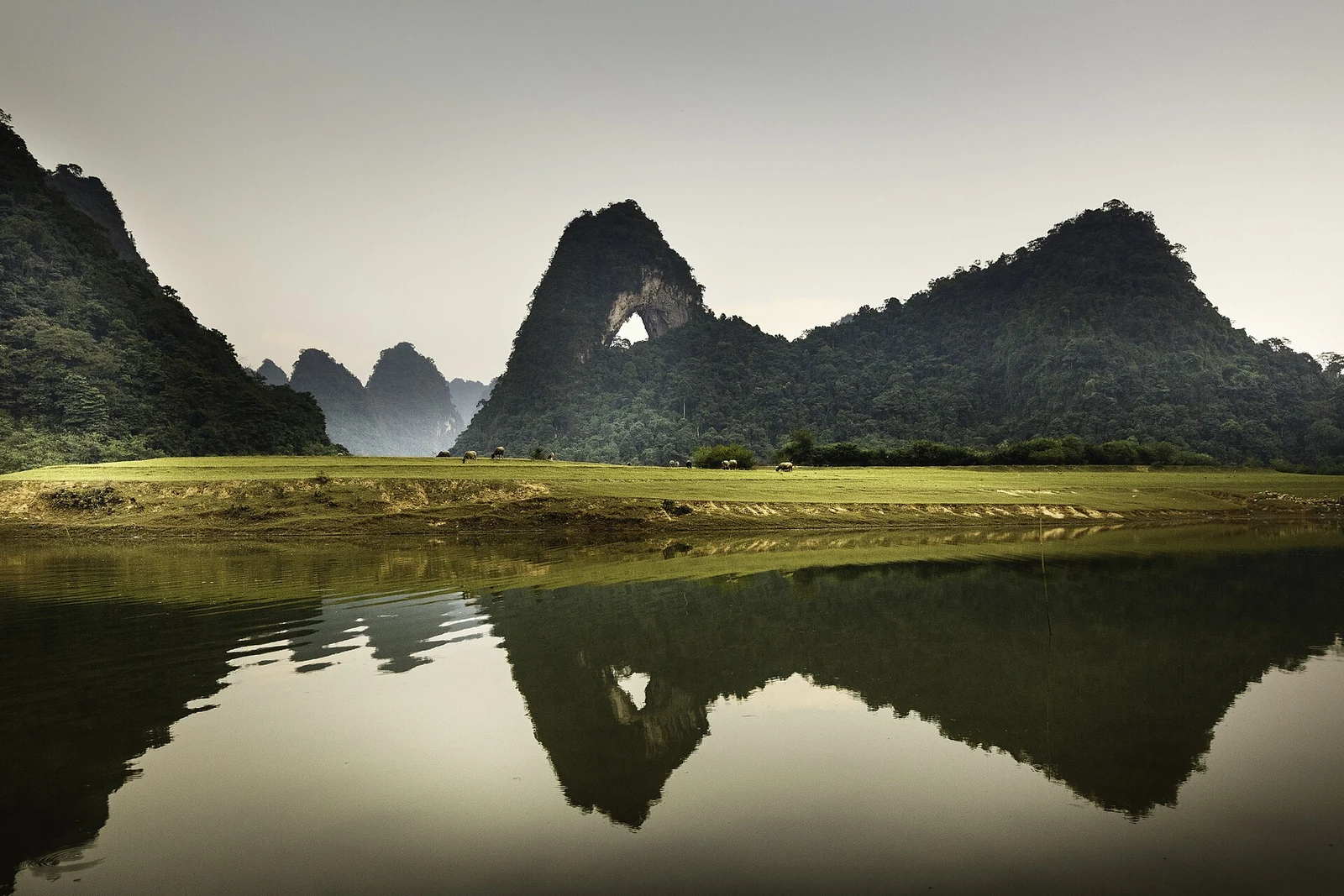
Quay Son valley: photographing river colour when water level is out of your hands
Jade or milky white? Quay Son’s colour shifts with the season. A photo plan for Ban Gioc’s river that works at any level, plus how to respect a border landscape.
 Cat Ba Connect4 min read
The short answer
You cannot book Quay Son’s colour. Official descriptions call the river jade or turquoise in the dry months and a white wall of water in the rainy season, with sediment changing the look. So plan pictures that work at any level: water texture, raft scale, the river in the fields, a high view from the pagoda. Check recent local reports close to the day, keep a second morning free, and photograph from permitted places, since Ban Gioc sits right on the Vietnam-China border.
What actually changes the colour
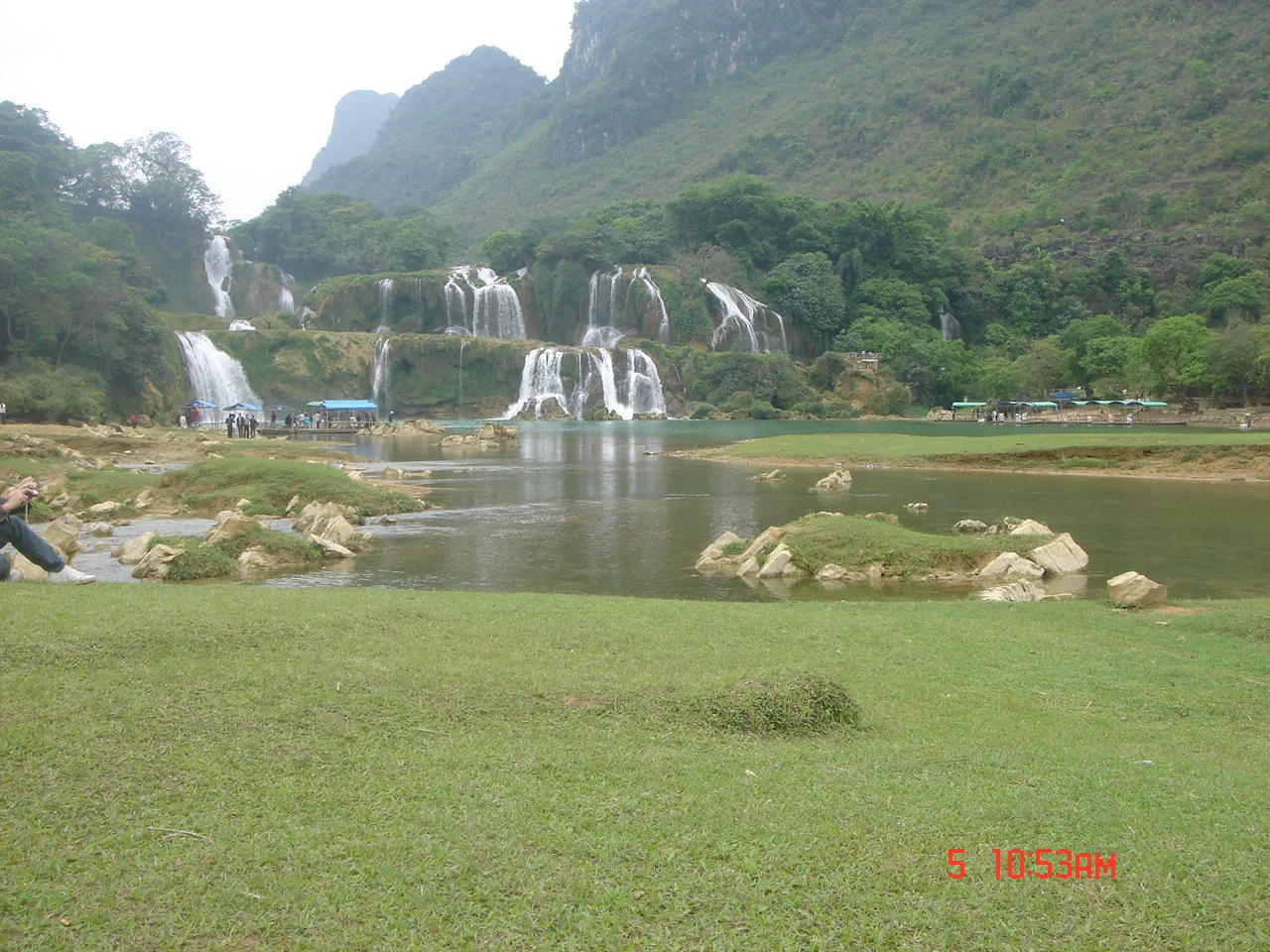
Published sources agree on the broad pattern. The National Biodiversity Conservation Agency’s Ban Gioc page says the rainy season, June to September, brings strong flow and upstream sediment that makes foam milky white, while dry-season water is calmer, with the river “shimmering” jade green. Vietnam Tourism describes a single wall of white water in the rains and a calm turquoise stream from October to May.
So, broadly, more water means more sediment and less transparency, while low water means clear colour and thinner falls. You usually cannot have both at full strength, and a photograph promising you can has probably been edited or taken on a rare day. Decide which you value: power or colour. Then choose a window and accept that a storm upstream can change it within a day.
Three subjects that do not depend on the level
Build your list around what stays true. First, scale: the bamboo rafts that Vietnam Tourism says operate to the base of the cascades give any waterfall frame a human measure, so include one if they are running. Second, texture: use a slower shutter on the steps of the falls for smooth water, or a fast one to freeze spray. A small tripod or a rock-steady handhold on a rail will do; try a range of speeds and pick later. Third, context: the river moving through fields and karst tells a story that a tight waterfall shot does not.
Vietnam Tourism also suggests a high view from Phat Tich Truc Lam pagoda at early morning or sunset, and midday for rainbows in the falls. Treat these as starting points. Rainbows need spray and sun together; no timetable can promise one.
Light, polarisers and the green problem
River colour is partly a camera problem. A polarising filter, rotated slowly, cuts surface glare and shows more of what is in the water, which often does more than any edit. Without one, shoot with the sun behind or beside you. Cloud softens contrast and helps with white water, which clips easily; underexpose a little and check the highlights.
Be honest later. It is tempting to push turquoise in editing, but that creates the same unrealistic promise you were warned about. A small adjustment is fine; a colour the river never had misleads the next traveller.
A border view is not an ordinary riverbank
Ban Gioc sits on the border, with the left half of the main fall and the secondary fall in Vietnam and the right half in China, according to the conservation agency’s page. Your camera does not change that line. Follow marked paths, do not cross markers, and keep clear of anything that looks like a post or security installation. If staff or officers ask you to stop shooting, do so.
Paperwork matters too. The guide on this site to border-area permission explains that rules were amended from 17 November 2025, with tourism-zone exceptions that do not cover everywhere. Ask your operator or local authorities about your exact route, and carry your passport. Drones near a border are a poor idea at the best of times, so leave yours packed unless you have written clearance.
Planning a day that survives a brown river
Ask two separate questions, as the site’s Ban Gioc conditions guide suggests: can you reach the viewing area, and are any river activities running? Stay nearby rather than making a long same-day return, so you get an extra light. If the water comes up brown after rain, shoot the mist in the valley, the rice fields framing the falls at harvest time, or Nguom Ngao cave nearby.
The landscape protection area covers 566 hectares, per the same agency, and farming continues around it, so respect fields as you move about. A strong photograph of a muddy river in full flood, captioned honestly, may turn out to be the most useful one you take.
Questions travellers ask
When is the Quay Son most turquoise?
Official descriptions point to the drier months, roughly October to May, though recent rain can change it within days. Ask locally close to your visit, since no month guarantees the colour.
Do I need a permit to photograph at Ban Gioc?
A normal visitor generally follows on-site rules, but the area is a border zone and rules depend on your exact route. Confirm with your operator or local authorities, and do not fly a drone without written clearance.