Po Nagar with bad knees: what to ask about steps, shade and the safest approach
Po Nagar’s towers sit on Cu Lao hill above a steep flight of 36 steps. What to ask about the later south stairway, where shade runs out and how to plan the visit.
 Cat Ba Connect4 min read
The short answer
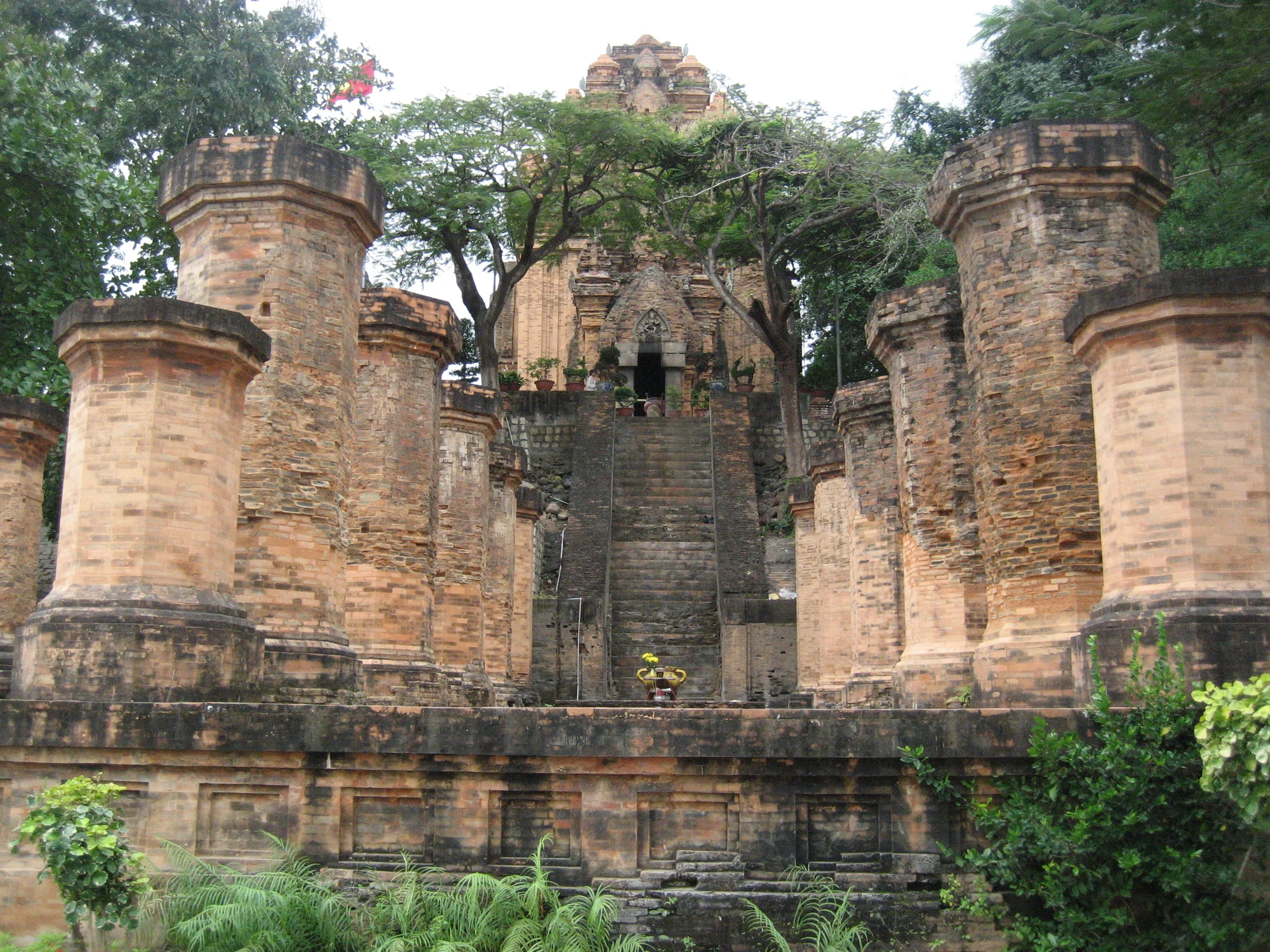
Po Nagar’s towers stand on Cu Lao hill, and the provincial heritage account says a steep flight of 36 steps climbs from the pillared hall to the temple group. It also describes a later stone stairway on the hill’s south side, added for visitors. With bad knees, ask which of the two is in use, and go early: the hall’s roof is gone, so shade is limited. No step-free route is documented here. The site’s published hours are 6:00 to 17:30, with worship always in progress.
Read the site as a line of three levels
The Khanh Hoa tourism account gives the clearest plan of the site. Cu Lao hill rises a little over 20 m above sea level near the mouth of the Cai River, roughly 2 km north of central Nha Trang. The sanctuary follows an east-west line: the entrance gate, then the mandapa, the pillared ritual hall, then the main tower.
So a visit is a sequence of rises, not a single climb. Each one is a decision point. Knowing that lets you agree in advance where a companion will stop, rather than discovering at the top of a flight that one of you has gone too far.
Two stairways, and why the choice matters
That account says a steep flight of 36 steps climbs from the mandapa to the temple complex, and that a later stone stairway on the hill’s south side was added for visitors. It gives no count, width or handrail detail for the south stair, so no measurements are repeated here.
Ask at the ticket point: is the south stair open today, and does it have a rail? Is it gentler than the 36 steps, or only longer? Can a car or taxi drop us closer to that side? Do both stairs end at the same level? Those four answers will tell you more than any list of opening hours.
Shade is an architectural question
The mandapa has four rows of octagonal pillars, ten large and twelve small, and sockets suggest they once carried a roof beam that no longer survives. In other words, the hall that looks like a shelter does not shelter you. The towers themselves give shade only where the sun allows, and the site is a brick and stone hilltop.
That makes time of day the main control you have. The published hours are 6:00 to 17:30. Aim for soon after opening, carry water and a hat, and ask whether benches exist near the towers. Dark brick and stone hold heat, and a stop on the steps is no shame.
Inside the towers, and at the top
The main tower is about 23 m tall and has four door forms, but only the east door is open; the others are blind. So expect one narrow route in and out, with people coming the other way and worshippers at the shrine. If the threshold or the crowd looks wrong for you, the exterior of the group is the larger part of the site anyway.
This is an active place of worship, so dress for it, follow footwear instructions, and let people making offerings go first. A slow visitor at a shrine door needs to step aside for them. Ask staff where a person who cannot enter can sit and wait.
Decide what counts as a visit
For some people, the mandapa and a view up to the towers is the right visit, with the climb left to younger legs. It is not a lesser trip: the provincial account dates the pillared hall to about the 11th or 12th century.
Keep the rest of the day flat. Long Son also involves steps, so do not stack it on the same morning. Check the fare at the gate, and have your taxi wait or agree a pick-up point on 2 Thang 4 Street before you go in. Festivals bring crowds, so ask your hotel if anything is on that week.
Questions travellers ask
How many steps are there at Po Nagar?
The provincial account gives a steep flight of 36 steps from the mandapa to the temple group, plus a later south stairway with no count given.
Is Po Nagar wheelchair accessible?
No source reviewed says so, and the site is on a hill with stairs. Ask at the ticket point about a closer drop-off and the south stairway.