Lung Tam hemp linen: the months behind a Hmong cloth and how to buy it fairly
Lung Tam’s Hmong linen takes about 40 steps from field to cloth. What each stage involves, what the national heritage listing means, and how to judge a fair price.
 Cat Ba Connect4 min read
The short answer
A piece of Lung Tam linen takes months, because it passes through about 40 hand steps: growing, stripping, joining and softening fibre, weaving, bleaching, beeswax drawing and repeated indigo dyeing. Hmong planting and weaving here became national intangible heritage in January 2016. This is a national listing, not a UNESCO one. Visit the cooperative at Hợp Tiến, ask who made a piece and how, and expect prices that reflect time. Ask before photographing weavers, and do not expect every stage to be running.
Count the steps before you touch the price tag
Sources count the process at about 40 steps, or 41 for a small piece, according to a Báo Quốc tế profile of the artisan Vàng Thị Mai. Tạp chí Công Thương says plants are harvested after about two months, then a run of drying, stripping, joining fibre, soaking, rolling, weaving, bleaching with kitchen ash, dyeing and wax drawing takes several months more. Fibres are joined by hand, end to end, and Vàng Thị Mai’s stages include boiling thread in ash water and once more with beeswax.
Even if you see only a loom on your visit, weaving is one stage out of many. Ask the woman at the loom which step takes her longest.
Why the wax and the indigo cost so much
Báo Quốc tế and VietnamPlus both call hot beeswax drawing the hardest stage. Melted wax is drawn on with small handmade pens, and the waxed area resists the dye. Then comes indigo. VietnamPlus describes cloth soaked in dye and dried in the sun, and repeated five or six times, with other colours from natural materials such as turmeric, according to Tạp chí Công Thương.
Look at a finished piece against the light. Can you see small irregularities in a line of wax? Does the blue change between folds? Those are records of hand work, not defects. A plain woven scarf and a fully waxed and dyed panel are different products, and they should not cost the same.
Who runs the looms
The name to know is Vàng Thị Mai, a folk artisan honoured in 2015, who helped bring Lùng Tám’s linen to outside markets. Sources give the start of her work as 1998 or 1999, and Tạp chí Công Thương dates the cooperative to 2001. Nhân Dân reports more than 140 members in nine production groups, annual revenue above 1.5 billion đồng and average monthly incomes of about 6 million, 4 million for members over 70. Those numbers show that a sale reaches real wages.
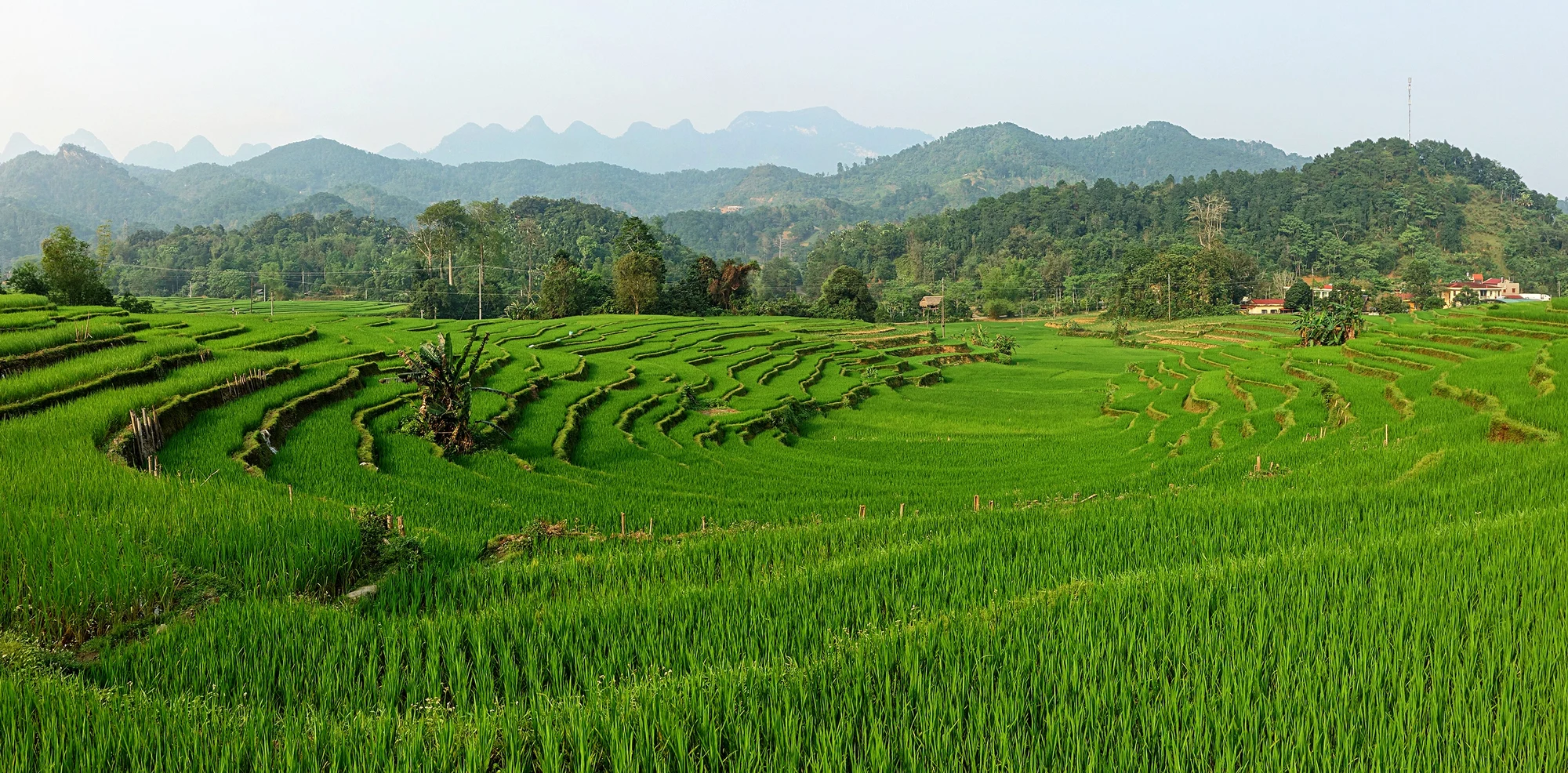
Hợp Tiến hamlet in Lùng Tám commune is where the cooperative works and displays its goods. It was part of Quản Bạ in Hà Giang, and now falls under Tuyên Quang after the 2025 mergers, so search both names. Exports reach Europe, the US and Japan. Other groups exist, such as the Cán Tỷ cooperative, so do not assume that all Quản Bạ linen comes from one place.
Reasoning about a fair price
The only published price range found for this guide is from Cán Tỷ, at about 60,000 to 1,500,000 đồng depending on size and type, and that is a neighbouring group, not a Lùng Tám price list. Use it only as a sense of range, and confirm any figure on site.
Ask what stages each item has been through. Is the thread hand-spun here? Is the dye natural? Is the pattern wax-drawn or printed? Who made this one? If a piece went through the full process, a high price means months of skilled work. A simple machine-sewn bag from purchased fabric should cost less. If the asked price at a cooperative is more than you want to spend, buy something smaller instead of bargaining.
Visiting a workplace, and what heritage status means
The Ministry of Culture, Sports and Tourism listed the Hmong technique of growing lanh and weaving it at Lùng Tám as national intangible heritage in January 2016. No UNESCO listing was found for this guide, so do not repeat that claim.
Some producers invite visitors to try spinning or weaving, so ask ahead. Ask before photographing faces, hands or designs, and offer to buy or pay for time. Ask too how to wash a piece. VietnamPlus suggests September to April, the dry months, but plants and processes keep their own calendar, and you may see only some stages.

Questions travellers ask
Is Lung Tam linen weaving a UNESCO heritage?
No such listing was confirmed for this guide. It became Vietnam’s national intangible cultural heritage in January 2016. Do not repeat a UNESCO claim unless you can see a source.
Can I buy directly from the weavers?
Yes, reports say visitors can buy at Lùng Tám, with the cooperative at Hợp Tiến displaying its goods. Confirm opening times locally, and ask who made the piece.