Hue’s vegetarian table: how Buddhist tradition shaped the city’s mock-meat cooking
In Hue, vegetarian cooking follows the lunar calendar and pagoda kitchens, and can imitate meat with banana. Learn the days, the words and the questions to ask.
 Cat Ba Connect4 min read
The short answer
Hue’s vegetarian cooking grew from its many pagodas and a local habit of eating meat-free on set lunar days, even among people who are not full-time vegetarians. Its signature move is giả mặn, plant dishes shaped to resemble meat, with reported examples made from banana. For a visitor, the practical keys are the words chay and giả mặn, the lunar calendar, and a plain check on fish sauce and shrimp, since many famous Hue cakes are not vegetarian at all.
A calendar, not a diet
Elsewhere, vegetarian food is often a lifestyle choice or a separate cuisine. In Hue it runs on the moon. VnExpress reported in 2012 that alongside year-round vegetarians, many residents keep four meat-free days each lunar month: the 30th, the 1st, the 14th and the 15th. That is why a street you passed yesterday can look different today: the same article says many cơm hến and cá tràu noodle stalls close on those days, because their owners avoid killing snails and fish.
Check the lunar date before a food-focused day. Lunar calendars are easy to find on a phone. On those days vegetarian stalls should be busiest, while a clam or fish dish you had planned may simply not be there.
From pagoda to palace, as the story is told
Hue’s density of pagodas is the obvious starting point, and pagoda cooks are the tradition’s acknowledged specialists. VnExpress quotes those chefs saying a vegetarian feast takes twice as long to prepare as a meat one, which is a useful corrective to the idea of simple temple food. The same report connects the royal household to the practice from the time of Lord Nguyễn Phúc Chu, and says kings stayed in the Trai Cung fasting palace at the Nam Giao altar before worshipping heaven.
Read that second claim as one press account, not settled history. We could not open a primary source tracing a line from a particular lord to a modern menu. What can be said safely is that Buddhist practice and courtly ritual were both part of why meatless eating carried status here.
Giả mặn: cooking that imitates on purpose
The term to learn is giả mặn, literally imitating the savoury, or non-vegetarian. VnExpress gives two examples that show how far it goes: a mock pork roll made from banana, and a mock fish skin made from green banana. The skill lies in texture and appearance, with the plate looking familiar and the ingredient being something else.
For a Buddhist guest, the imitation does not break the rule, because the food contains no animal. It may still be confusing if you are ordering by picture. If a menu shows what looks like pork, ask whether it is chay before you recoil or get excited. Upscale places, the article notes, may also use imported ingredients and charge more.
Hue’s famous cakes are not automatically vegetarian
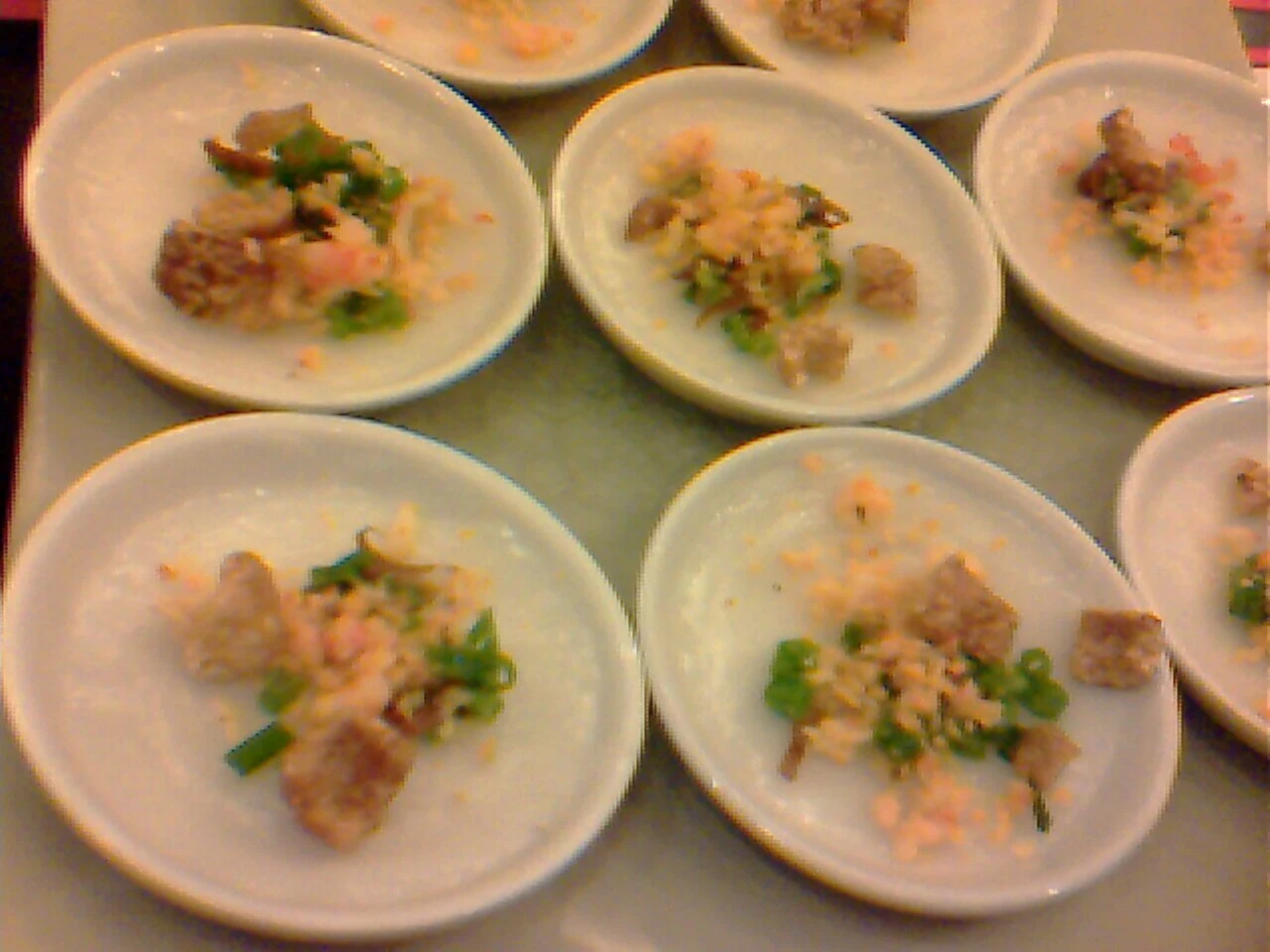
This is where visitors slip. Rice cakes look gentle, and the assumption is that a steamed cake must be meat-free. Vietnam’s tourism board lists bánh bèo with dried shrimp, pork crackling and fish sauce, bánh nậm with shrimp and fish sauce, and bánh bột lọc with pork and shrimp. Even a dish that seems clear can come with a fish-sauce dip, so ask for it separately or ask whether a chay version exists.
Useful phrases are short. Ăn chay means eat vegetarian. Không mắm asks for no fish sauce, and không tôm, không thịt means no shrimp, no meat. A strict vegan or a person with allergies should also ask about shared pans and broths, because a place selling both kinds of food cannot promise separation.
Where to look, and a festival to plan around
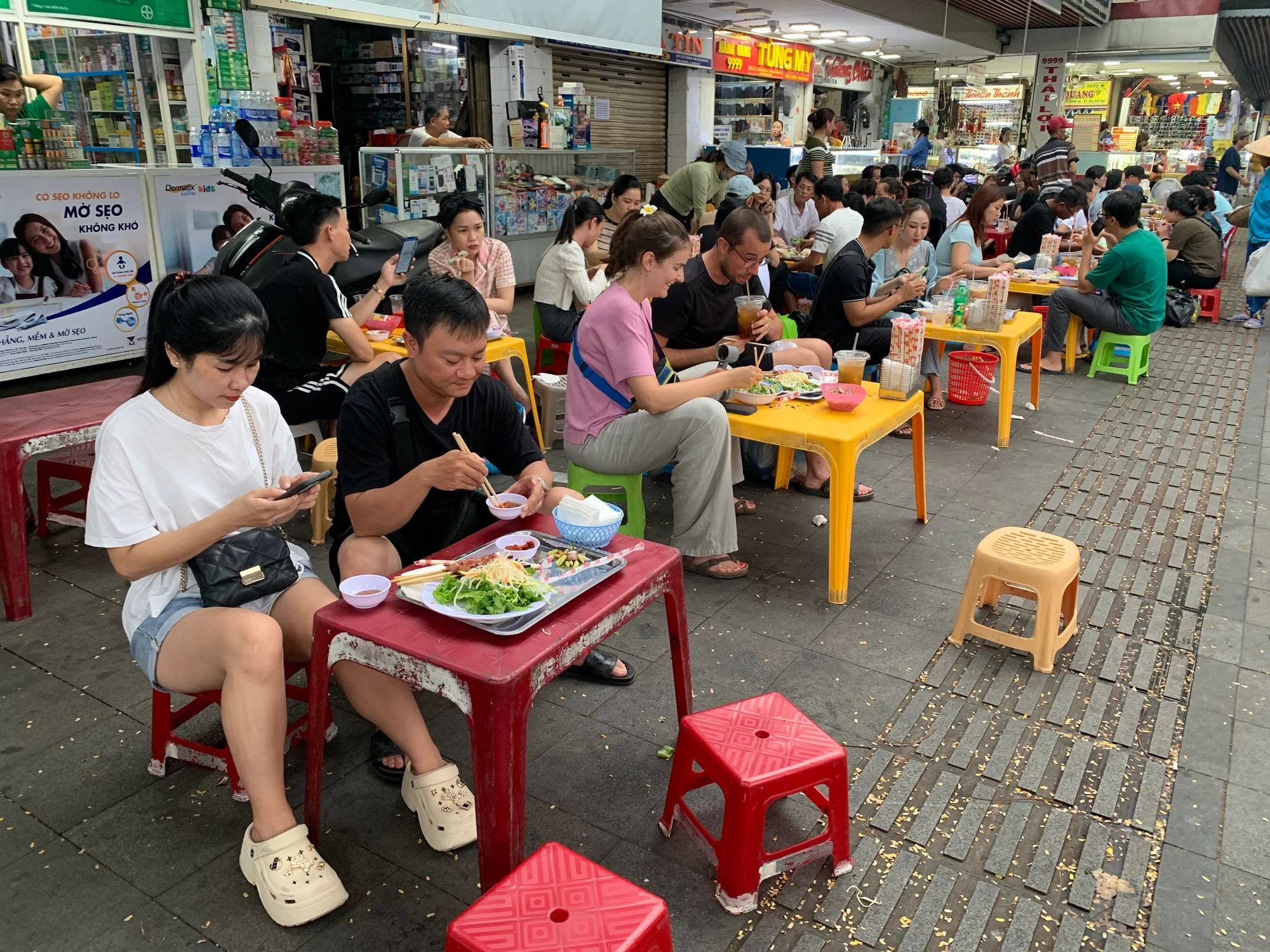
VnExpress named Đông Ba, Bến Ngự and An Cựu markets as places selling vegetarian food, along with buffet-style restaurants on Phan Bội Châu, Điện Biên Phủ and Thủy Xuân. That list dates from 2012, so use it as a map of areas and not a list of current addresses. Pagoda neighbourhoods remain the logical place to start looking, and a stall with a queue on a lunar day is a good sign.
If your dates fall right, the city also runs a vegetarian food festival within Festival Huế. The 2026 edition opened on 28 May on Nguyễn Đình Chiểu pedestrian street, organised by the city’s Buddhist Sangha with the festival committee, with 56 stalls and about 100 dishes from hotels, restaurants and temples. Future dates need checking each year, as they follow the lunar calendar.
Questions travellers ask
Which days are vegetarian days in Hue?
Many residents eat vegetarian on the 30th, 1st, 14th and 15th of each lunar month, according to a 2012 VnExpress report. Some stalls selling clam or fish dishes close on those days.
Is bánh bèo vegetarian?
Usually not. Vietnam’s tourism board describes it with dried shrimp, pork crackling and fish sauce. Ask whether a chay version is available, and confirm the dipping sauce.