Cà phê muối: where Hue’s salted coffee came from and how to taste it
Hue’s salted coffee is traced to a café opened in 2010 on Nguyễn Lương Bằng street. Here is who made it, why salt works in the cup and how to taste it properly.
 Cat Ba Connect4 min read
The short answer
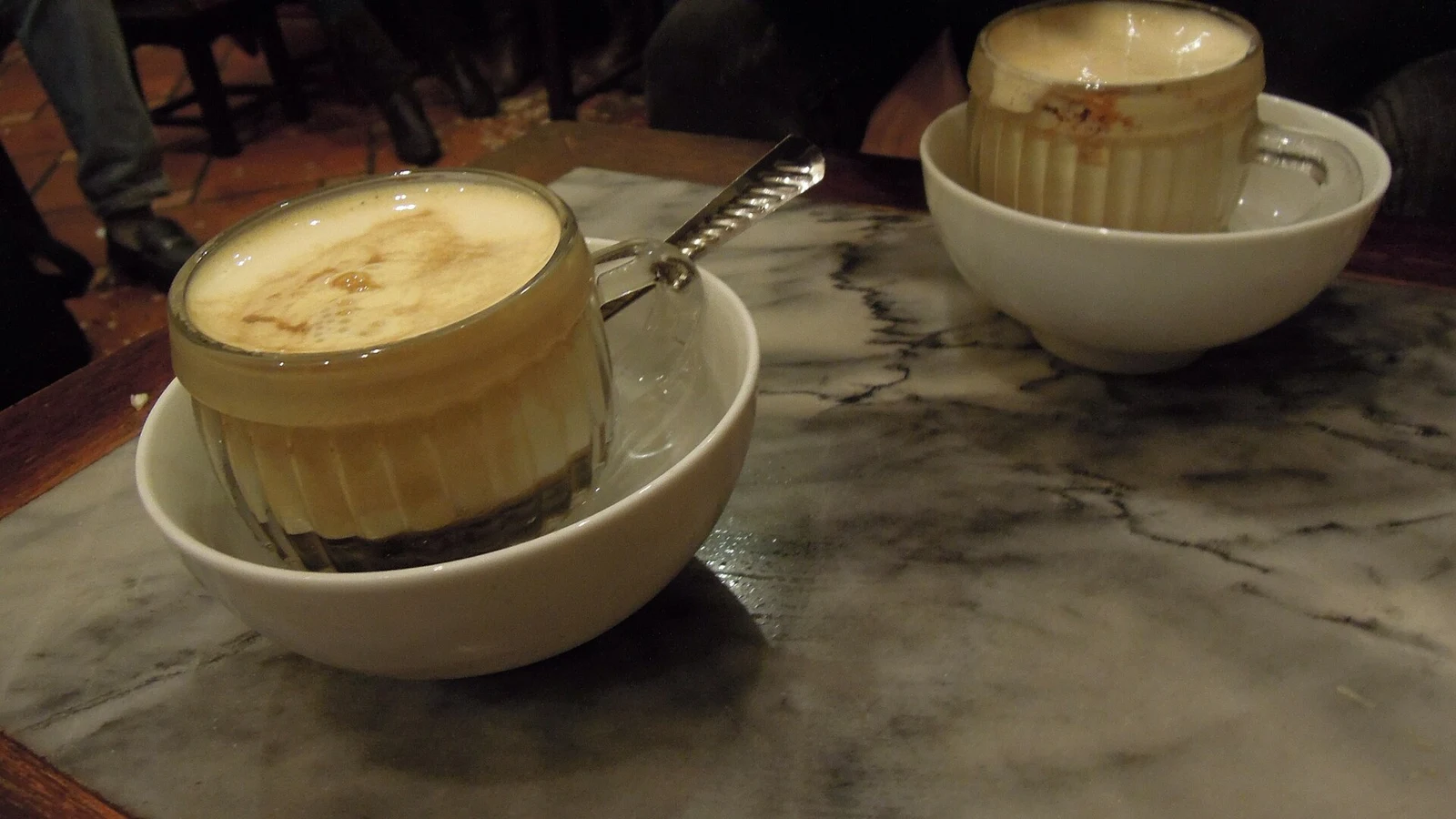
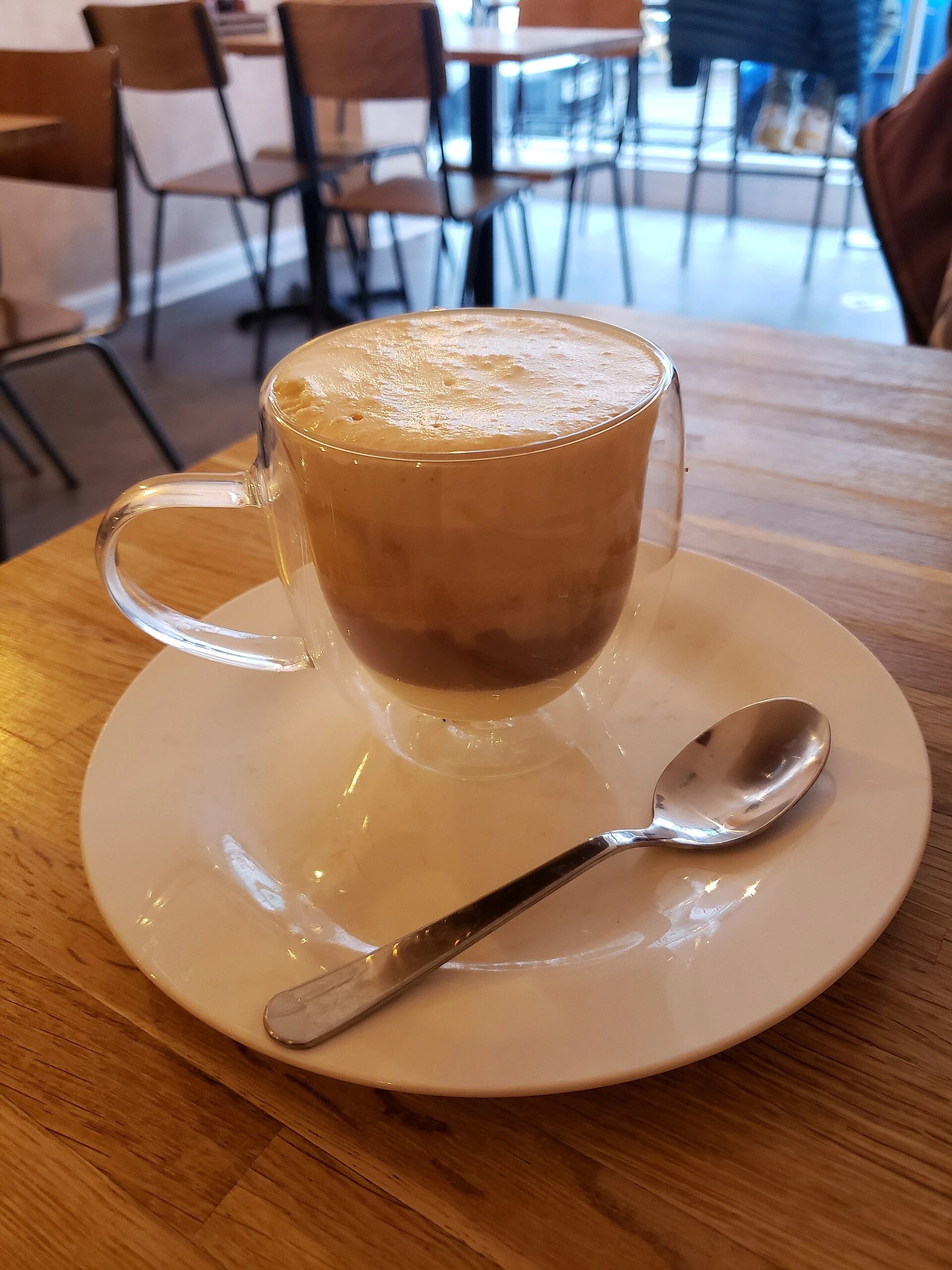
Cà phê muối, or salted coffee, is widely traced to a Hue café that Hồ Thị Thanh Hương and Trần Nguyễn Hữu Phong opened on Nguyễn Lương Bằng street in 2010. The usual build is condensed milk, salted cream and phin-dripped coffee, stirred together before drinking, hot or iced. Press accounts say salt softens the bitterness and sets off the sweetness. Taste it stirred first, then decide about ice, and treat the romantic origin tale behind it as a story, not history.
A young drink with a well-documented start
Many Vietnamese food origins dissolve into legend. This one has names and a street. Vietnam Economic Times reports that the owners told CNN Travel they created the drink in 2010, when they opened their first café on Nguyễn Lương Bằng in Hue. VnExpress wrote in 2020 that the idea appeared about a decade earlier, and travel writer Luke Digweed at Vietnam Coracle credits the same husband and wife, Mr Phong and Mrs Hương, saying the recipe stayed close until the late 2010s.
One caution on the address: published house numbers differ, so check a current map. Salting coffee as a general idea is harder to trace, and readers’ comments on Coracle mention sailors doing it. What is documented is this particular Hue drink and name.
The love story is inspiration, not history
VnExpress recounts the tale Hương read while looking for an idea: a nervous young man on a first date asks for salt in his coffee, and his wife later makes it for him every morning, never learning until his death that he disliked it. It is a fine story, and it is told as inspiration, not as fact. Nobody in the Hue account claims it happened.
The owners’ commercial motive is more interesting. They told CNN Travel they wanted the café to stand out, and that the name was chosen to catch attention because many people assumed coffee went only with sugar or milk. Customers’ feedback then shaped the recipe. Early scepticism turned into 500 to 700 cups a day by 2020, according to VnExpress.
What is actually in the glass
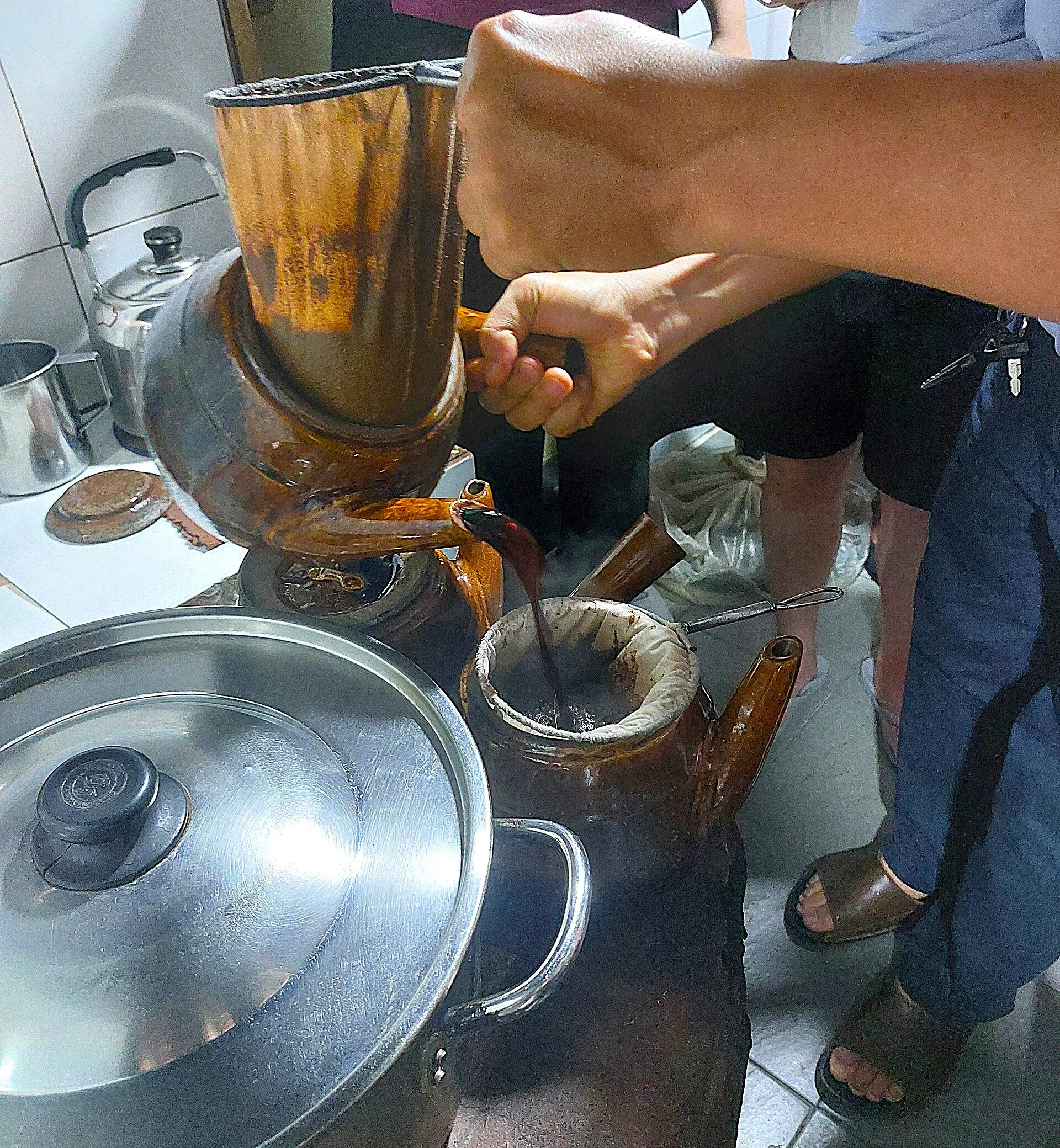
VnExpress describes the original build as condensed milk at the bottom, a layer of fermented milk mixed with salt, and an aluminium phin on top. After about three minutes the black coffee has dripped into the salted layer, and you stir. Vietnam Economic Times describes the same idea more simply: condensed milk and black coffee with a salted cream, hot or iced. Coracle says robusta is the base.
Those three details give you a quick way to read a copy. If it arrives ready-mixed in a plastic cup, you have a drink built on the idea but not the same method. Coracle’s writer considers such pre-made versions weaker. That is one opinion, but you can check it yourself by ordering the phin version when a café offers both.
Why salt works, and how to taste for it
The owners’ own explanation is simple: condensed milk balances the coffee’s bitterness and salt lifts the sweetness. VnExpress says salt softens that bitterness and rounds the drink out. Coracle compares the result to salted caramel, a fair shorthand if you know the flavour. None of this requires much salt, and if the first thing you notice is saltiness, the drink has probably gone wrong.
Taste in stages. Have a small sip of the cream on its own if it sits on top, stir fully, then sip again without ice. That second sip tells you the balance. Add ice only after, because it dilutes quickly in a hot city. Sweetness is the usual complaint, so ask for less condensed milk, or ít ngọt, if you prefer coffee to dessert.
Drinking it in Hue, and what the price tells you
The spread is real: VnExpress mentions salted coffee in Hanoi, Da Nang and Ho Chi Minh City, and Coracle describes it moving across central Vietnam and then nationwide. So you do not need to be in Hue to try it. The reason to try it here is comparison. Have one at a modest local place, one at a smarter café, and note what changes in cream, sweetness and strength.
VnExpress quoted 15,000 đồng a cup at a simple shop on Nguyễn Lương Bằng and 27,000 to 35,000 đồng elsewhere, but that was in 2020, so read it as a ratio, not a price. Hue’s salted coffee pairs naturally with an old-town walk or a rain break. A Saigon cà phê vợt stop later in the trip makes a useful contrast in method.
Questions travellers ask
Who invented Hue’s salted coffee?
Press reports credit Hồ Thị Thanh Hương and Trần Nguyễn Hữu Phong, who say they created it in 2010 at their first café in Hue. Salting coffee as a general idea is older and hard to trace.
Does salted coffee taste salty?
It should not be strongly salty. Sources describe a balance that softens bitterness and lifts sweetness. Writers compare it to salted caramel, so stir well before you judge it.