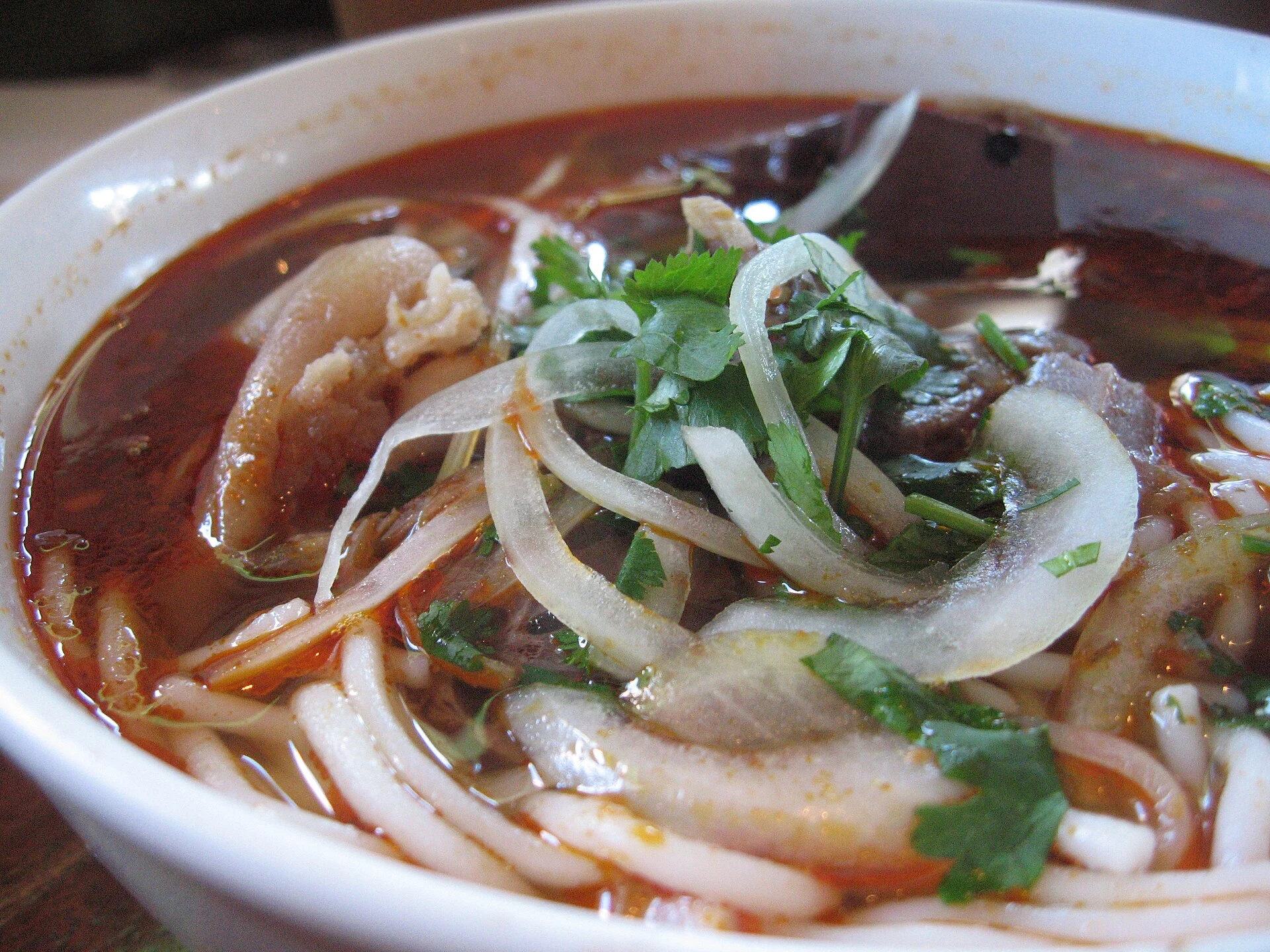
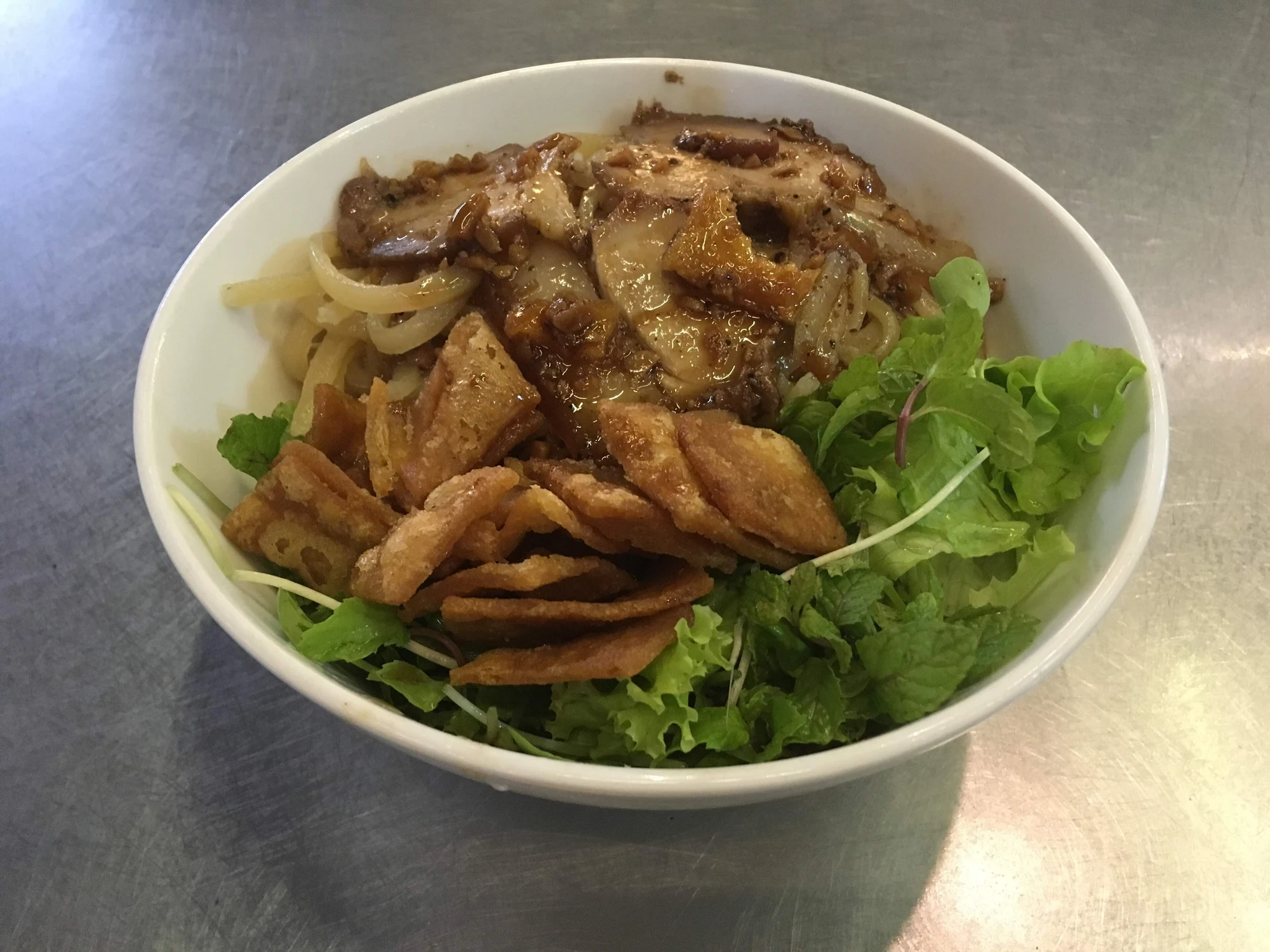
Cơm hến: Hue’s baby-clam rice, and why its islet no longer supplies the clams
Cơm hến is tied to Cồn Hến, the Perfume River islet, yet most clams now come from elsewhere. Learn how the bowl works, what the broth does and who should skip it.
 Cat Ba Connect4 min read
The short answer
Cơm hến is a Hue bowl of cool rice topped with small river clams, raw shredded vegetables, peanuts, pork crackling, shrimp paste and chilli, with hot clam broth on the side. Its name and memory belong to Cồn Hến, an islet in the Perfume River, but press reports say islanders have bought most of their clams from outside since 2000. Expect small portions and real heat. Anyone with a shellfish allergy should skip it, because both clams and shrimp paste are central.
An islet’s name on clams from somewhere else
Cồn Hến, an islet in the Perfume River in the Vỹ Dạ area, gave clams their local fame, and VnExpress still calls clams from there the best. The supply story is less romantic. Pháp Luật reported in 2012 that nearly 40 boats once worked the river daily, with the peak before 1999, and that since 2000 villagers have had to buy from elsewhere, including Vĩnh Tu, Thuận Hòa and above all Quảng Trị. It blamed mechanised harvesting, pollution, sand dredging and the Thảo Long dam, which cut off salt water.
So what survives on the islet is mainly the skill of processing and cooking. That article is more than a decade old, so ask where today’s clams come from. The answer does not lessen the dish; it just corrects the postcard.
The cold rice is the point
The first surprise for many visitors is temperature. VnExpress explains that Hue cooks use overnight rice, a frugal habit of wasting nothing, and a recent article describes the rice as cooled and fluffy, never mushy. The bowl arrives at room temperature, with the hot broth served separately. Treat them as two parts of one dish: you may spoon the broth over or sip it in between, depending on how you want the heat to land.
Around that rice sit the components that make it a composed dish: shelled clams, thin banana blossom, herbs, sour star fruit, roasted peanuts and pork crackling. A plain description makes it sound like a salad. In practice it is closer to a seasoning exercise, and each spoon can be different depending on how much you mix.
How much shrimp paste and chilli to accept
Cơm hến is often assembled for you, and the seasonings can be strong. Sources name chilli paste, mắm ruốc shrimp paste and roasted salt among them. If you are unused to Hue’s heat, ask for less chilli before the bowl is put together, since it is hard to remove afterwards. Say ít cay, then taste before adding anything from the table.
Mắm ruốc has a pungent smell that surprises some newcomers, and it is the savoury base of the bowl, so leaving it out changes the dish. Vegetarians should look elsewhere: pork crackling, clams and shrimp paste are all structural here. Small portions are normal, and VnExpress notes that diners often eat two or three bowls, so order one first and decide after.
When to go, and what recognition it really has
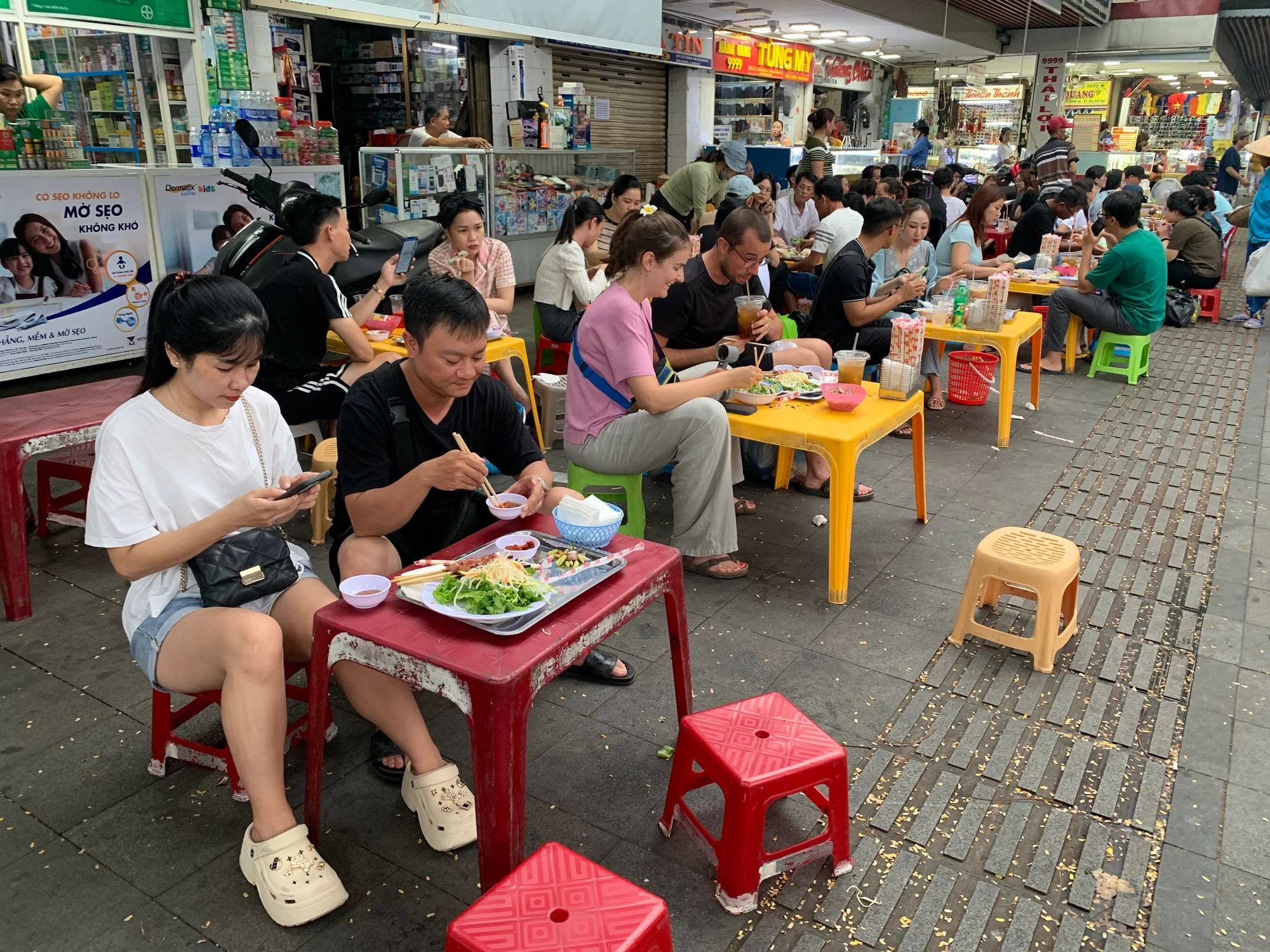
VnExpress described street vendors selling mainly from about 7:00 until noon, with some larger shops open all day, so treat cơm hến as a morning food until you find otherwise. Bún hến and mì hến are common variants if you prefer noodles. Choose a stall with steady custom, so the bowl’s components are not sitting out for long.
You may see heritage language attached to it. On 7 November 2023 the Vietnam Culinary Culture Association listed cơm hến among typical national dishes. As a recent report points out, that is promotional recognition and not national intangible heritage status, a distinction worth keeping, especially as bún bò Huế’s folk knowledge has received such a listing. A proposed Cồn Hến community tourism model, floated in July 2026, was only a study idea.
If you have a shellfish allergy, this bowl is out
The UK’s NHS lists shellfish among the most common food allergens and says that people with a food allergy must avoid the food, including anything containing its ingredients. Its examples are crustaceans such as prawns and crab. Cơm hến holds clams, which are molluscs, and shrimp paste, which comes from a crustacean, so it can affect either form of allergy. Removing the visible clams would not solve that, as the broth and seasonings are part of the dish.
The NHS also advises telling staff about your allergy and treating breathing difficulty or throat tightness as an emergency. If you cannot be sure your allergy is safe here, skip cơm hến rather than negotiate at a busy stall. Hue’s market cakes and vegetarian kitchens offer other ways in, though those need the same questions.

Questions travellers ask
Is cơm hến served hot?
The rice and toppings usually arrive at room temperature, with hot clam broth on the side. That contrast is intended, so taste before you pour the broth over.
Do the clams still come from Cồn Hến?
A 2012 press report said most have been bought in from outside since 2000, especially from Quảng Trị. Ask your vendor, since the current supply may vary.