
Hoang Su Phi in water season: photographing flooded terraces without chasing a date
Hoang Su Phi’s flooded terraces arrive with the rain, usually around late May. How to plan a flexible week, shoot reflections well and behave around transplanting.
 Cat Ba Connect4 min read
The short answer
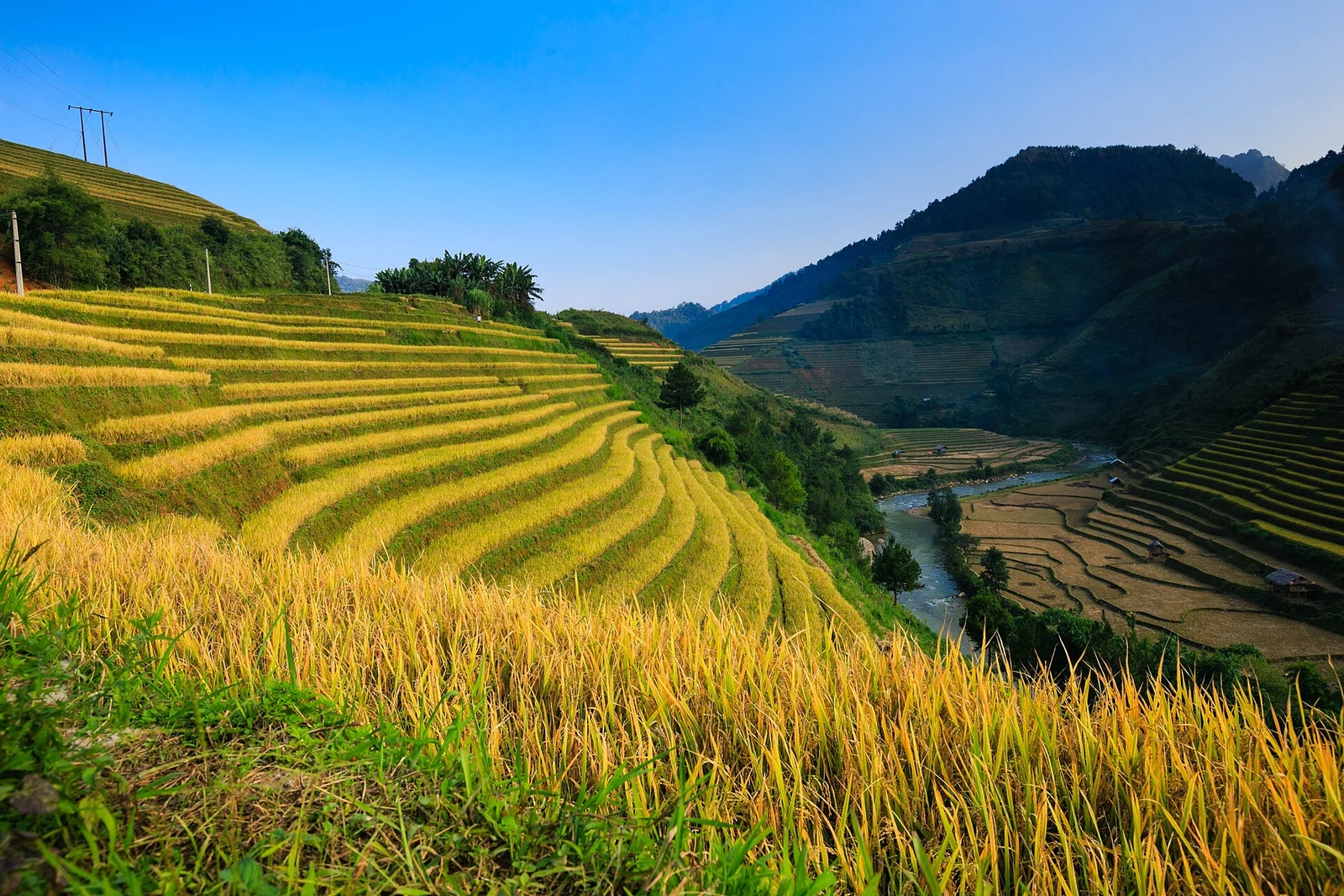
Hoang Su Phi’s water season usually falls around late May to early June, when terraces are filled for transplanting, but the real timing follows the rain and varies by village and height. Book a flexible stay of several nights rather than one date, ask a local host what the fields near you are doing that week, and shoot in low morning or late-afternoon light. Stay out of the fields, and remember these are the busiest weeks of the farming year for the families working in them.
Two calendars that rarely match
A traveller’s calendar has fixed flights. A farmer’s calendar has rain. Bao Ha Tinh gives the water season as about late May to early June, and Tap chi Cong Thuong notes Dao villagers transplanting in May. VnExpress, writing about the northwest in general, says flooding usually spans May and June, and that transplanting comes earlier or later depending on rainfall in each area.
Treat those as a likely band, then add height. The terraces are spread widely, with about 3,720 hectares across the former district according to Bao Ha Tinh, so one slope can be full while another is still dry or already green. The honest plan is to choose a week, not a day, and stay long enough for your week to contain something worth seeing.
Choosing a base from a protected list
About 1,380 hectares in 11 communes hold national scenic recognition, again from Bao Ha Tinh. Bao Lao Cai lists those communes, including Ban Phung, Ban Luoc, San Sa Ho, Ho Thau, Nam Ty and Thong Nguyen, and dates the rankings to 2012 and 2016. Tap chi Cong Thuong singles out Ban Phung as the best place for flooded terraces, with Dao stilt houses among the fields.
Those are useful names, but check them before booking. Vietnam reorganised its local administration in 2025, so a commune on an old list may now be labelled differently on a booking site or map. Give your host or driver the village name and ask which ward or commune it falls under today. A base with several nearby slopes at different heights gives you more chances than a famous viewpoint alone.
Making reflections work
A flooded terrace is a mirror, and mirrors depend on angle. Tap chi Cong Thuong describes the morning scene as soft curves holding cloud and sunrise light, and the late afternoon as gentler. The practical reason is simple: a low sun and a bright sky give the water something to reflect, so stand on a path above the plot and look across it, not straight down.
Try a short telephoto to compress several levels of curves. On a dull day, expose for the sky in the water, and let the bund lines become dark contours. Look for a scene where plots are at different stages, because a mix of mirror, fresh seedlings and bare earth has more depth than one uniform sheet. A polariser can remove the reflection you came for, so check it as you turn it. Any tripod should stay on the track, not on the banks.
These are people’s hardest weeks
Nung, Dao and La Chi communities are credited by Tap chi Cong Thuong with shaping these terraces over centuries. In water season you are a guest in the middle of their workload. Bunds are often rebuilt or freshly wet, and a single step can open a leak that a family must fix. Stay on tracks your host uses, go single file, and never walk a bank to reach a viewpoint.
Ask before photographing anyone working, and take no for an answer. Do not call people to look up or to pose with a buffalo. Bao Ha Tinh also mentions agricultural rites such as ceremonies for the rice spirit and for forest and land gods; if you come across one, keep your distance unless invited. If you hire a local guide or eat at a local house, you put a little money directly into the system you are enjoying.
Weather caveats for a rain-driven scene
The scene depends on rain, so accept wet roads as part of the deal. Mountain routes may get muddy or close, so ask your host about the current state of the road before each day’s drive, and treat any fresh earth on a slope as a reason to turn around. Leave a buffer day before any onward flight.
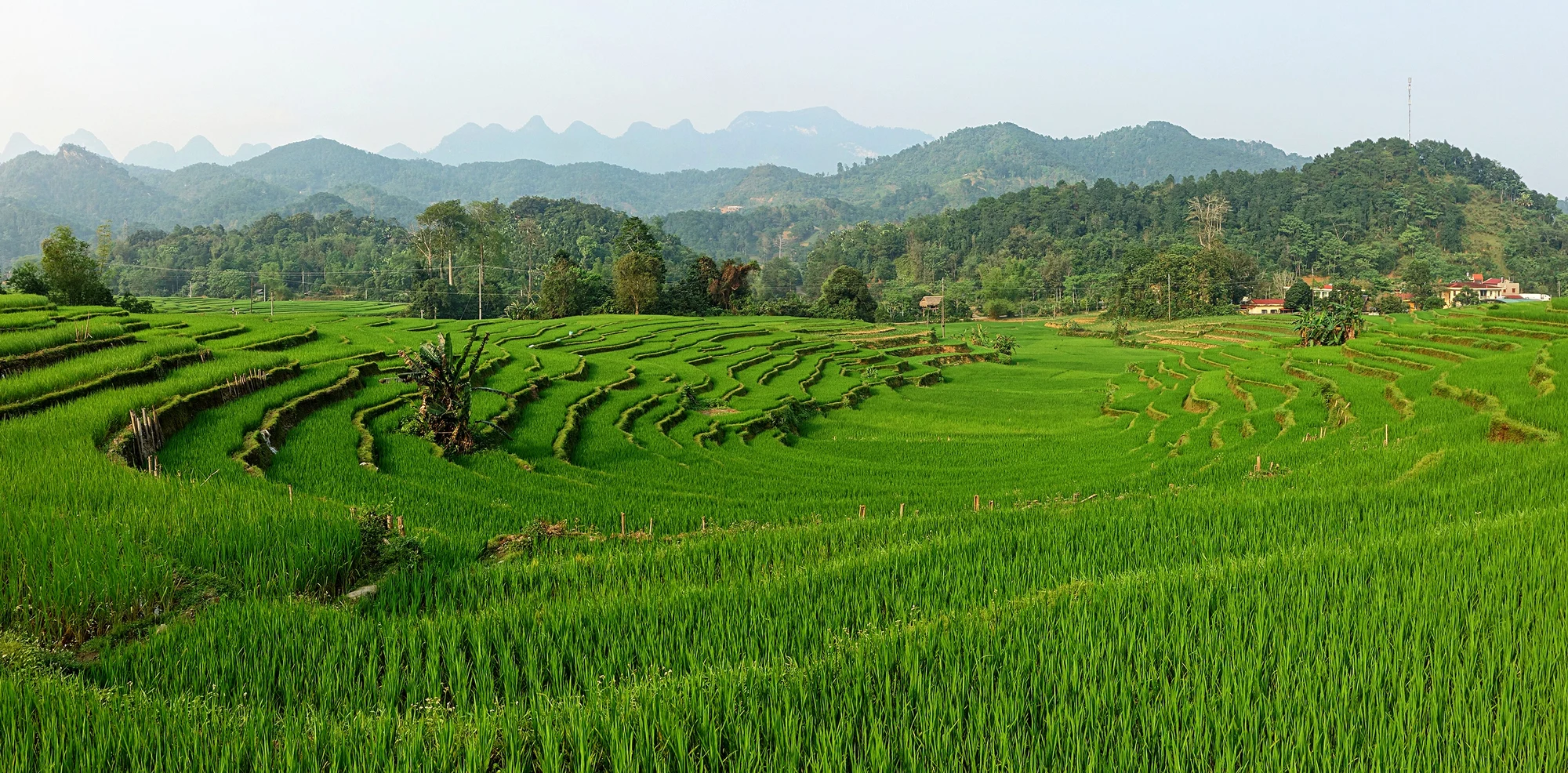
If you miss the mirrors, stay anyway. Young green rice has its own beauty, and Bao Ha Tinh gives late September to early October for ripe rice if you would prefer to return. The Hoang Su Phi harvest guide on this site explains that second window, with the same caution about dates.
Questions travellers ask
What month is best for flooded terraces in Hoang Su Phi?
Late May to early June is the usual band, but rainfall moves it from year to year. Check with a host close to your trip, and stay several nights to widen your chances.
Can I walk on the bunds for a better photo?
No. During water season, bunds hold the water for transplanting, and foot pressure can cause leaks. Shoot from tracks, and ask your host where it is fine to stand.