Ho Thi Ky after dark: a working flower market and its Cambodian-Vietnamese food lane
Hồ Thị Kỷ joins Saigon’s big flower trade to a food alley built by Vietnamese families from Cambodia. See when each side wakes and what to eat at which hour.
 Cat Ba Connect4 min read
The short answer
Hồ Thị Kỷ is two markets sharing one maze of alleys: a wholesale flower trade that VnExpress says takes deliveries from around 23:00, and a food lane shaped by ethnic Vietnamese families who came back from Cambodia in the 1970s. Most stalls are busiest from late afternoon. Bún num-bo-chóc, the Khmer-style noodle dish, is mainly a morning food. Go on foot, expect narrow lanes and treat every listed time as a guide rather than a promise.
Two clocks in the same alleys
A map shows one place. In practice this is two businesses on different schedules. VnExpress says flower shipments begin arriving around 23:00, while most food stalls are busiest from about 16:00 until nightfall. Vietnam Airlines’ guide calls the flower side a round-the-clock market and the food street busiest from 15:00 to 23:00. MIA gives the market as 15:00 to 23:00.
Those times are not an official timetable. Znews found in 2017 that the market had no management board, which helps explain why nobody publishes one. The practical reading is that late afternoon to evening suits eating, late night suits watching flowers arrive, and holidays run around the clock. Znews says trade goes day and night at festival time, and that streets get badly jammed.
Where the Cambodian name comes from
The nickname chợ Campuchia, or phố Cam, is not a marketing label. VnExpress reports that ethnic Vietnamese returning from Cambodia after the political upheaval of the 1970s were temporarily resettled around the Pétrus Ký area, and founded this market, officially called Lê Hồng Phong market. Today the second generation mostly runs the stalls. One vendor recalled arriving in 1970 to a muddy, rat-infested settlement; another continues her mother’s chè stall, moved from Cambodia.
Vietnam Airlines’ guide frames the arrivals as people fleeing genocide, and VnExpress puts it more generally. Either way, this is a community’s history and not a theme. These families are Vietnamese with a Cambodian past, so use that framing in conversation rather than calling it Khmer town.
What to eat, and at what hour
The dish to plan around is bún num-bo-chóc, a turmeric-yellow noodle soup. MIA describes a broth of snakehead fish bones and fermented shrimp paste, with herbs and flowers on top, and VnExpress says most ingredients are brought from Cambodia. It is sold roughly 6:00 to 10:00, so an evening visitor will miss it. That single fact divides this market into two trips.
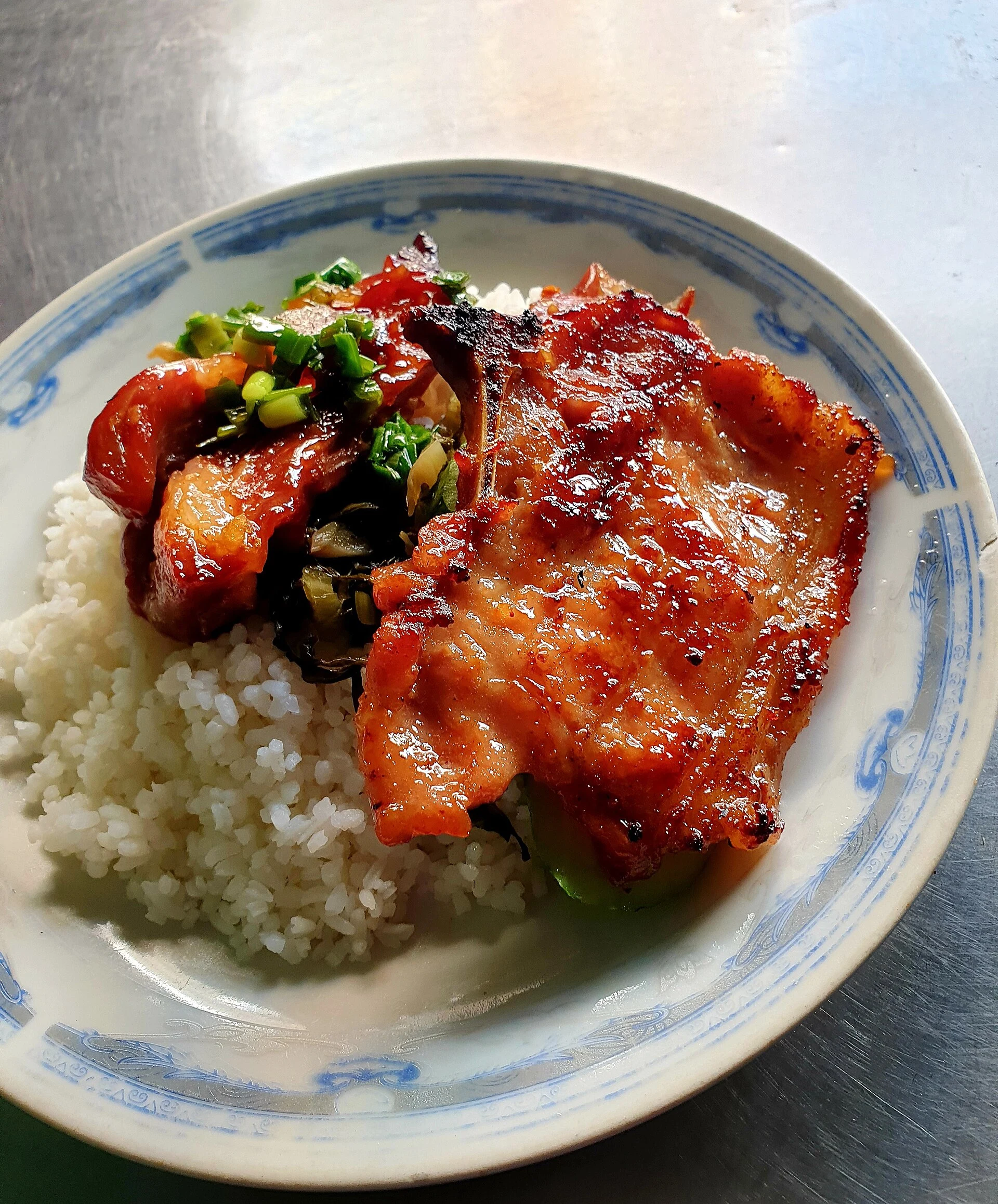
The afternoon offers chè with pumpkin flan, sago and palm sugar; MIA lists one stall at 9:00 to 15:00. Grilled bananas, Cambodian sausage, and grilled beef with lemongrass and garlic also appear in the guides. VnExpress mentions dried Tonlé Sap fish and sầu đâu leaves for take-home cooks. Those with fish, shrimp or peanut sensitivities should ask, since fermented pastes run through this cooking.
Reading the flower trade
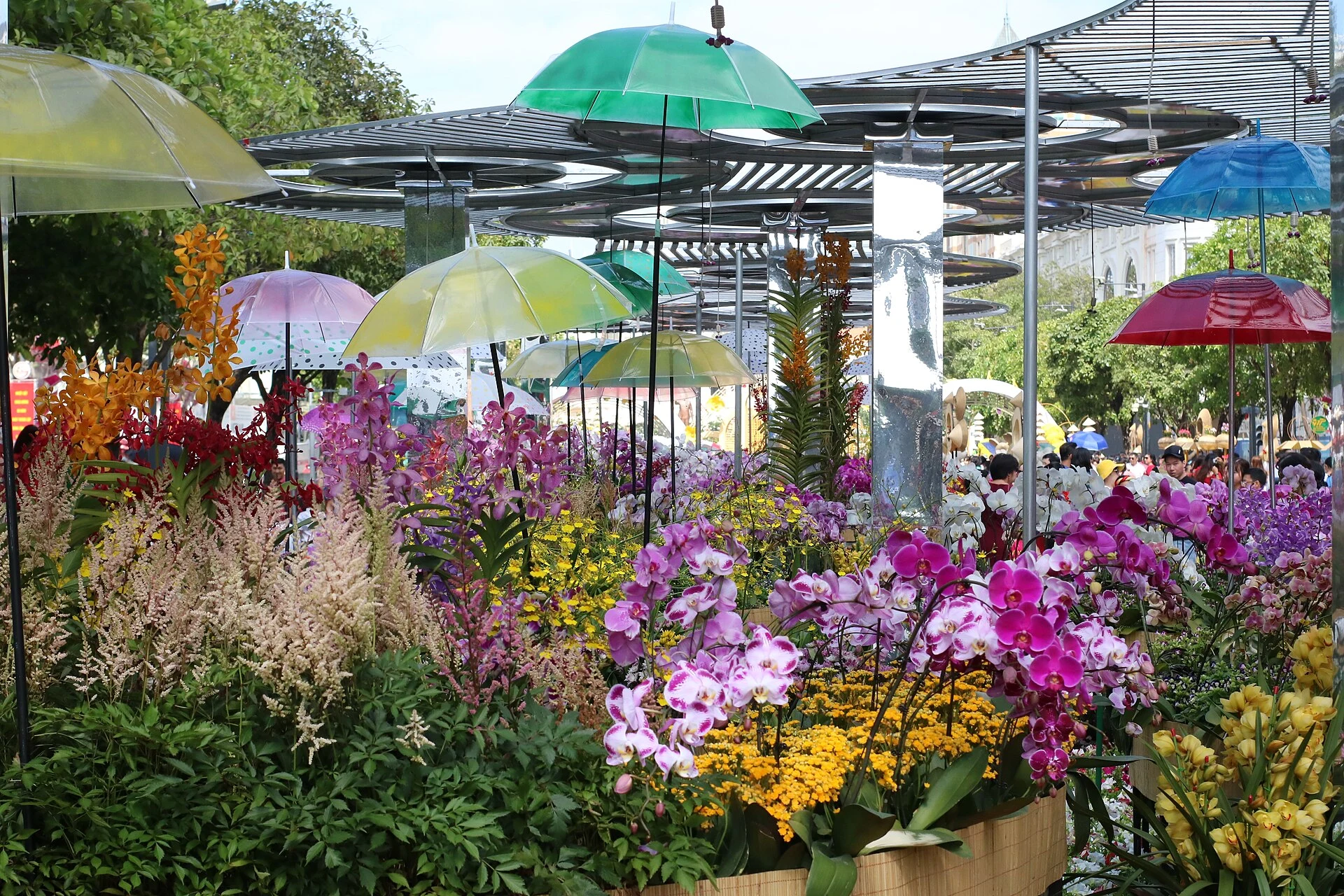
The flower market has its own uncertain origin dates. Znews says 1987, VnExpress describes about ten vendors in the 1980s with a district reorganisation in 1988, and Vietnam Airlines says 1970. What they agree on is the supply line: flowers come from Đà Lạt and the Mekong Delta, and Znews adds the north and centre. By VnExpress’s count, more than 100 flower and accessory shops now line Hồ Thị Kỷ.
Treat it as a wholesale floor. Znews described stalls spreading over pavement and carriageway until the road nearly vanished, with buyers’ motorbikes parked in front. Step aside for anyone carrying stems, and do not touch displays. Vietnam Airlines suggests arriving before 10:00 for fresh blooms and photographs, a different visit from the night-time one, and much calmer.
Getting in, and keeping expectations modest
VnExpress describes two main ways in: from Lý Thái Tổ along Hồ Thị Kỷ, or through alley 374 on Lê Hồng Phong. Vehicles can enter, but the alleys are narrow, so park outside and walk. VnExpress mentions parking attendants at both ends, and Vietnam Airlines estimates a three to six-minute walk in from the main roads.
The market’s future is less certain than its popularity. In 2017, Znews reported a proposal from the Bình Điền wholesale market company to move some wholesale markets, including this one, out of the city, a plan traders opposed. We found no decision on that, and you should check recent local news if a visit depends on it. Bring cash in small notes, and arrive hungry but not in a rush.
Questions travellers ask
When should I go to Hồ Thị Kỷ?
Go in the late afternoon or evening for the food stalls, and before about 10:00 for flowers and bún num-bo-chóc. Times vary between sources, so treat them as a guide.
Is Hồ Thị Kỷ Cambodian?
It is largely a community of ethnic Vietnamese families who returned from Cambodia in the 1970s, and their children. Cambodian foods and ingredients are sold there, alongside other Asian dishes.