Hanoi’s tree streets: a shaded French Quarter walk that reads the canopy
A self-guided French Quarter walk that reads Hanoi’s street trees: sấu, sao đen and milk-flower trees, what the city’s new tree plan means, and why dates mislead.
 Cat Ba Connect4 min read
The short answer
Walk Hanoi’s French Quarter by looking up. From Hoan Kiem, head south through streets known for particular trees: sấu on Tran Hung Dao, flame trees on Ly Thuong Kiet, milk-flower trees on Nguyen Du and sao đen on Lo Duc. Each street has its own species and its own shade. Do not time the walk to a leaf-fall date, since published accounts disagree, and leave your plan loose. Go early, carry water, and notice how a 2026 city plan aims to give each street one main tree.
Why one street, one tree is a story worth reading
Hanoi’s avenues have long been planted species by species, and in October 2026 that habit became policy. Tien Phong reports that a city decision, number 5008, approves a scheme giving each route a leading species, with central streets sorted into six landscape groups. The same report counts more than 8,000 old trees in the historic inner city and sets a target of over 10 square metres of urban green per person by 2030.
For a walker this turns an ordinary street into a question: is this row the old planting, or the plan? Sidewalk saplings next to giant trunks are the visible edge of that decision. Coverage of the scheme also notes that healthy old trees should be kept and that ageing ones would be replaced gradually to avoid a sudden loss of shade.
A loose route through five canopies
This is a suggested order rather than a measured itinerary, so check it on a map and shorten it freely. Begin at Hang Khay on the south side of Hoan Kiem, where the city scheme names lộc vừng, sấu and crape myrtle among the lead trees. Move south along Ba Trieu, another street in the plan for sấu and lộc vừng, then onto Tran Hung Dao, where VnExpress describes sấu rows more than a century old. Step across to Ly Thuong Kiet, known in the same article for its rows of flame trees.
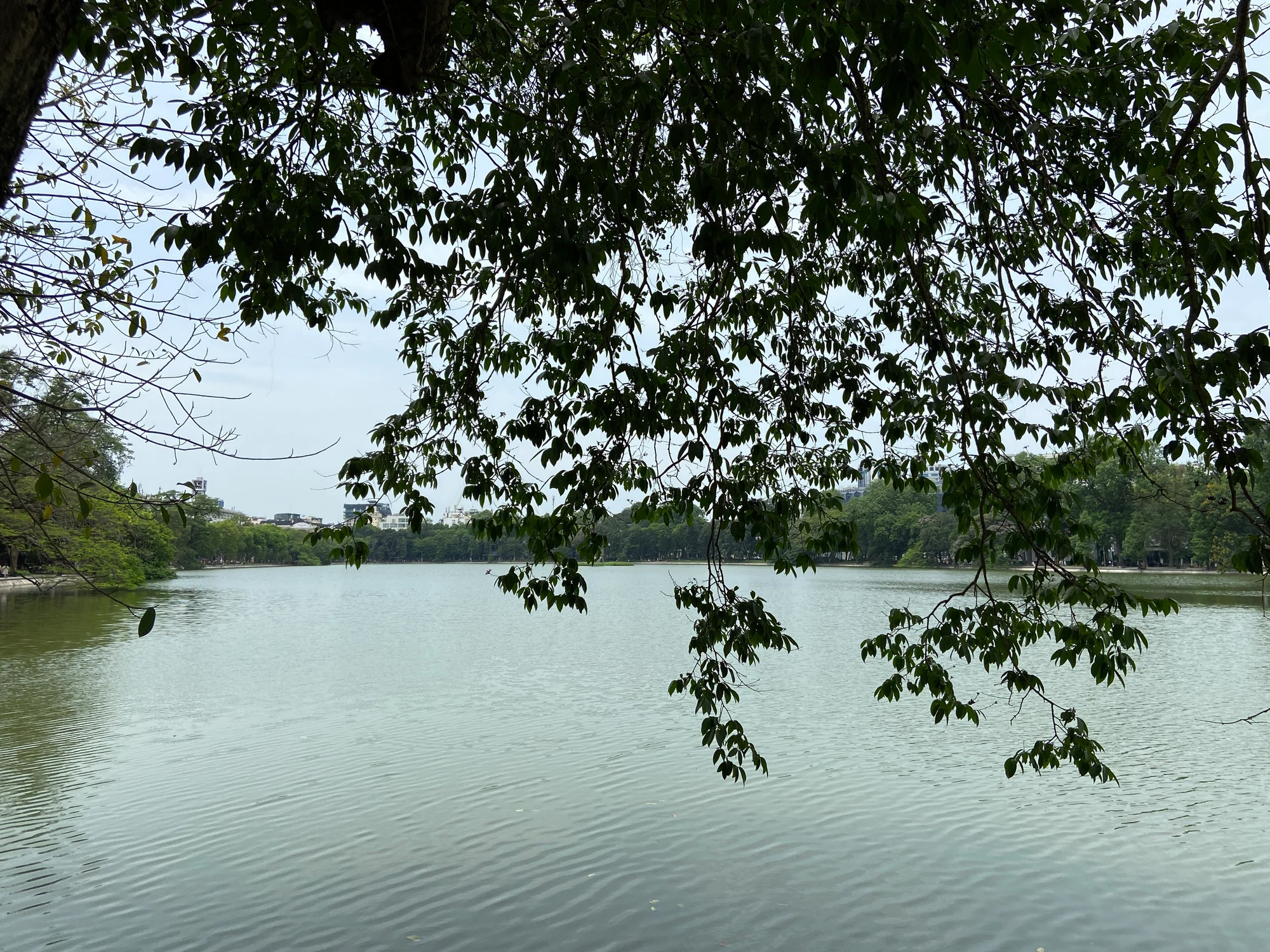
Continue to Nguyen Du for the milk-flower trees and, for the last stage, Lo Duc, which Tien Phong describes as lined with century-old sao đen. If the heat or traffic wears you down, stop after Nguyen Du. Thien Quang lake sits beside the street and makes a natural pause.
Telling the trees apart from the pavement
Start with the trunk and the ground. Under a sấu, the Indochina dragonplum, look for fallen fruit in season: Vietnam News gives June to September for harvest. Lift your eyes to a tall, straight, dark tree on Lo Duc and you have sao đen. A milk-flower tree, sữa in Vietnamese, has its leaves in whorled fans; it is also the street tree with a controversy, since very dense plantings of it are slated for gradual replacement. Phượng on Ly Thuong Kiet are the feathery-leaved trees that turn red when in flower.
Bring a free plant-identification app if you like, but check its answer against the street’s reputation. Apps are poor at leafless trunks.
Dates that refuse to line up
Writers love Hanoi’s leaf seasons, but they do not agree. Dan Tri’s English edition describes sấu leaves falling for about a month from early April. Vietnam News writes of them dropping at the end of August and in early September. Both are describing real scenes in different years and streets, and a tree’s timing can move with the weather, so this guide offers no fixed bloom or leaf date.
That turns out to be useful. A row half-bare and half-green tells you more about a tree’s rhythm than a postcard moment does. Ask a shop owner under the trees what they last swept up; it is a good small-talk opener and a better forecast than any calendar.
Walking comfort, and a detour worth a taxi
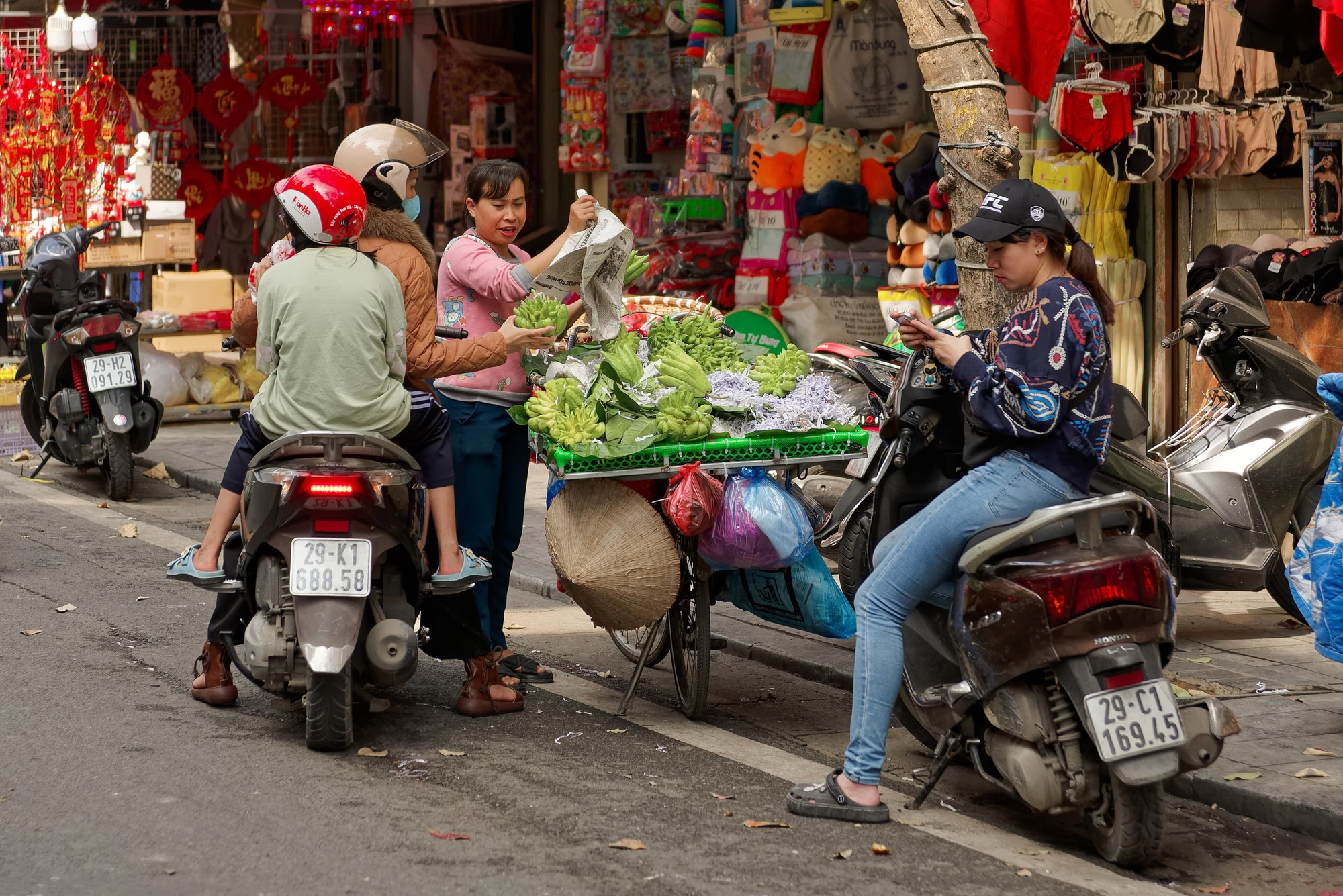
Shade does not cancel Hanoi’s heat or its motorbikes on the pavement. Morning is kinder, and cafés give you an excuse to stop. Watch your footing, because roots lift paving and parked bikes push walkers into the road. Stay well back from storm-damaged limbs after bad weather.
If this walk gives you an appetite, take a taxi to Phan Dinh Phung, the street most often named for sấu. Tien Phong says the plan keeps sấu from Mai Xuan Thuong to Cua Bac and nhội from Cua Bac to Hang Dau, so the species changes along a single road. Stand at that junction and you can see the city’s tree thinking from one spot.
Questions travellers ask
When do Hanoi’s sấu leaves turn?
Published accounts conflict, with some pointing to April and others to late August or early September. Treat any date as a rough guide and enjoy whatever stage you find.
How long is this French Quarter tree walk?
It is a loose suggestion rather than a measured route, so check the distance on your map app. You can stop after any street, since each works alone.