Suitcases and tenders at Ha Long ports: packing around the gangway
On a Ha Long cruise your suitcase may meet a van, a lounge, a tender and a gangway. What one operator does with bags, and what to pack and ask before you board.
 Cat Ba Connect4 min read
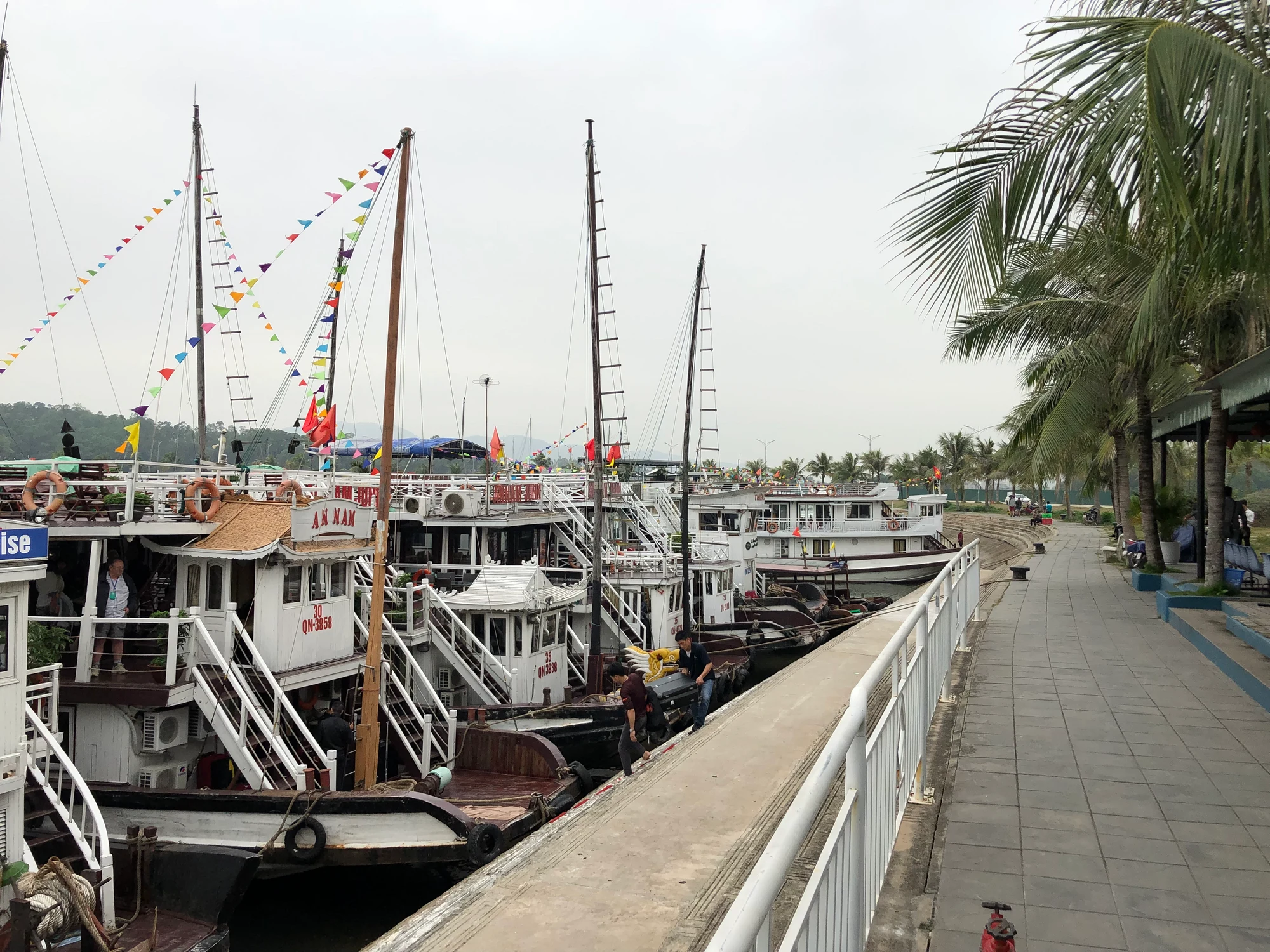
The short answer
A suitcase on a Ha Long cruise usually has to survive four stages: the van, the terminal, sometimes a tender, and the step onto the ship. One operator says its crew tag bags at check-in and take them to the cabin, but that is not a port-wide rule, so ask yours. Keep a small bag on you with passport, medicine and swimwear, because a tagged case can reach your cabin after you do. A small suitcase is plenty for one night.
Four stages, four questions
Think of the journey as a chain. The van: does your case fit with those of the other passengers, and does it travel with you? The terminal: is there a lounge where bags are tagged? The small boat: is there a tender to the main ship, or do you walk aboard from the pier? The gangway: are there steps or a gap?
The related Ha Long terminal guide explains why the name of the port matters. Here the focus is the bag. Ask each of those four questions by name; the word transfer in a brochure answers none of them.
What one operator actually says
Bai Tho Junks publishes unusually clear timings: port arrival around 11:30 to 12:00, boarding around noon and departure from 12:30 to 13:00, with its crew tagging bags during check-in and moving them to the cabin. It also tells guests to keep essentials in carry-on luggage. On that model, you will not see your case between the lounge and the room, which is a reason to keep your medicine with you.
Treat that as a useful example, not a standard. Ask your own operator whether it handles bags the same way, and which ship and pier it applies to.
Packing around the gap between boat and ship
A tender step is the place you want both hands free. So the case should be something a crew member can lift without drama, and your own bag should sit on your back rather than in your arms. Hard four-wheel spinners are at their worst here: wheels are no help on a boat deck. If you own a soft holdall, this is its moment.
Bai Tho advises a small suitcase or backpack for a two-day, one-night cruise and says guests are often surprised how little they use. Add a waterproof bag for kayaking and a small backpack for excursions, and leave the rest in Hanoi.
The time cost of a late bag
Luggage matters most when you are running late. Bai Tho says boarding risk rises after noon, and that departures follow schedules set by the harbour authority, not by individual guests. A special tender after the ship has left needs approval from the bay authority and usually costs extra, and if none is possible the booking may count as a no-show.
So do not leave a hotel with an open suitcase or stop to reorganise bags on the road. If you are moved to a later van by a shop stop or a slow hotel checkout, call the operator at once rather than at the pier.
Going ashore with the case again
The way back has its own trap. Bai Tho’s timetable has check-out around 9:00 to 9:30 and a return to harbour around 10:45 to 11:15, so cabins may be cleared well before you land. Pack the night before, keep one layer and your documents out, and place the case by the door when the crew ask.
At the harbour, identify your bag yourself before the van is loaded. If you are staying in Ha Long or heading to Cat Ba rather than Hanoi, tell the operator on board. Your bag follows the van you are booked on, and a change of plan is easier to fix at sea than in a car park.

Questions travellers ask
Do crew carry luggage onto Ha Long cruise ships?
Some do. One operator says crew tag bags at check-in and take them to cabins. It varies, so ask yours before you travel.
What size bag should I bring on a Ha Long cruise?
One operator suggests a small suitcase or backpack for one night, plus a small bag for excursions. Soft bags are easier on boats.