Cool-season light on Ha Long Bay: how to photograph low cloud from a cruise deck
Winter on Ha Long Bay brings low cloud, soft light and cold decks. How to choose a cabin side, protect gear in damp air and shoot grey karst without a blue sky.
 Cat Ba Connect4 min read

The short answer
Accept that a winter Ha Long cruise will probably be grey and photograph it on those terms. Vietnam Tourism describes the bay as misty and cloudy from December to March, and January can be properly cold. Soft cloud suits layered karst, silhouettes and long tonal bands, so frame peaks in overlapping rows and use boats for scale. Bring batteries, a dry cloth and warm layers. Ask which deck stays open, and do not pay extra for a cabin side, since a boat’s heading changes.
Why grey is a gift to this subject
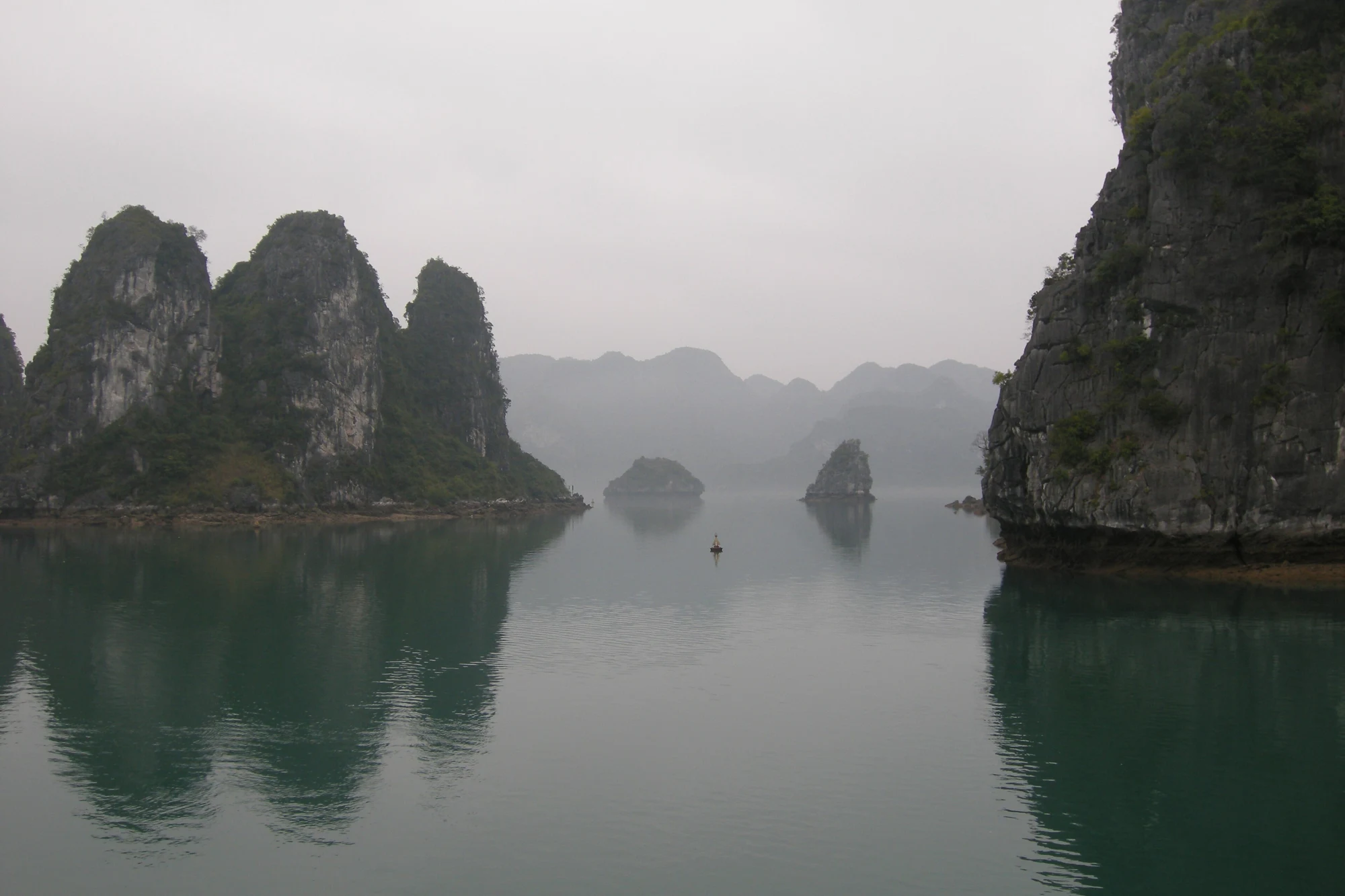
Blue-sky Ha Long can look harsh: dark rock against bright water, with deep shadows on every face. Cloud acts as a giant diffuser. It separates ridges into paler and paler layers, each one a step further away, and that is the depth that makes a limestone bay feel endless. Vietnam Tourism says as much in passing, noting that mist can give the karst a more mystical look, although the same page warns that winter is cloudy and that January can be frigid.
So set your expectations before you board. This site’s guide to rainy cruises separates visibility from operating conditions, and that matters here too. A low cloud base will not usually stop a sailing, but wind or official orders can. Nobody can tell you in advance whether you will get ten layers of ridges or just two, or none.
Composing for layers, not for colour
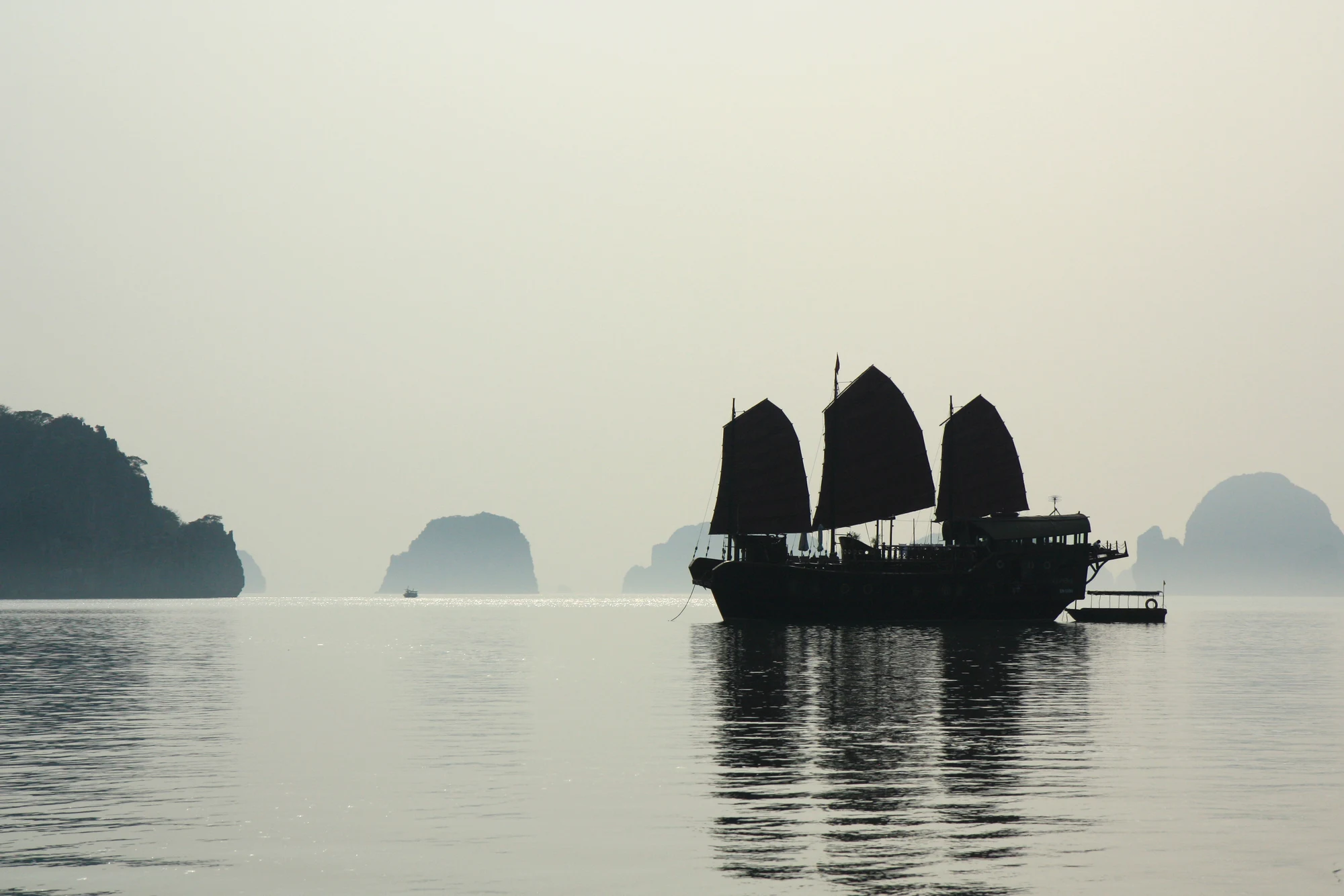
Without colour, shape does the work. Look for rows of islands overlapping at different distances, and shoot them with a mid-telephoto so that the rows stack up. Place one dark foreground element, perhaps a nearer island, a junk or a kayak, against the pale background. Horizon lines are hard to see in haze, so check yours is level, and try a square crop in your head.
Try black and white, even on a phone. The scene is nearly monochrome already, and converting it removes the slight greenish cast of winter water. A long exposure from a moving boat will not work, because the deck never stops moving. Use a shutter speed of about 1/250 second or faster, and raise ISO without guilt. Noise bothers far fewer people than blur does.
The deck is a working platform
Boats move on a fixed route, so you will rarely choose your angle. Ask the crew which outside decks remain open in cold or wet weather and when the boat sails through the narrower channels, since these are the best moments for nearby rock. Be up on deck before those passages. A cabin “side” is a weak thing to pay for. The ship turns, moors and swings on its anchor, so any promise of “karst views from the left” is likely to fail by morning.
Stay safe and considerate. Wet decks are slippery, and rails are not tripod mounts. A tripod is often useless anyway because of vibration, so brace your elbows on a solid surface and let the engine’s vibration be your signal to use a fast shutter speed. Keep walkways clear for crew.
Damp air and cold batteries
Moisture is the main hazard for your kit. Going from a warm cabin to a cold deck is fine, but coming back in will fog your cold lens and sensor chamber within seconds. Before heading indoors, seal the camera in a plastic bag or a zipped pouch and let it warm slowly. Keep a dry microfibre cloth in a sealed bag, and a second in reserve for when the first gets damp.
Carry spare batteries in an inside pocket, and rotate them, because cold saps charge. A phone in a cold hand drains fast as well. Top everything up in the cabin at night; check what power your boat provides, as the plug supply varies by vessel. A simple rain cover or even a shower cap protects a camera during brief showers.
If visibility drops to almost nothing
Some days the bay disappears. Move your attention closer. Rope, wet teak, condensation on a window with a vague shape behind it, tea steam, crew at work with their permission. The cave stop gives you a subject that no weather can spoil, with lighting of its own, so ask whether your boat’s route includes one and follow the guide’s rules on the steps.
Early morning remains the best hope for a thinning layer. Be on deck before breakfast, with coffee. If you cannot take a good image, stop trying and watch instead; the sound of a winter bay with the engine off is worth an hour. An enclosed lounge with big windows becomes your real viewing platform on the worst days.
Questions travellers ask
Is it worth taking a Ha Long cruise for photos in winter?
Yes, if you like soft light and layered shapes. If you need blue water and sharp sun, Vietnam Tourism points to April to June or September to November as better bets, though nothing is guaranteed.
Which cabin side is better for photographs?
Neither is reliable, since the boat turns and swings at anchor. Choose your cabin for comfort, and use the outside decks for photographs.