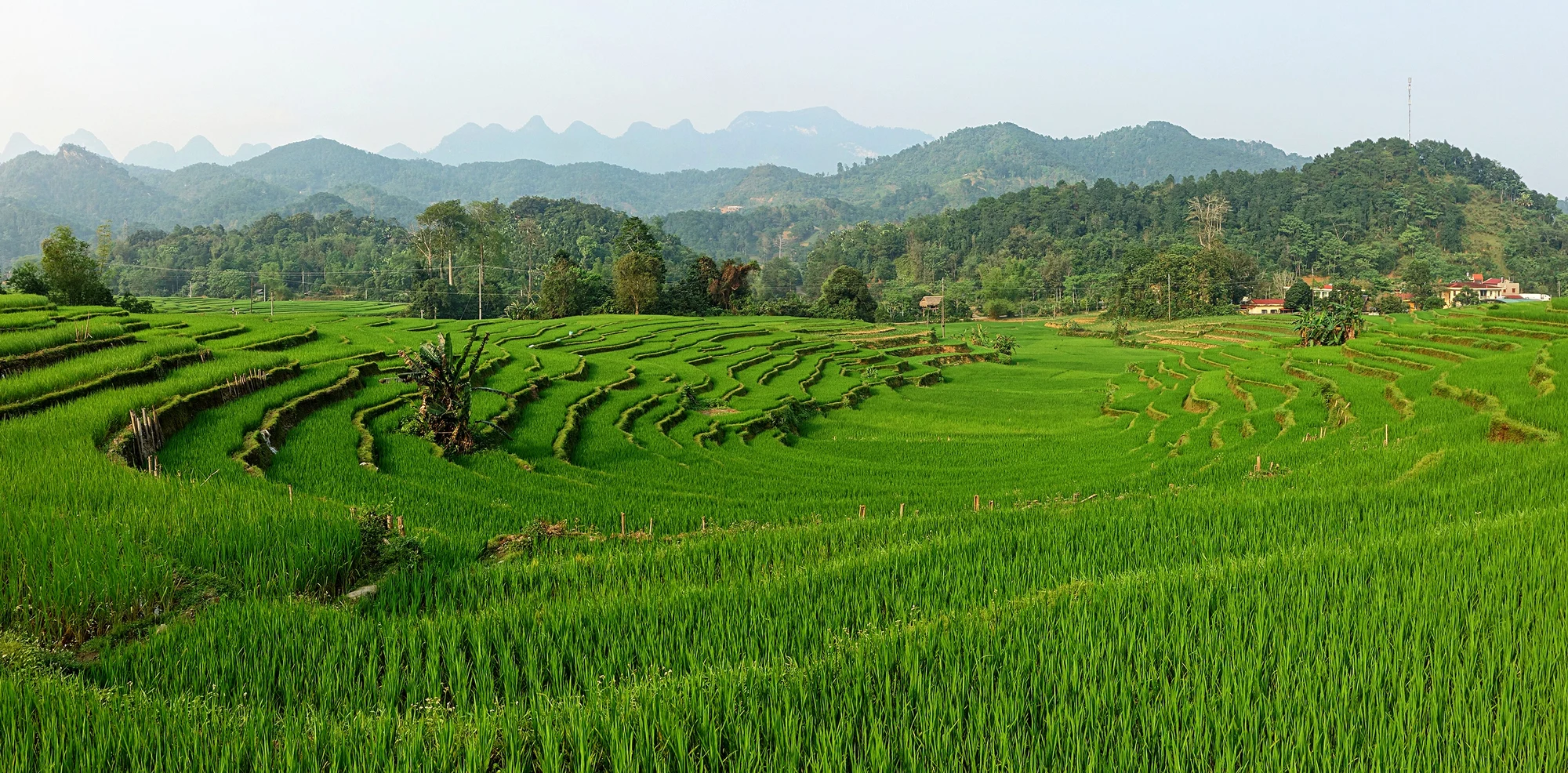
Shan tuyết tea in Ha Giang: old trees, high ridges and a harvest you should not disturb
Ha Giang’s Shan tuyết tea comes from old upland trees around Tây Côn Lĩnh. See what the age claims can and cannot prove, and how to buy from cooperatives.
 Cat Ba Connect4 min read

The short answer
Shan tuyết is a highland tea from old trees on Ha Giang’s ridges, especially around Tây Côn Lĩnh and Hoàng Su Phì, picked mainly by Dao and other upland communities. Age claims vary widely, from 50 to more than 500 years, and are rarely documented tree by tree, so treat them with care. Buying from a named cooperative with OCOP-rated products is the safest route. If you visit, ask first: these trees are someone’s income, and a harvest morning is no place for a photo stop.
Why the name matters on a misty ridge
Shan tuyết is a local name, with tuyết meaning snow, and the buds carry a white fuzz that Việt Nam News notes on the leaves here. That visible down is the feature to look for in dry tea, because it is one thing you can check for yourself. The other is altitude. Phìn Hồ village sits at 1,500 to 2,000 metres near Tây Côn Lĩnh, according to the same report, and old trees above 1,000 metres remain the main income for nearby communes.
VnBusiness describes the trees as growing naturally, and Việt Nam News speaks of natural trees surrounded by fog. This is a different picture from a clipped lowland tea garden, and it is also why access needs asking.
How old is old? Read the numbers sceptically
Tree-age claims are the shakiest part of this subject, and they are also the sales pitch. VnBusiness reported in 2021 that Hoàng Su Phì alone had over five million trees more than 300 years old, with about one million over 500 years. VietNamNet, on Tây Côn Lĩnh’s peak in 2023, gave a far more modest 8,700 ancient trees aged roughly 50 to 400 years. Different areas and definitions may explain some of the gap, but figures on this scale deserve caution.
We did not find a published method dating individual trees. So when a label says 500-year tea, you are reading tradition or marketing, not a measured age. Ask how the age was established. A thick trunk tells you a tree is old without telling you how old, and that may be enough.
From cheap buds to five-star packets
The economic story is more concrete than the botanical one. Việt Nam News reported that fresh buds once fetched only 5,000 to 6,000 đồng a kilo, and that Dao households near Tây Côn Lĩnh formed cooperatives over the following decade. By 2023 the district counted eight cooperatives, 20 large facilities and some 300 household workshops, with income around 35 million đồng per hectare.
The Phìn Hồ cooperative is the named example. Formed by Red Dao households, it took its green and black teas through the national One Commune One Product scheme, and they earned five stars in 2020. OCOP is a rating of a product and producer, so a star tells you someone reviewed the packet. It does not certify the age of a tree or the current batch, so check the date.
Buying without being fooled by a good story
VietNamNet gave prices in 2023 of about 300,000 to 700,000 đồng a kilo for traditional Shan tuyết in Phương Độ, and 450,000 to 900,000 đồng per 100 grams for pu-erh. Those are dated and local, but the gap explains why buzzwords get attached to packets. A cheap brick stamped with old-tree language should prompt a question.
Ask who made it, which commune it came from and when it was picked, and look for a cooperative’s name and an OCOP mark, then check it matches the product. Look at the dry leaf for fuzz. Keep your purchase modest and packed against damp. If you carry it home, check your country’s rules on plant products, and expect that a roadside bag without any of this information is just that.
Visiting a harvest as a guest
Tây Côn Lĩnh draws visitors with its rhododendron forests, VietNamNet says, and 15 households in Phương Độ run community tourism. That is the right door to knock on. Arrange a visit through a homestay or cooperative, so that someone expects you and a local is walking with you. The sources we opened give no reliable harvest calendar, so confirm the timing locally.
Once there, follow simple rules. These trees are private income, so do not climb them, break branches or pick buds for a photograph. Keep to paths, ask before filming, and stay out of a workshop unless invited. If people are picking, keep your distance and let them work. This pairs well with an autumn trip to Hoàng Su Phì’s terraces, which this site covers separately.
Questions travellers ask
Are Ha Giang’s Shan tuyết trees really 500 years old?
Some claims say so, but published figures vary widely and we found no method dating individual trees. Treat a stated age as tradition or marketing unless the seller can explain it.
What does an OCOP star on tea mean?
OCOP is a Vietnamese product rating. It shows a product was reviewed, and Phìn Hồ’s teas earned five stars in 2020. It does not prove a tree’s age or a batch’s origin.