Maize in rock pockets: reading the farmed karst of the Dong Van plateau
The green specks between grey rocks on the Dong Van plateau are fields. How rock-pocket maize works, why water is the limit and why you should stay out of the plots.
 Cat Ba Connect4 min read
The short answer
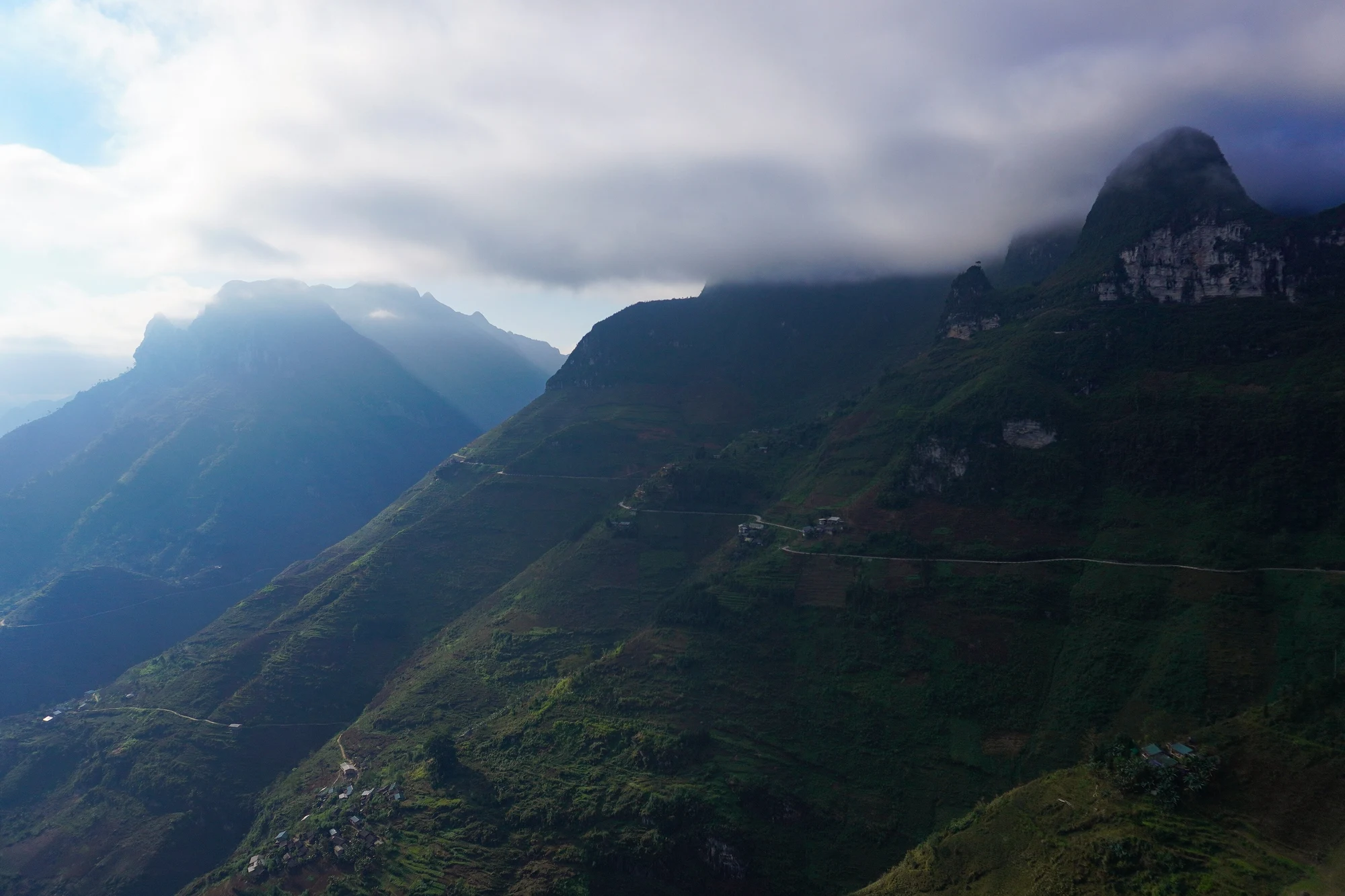
Those grey slopes on the Dong Van plateau are farmland. Mong families stack stones into walls to hold soil, carry earth up by hand to fill pockets in the rock, and plant maize that depends mainly on rain. The knowledge is listed as national intangible heritage. Because water drains straight into the limestone and soil is scarce, each pocket represents years of work. Read the walls from the road, ask before you walk near any plot, and keep off the ground even when it looks like empty stone.
First, learn to see the field
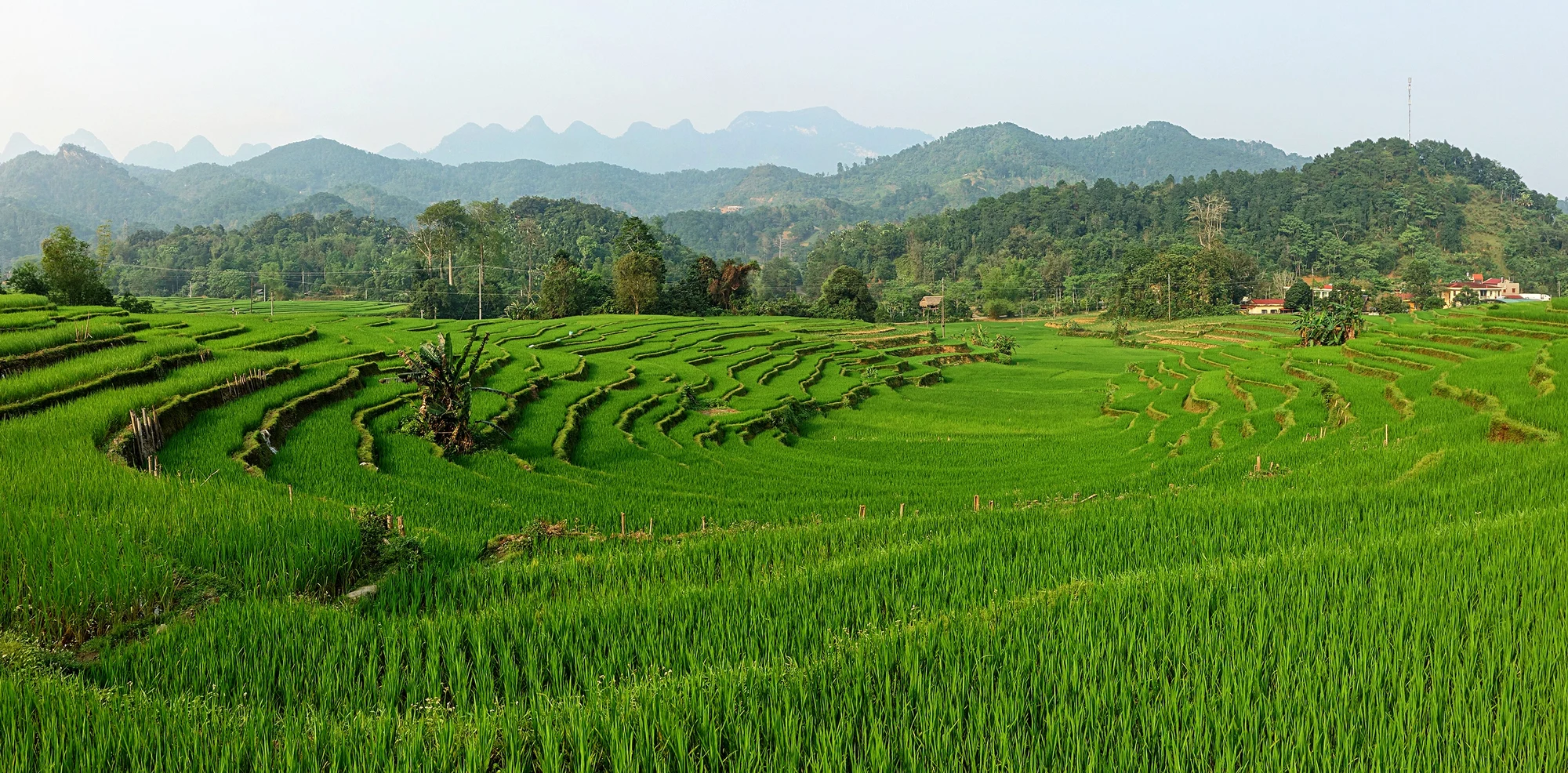
Viewed from a loop road, the plateau looks like a stone sea with accidental weeds. Look longer and the pattern appears: small tufts of green in a regular spacing, low lines of stacked rock, and tiny plots that climb far higher than seems reasonable. That is a field system. Decision 2684 of the culture ministry, dated August 2014 and reported by Bao Phap Luat, placed the knowledge of rock-pocket farming on the national intangible heritage list, covering the four plateau districts.
The geopark explains why the rock looks this way; this practice explains how people live on it.
How a pocket gets built
The technique begins with stone, because stone is what is available. Bao Phap Luat describes farmers clearing a slope in spring, from the bottom upward, then stacking rocks into retaining walls that stop rain washing soil away. Long plots get a wall along the lower edge; broader ground may be stepped. On high slopes where the rock cannot be levelled, they build closed stone pockets and carry in soil to fill them.
Dai Bieu Nhan Dan adds that some of these walls have stood for more than half a century, and that in pockets with little earth, soil is brought up from the foot of the mountain in back-baskets. It calls the method hard but the best answer when land is short. Maize goes in by hill, with three stalks per hill in Bao Phap Luat’s account, and a thin triangular butterfly hoe does the weeding between rocks where a normal tool would not fit.
Water is the hard limit
A German research project on the plateau, KaWaTech, describes why this land is dry despite wet months. Rain sinks quickly into the karst, so there is little lasting surface flow and no natural surface reservoirs. Rain falls mainly from May to October, and shortages are worst from November to April. Most settlements sit far above the few rivers. Households catch rain and carry water from wells, and communal “hanging” tanks have limited capacity.
Bao Phap Luat sums up the fields in a phrase: crops mainly wait on water from the sky. Vietnam Agriculture and Environment reports what that looks like in a poor year around Meo Vac, with early-planted maize lost when the rain failed. That report quotes a local officer saying that rocky ground keeps soil less hot, and that farmers save seed from their strongest ears. The research project also flags tourism as added pressure on that thin supply, so keep your showers short.
Why you should not walk through
The fields can look abandoned, particularly between crops. They are not. The soil layer may be only what someone carried up, and a dislodged stone can start the wall’s failure, with the rainy season ready to take the rest. Young plants are easy to crush in a rock gap, and a plot that looks like a shortcut to a viewpoint is someone’s food for the year.
Stay on the road or an established track. Stop only where it is safe, and ask a guide or the owner before going near a plot, even for a photo. Do not move stones, because any stone here may be part of a wall.
What to look for, month by month
Timing shapes what you can read. Bao Phap Luat places clearing and wall-building in spring and harvest in autumn, with maize dried on racks. Vietnam Agriculture and Environment gives about five months from planting to harvest. So in spring, look for fresh stonework and bare, prepared pockets. In summer, the green fills in. In autumn, watch for cobs drying on racks at houses. In the dry months, the walls stand exposed, and they are at their easiest to study.
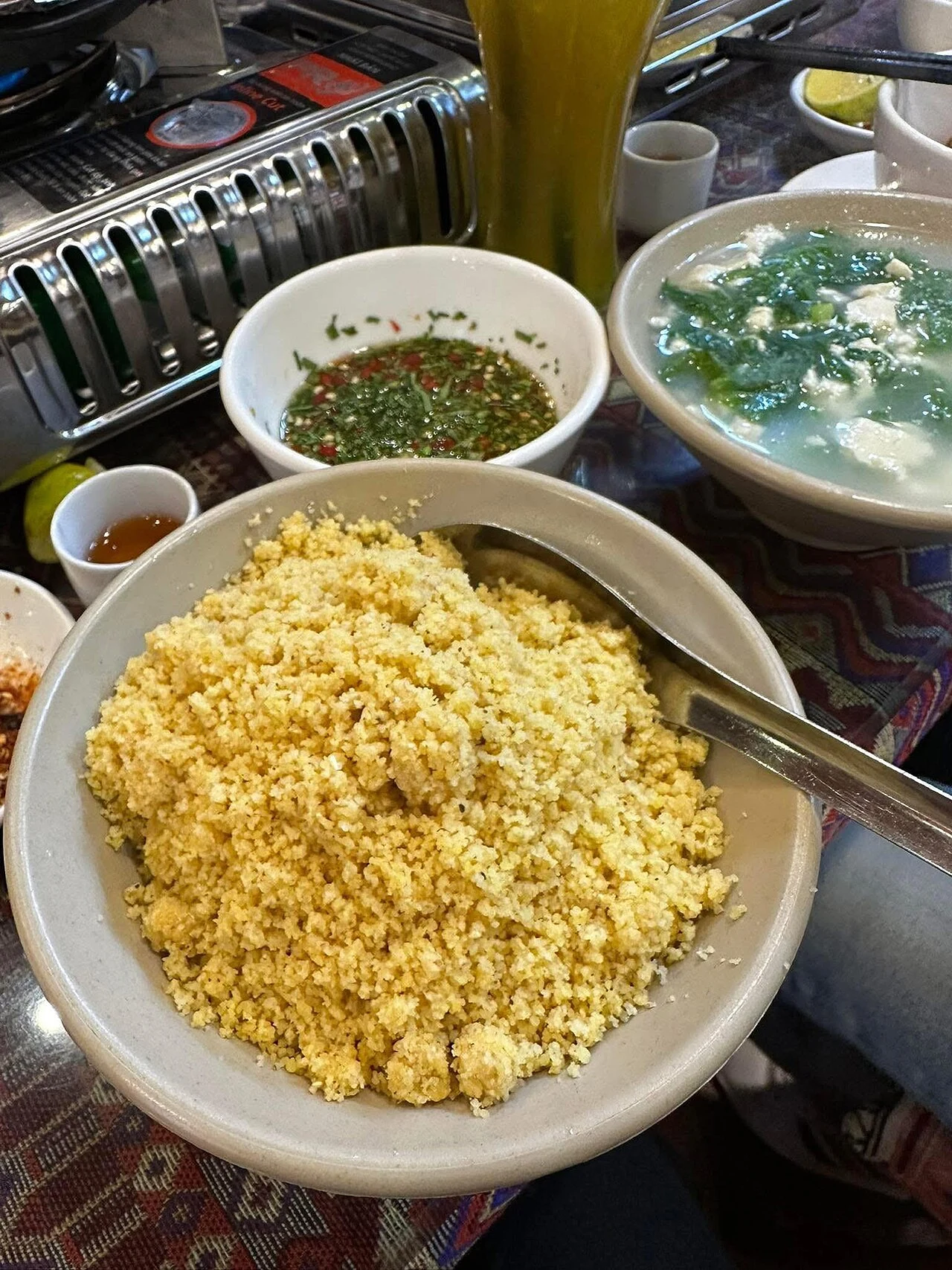
Your lunch can finish the lesson. Mèn mén, the steamed ground-maize staple of the plateau, is what all this labour ends up as, so order it knowing how it got to the bowl. Dai Bieu Nhan Dan warns that this knowledge passes on by word of mouth and could fade; asking respectful questions helps show it has value.
Questions travellers ask
Is it okay to climb over stone walls for a better view?
No. The walls hold scarce soil, and a moved stone can start a collapse. Stay on roads and tracks, and ask the owner or your guide before going near any field.
Why do people grow maize rather than rice here?
The sources describe very little level soil, rain-dependent fields and local maize adapted to drought. Bao Phap Luat notes that buckwheat is also grown, and that the crop relies on rainfall, not irrigation.