Rammed earth, yin-yang tile and stone fence: how a Hmong house suits the Dong Van plateau
A Hmong house on the Dong Van plateau is built from what the rock allows. How rammed walls, stone fences and tiled roofs work, and how to treat them as homes first.
 Cat Ba Connect4 min read
The short answer
A Hmong house on the Dong Van plateau uses what the rock allows: earth rammed into thick walls, stone for fences and floors, and tile or thatch above. Walls 40 to 60 centimetres thick hold warmth in winter and stay cool in summer, while stone fences shelter a family and its animals. Lũng Cẩm is the easiest place to see the form. Remember that these are lived-in homes, so look from public paths, ask before entering, and pay where a fee is requested.
Start with the rock, then the wall
On the Đồng Văn plateau, soil is scarce and stone is everywhere, and the houses show it. VietnamPlus describes the method: earth is cleared of roots, large stones and weeds, packed into a wooden form about 1.5 metres long and 45 to 50 centimetres wide, and pounded with a mallet, form after form, until the wall rises. The result, reports from Lũng Cẩm say, is 40 to 60 centimetres thick.
A thick earth wall is slow to warm and slow to cool, which is why sources credit it with warm winters and cool summers. Look for joins between sections of the form: they record the order of work.
The fence is a family decision in stone
Stone fences are what first strike many visitors, and they are not decoration. VnBusiness describes walls around head height that may enclose one house or several belonging to brothers, with a wooden gate usually kept shut, and animal pens inside the wall, close to the house. VietnamPlus says the family lays them itself, over months.
So a stone fence maps a kinship group and protects livestock in a place where both matter. Viet Nam News says hand-built fences at Lũng Cẩm were raised over generations. Notice how stones are chosen and fitted, how gates are placed, and whether the fence continues past one household. A shut gate is a clear signal. It is not an invitation to look over.
Three bays, an altar and rules you cannot see
Inside, reports describe a three-bay plan, with two doors and a few small windows. The central bay is widest, holding the ancestral altar and space for meals and guests. The left has the cooking stove and the couple’s bed, the right a heating stove and guest bed. A family’s spiritual and daily life sit inches apart, so if you are invited in, ask where you may stand and sit, and do not photograph the altar without permission.
VietnamPlus records customs worth knowing. Strangers, especially women, are not allowed in the area while walls are being rammed. The main post goes straight up to the roof without being put down on the ground. Iron hinges are avoided because iron is said to chill the air of a house. Customs vary between families and over time, so treat these as things to ask about.
Tile, thatch and what has changed
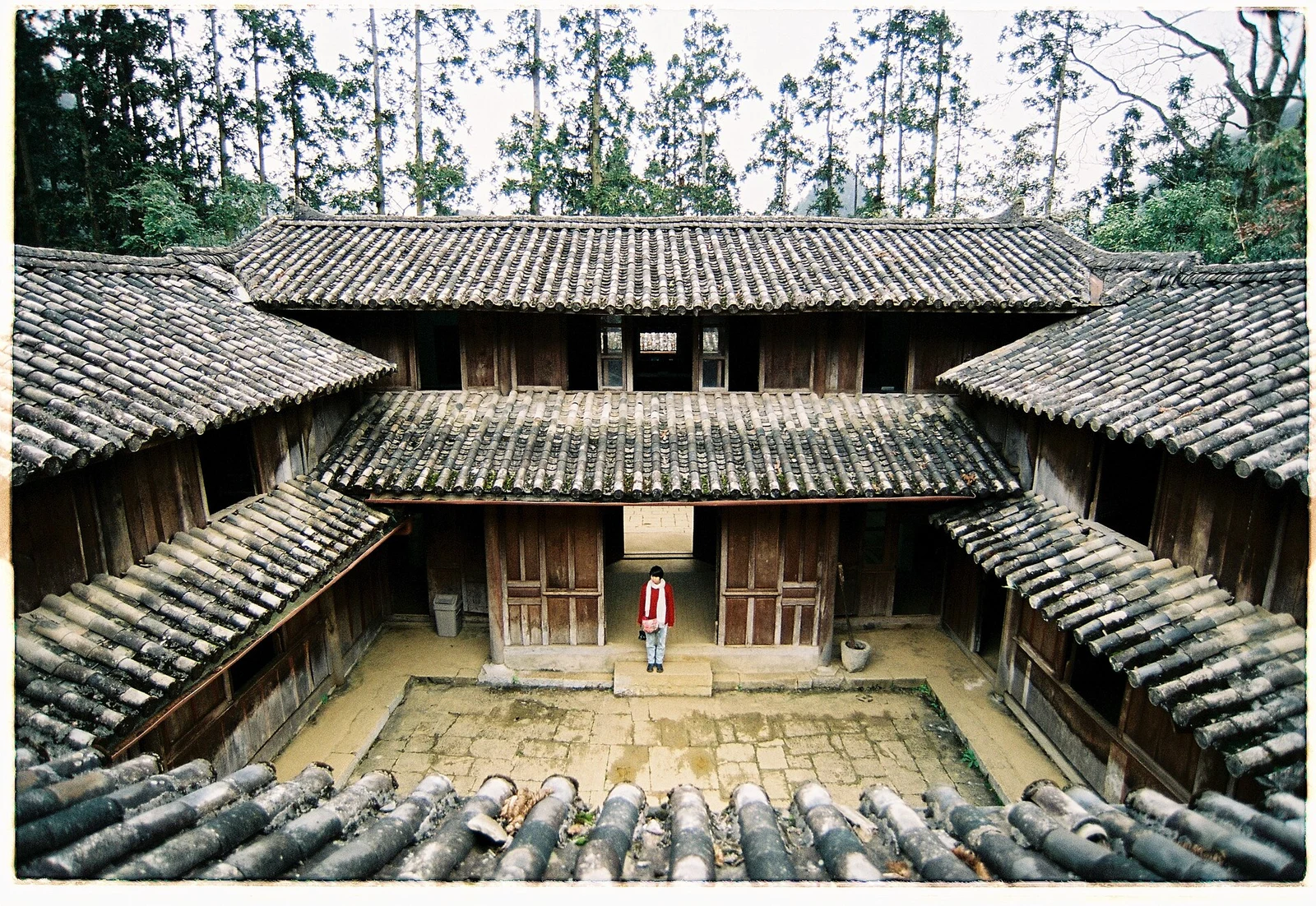
Roofs are yin-yang tile or thatch, and timber columns, trusses and floors sit on stone foundations and paved yards. At Lũng Cẩm, Báo Lào Cai describes homes closed on four sides around a small courtyard, with stone fences more than a century old. Reports describe houses about 100 years old, or even hundreds of years, so take such figures loosely.
The village has changed quickly. Viet Nam News reports tens of thousands of visitors a year, homestays and handloom fabric, and the old Mua family house is known as the setting for the film Chuyện của Pao. VnBusiness says there is no village ticket, only a charge at that house, which you should confirm. Administratively, the area is now in Tuyên Quang province, although many sources still say Hà Giang, and that may affect how you search for information.
Homes first, attractions second
The easiest way to behave well here is to spend time, not collect images. Stop where food or a bed is offered, and let conversations happen. Do not walk through a yard to reach a view or lean on stone fences. Flower fields near houses may be planted for visitors, so ask first.
For contrast, the Vương family palace at Sà Phìn shows the same plateau through wealth and power, and our guide to it is a good companion. Ask what was built with a neighbour’s help and what with money. People here live in the present, with phones and motorbikes, and a metal roof betrays nothing.
Questions travellers ask
Where can I see Hmong rammed-earth houses?
Lũng Cẩm in Sủng Là commune is the best-documented example, and houses of this type appear across the Đồng Văn plateau. Many are private homes, so stay on public paths.
Can I enter a Hmong house?
Only if invited or where a house is clearly open to visitors, as at the Pao film house. Ask first, follow your host, and do not photograph the altar without permission.