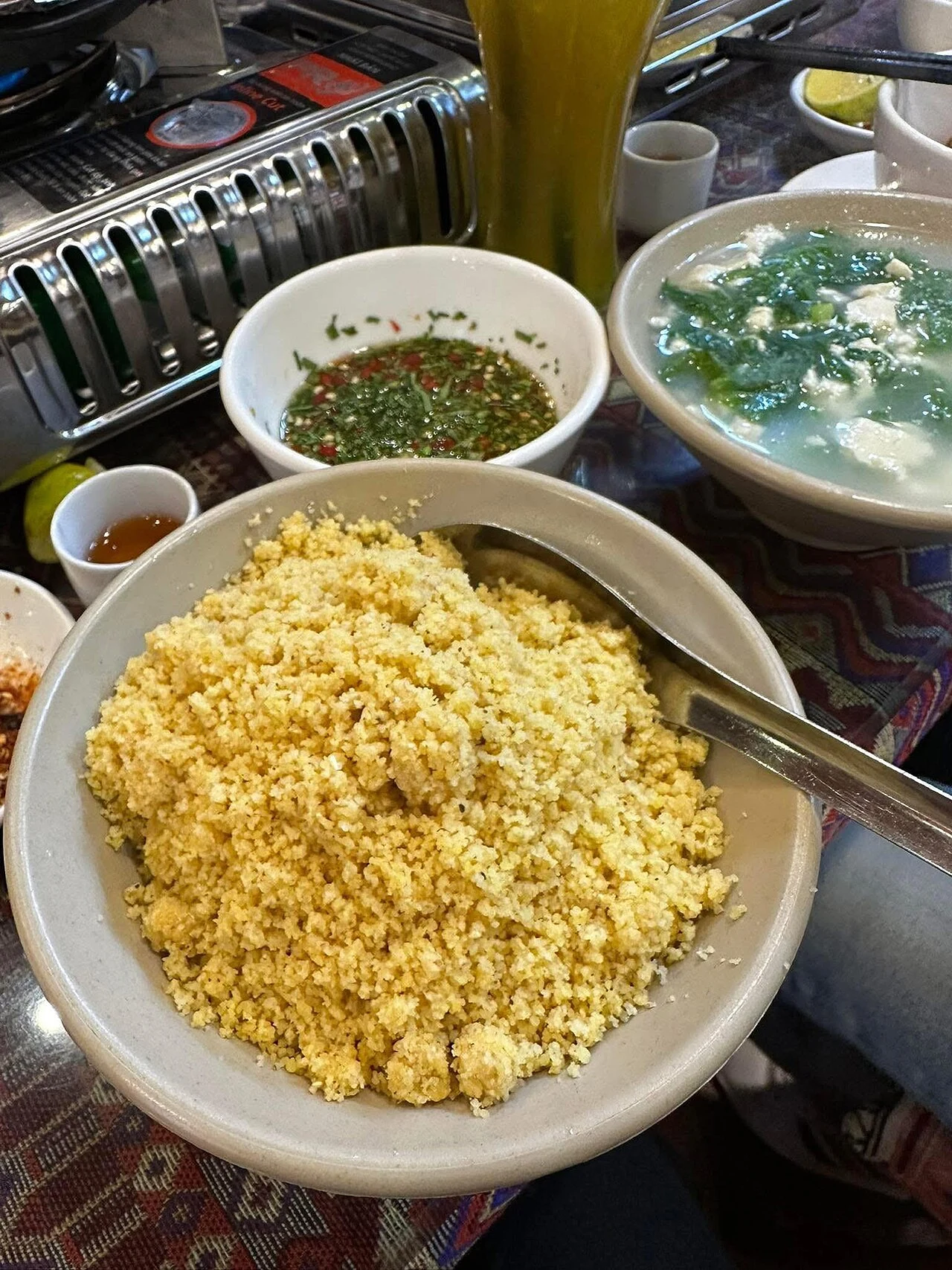
Ấu tẩu porridge in Ha Giang: the local tradition and the aconite risk
Cháo ấu tẩu is made from a root containing aconitine, a dangerous heart toxin. Understand the real risk, why long boiling is no guarantee and why declining is safest.
 Cat Ba Connect4 min read
The short answer
Cháo ấu tẩu is a Ha Giang porridge made with an aconite root that contains aconitine, a potentially fatal poison. A traveller cannot establish its safety from the cooking time, a seller’s reputation or a confident explanation. Medical sources document poisoning from culinary and processed preparations. Choosing another dish is the straightforward way to avoid this particular ingredient risk. Do not prepare the root yourself or drink wine containing it; seek immediate medical help if symptoms follow exposure.
Start with the toxin, not the tradition
Most food articles keep the warning for the end. This one cannot. The root in the porridge comes from an aconite plant. Vinmec, a Vietnamese hospital group, identifies ấu tẩu as Aconitum fortunei, and notes that aconitine affects the heart and nervous system and that the raw tuber is dangerous. A 2014 medical review in the journal Toxins describes aconitine as acting on sodium channels in the heart, nerves and muscles, and reports deaths from uncontrollable heart rhythm problems.
The porridge is also a genuine local dish, which guides list among Ha Giang’s specialities. Both things are true. What follows is meant to help you make that choice, and it should not be read as a recipe.
A kitchen story is not a safety standard
Accounts of cháo ấu tẩu often concentrate on the cook’s skill and the long preparation. Those descriptions explain a culinary tradition; they do not provide a verified safety standard that a visitor can check at the counter. This guide deliberately gives no processing sequence, quantities or cooking time. Such details could be mistaken for a method a reader can safely repeat, when the medical sources do not support that reassurance.
Bach Mai Hospital’s Poison Control Centre warns that poisoning has occurred after people used the root in food and after they took processed herbal products containing aconitine. Its explanation says processing does not consistently establish the remaining toxin content. The review in Toxins also documents poisoning from culinary uses. The practical distinction is between describing what a seller does and proving that the resulting bowl is safe. An ordinary customer cannot make that second determination.
The cases that make the risk concrete
Poisoning from this plant is not a historical footnote. In 2023 Mường Khương district hospital in Lào Cai treated a man who had cooked the root with bones. Numbness of the face and mouth, cramps, chest tightness and trouble breathing followed about three hours later, and he recovered after two days of care. The case illustrates why experimenting with the root at home is unsafe. That same year, Ha Giang’s provincial hospital reported treating a critically ill 49-year-old after he drank ấu tẩu-steeped wine.
Do not assume that putting the root in alcohol solves a problem associated with food. The clinical reports include poisoning after wine and herbal preparations, and Bach Mai warns against using the root on one’s own. Hong Kong’s Department of Health has also reported aconitine-type symptoms after herbal medicine. A bottle offered at a homestay or sold as a traditional remedy is not evidence that it is suitable to drink.
Choose the rest of Ha Giang’s table
A confident answer about preparation or an established restaurant does not let a traveller measure the toxin in a serving. This guide therefore does not recommend a vendor, a portion or a way of reducing the risk enough to try the dish. Choosing a meal without aconite avoids this particular ingredient exposure. Ask the kitchen to name the dish and its ingredients rather than accepting an unfamiliar bitter porridge as an unavoidable part of a local experience.
Ha Giang offers other food traditions to explore. The related guides introduce mèn mén and family dinners without requiring this root to be part of the meal. You can discuss the history of cháo ấu tẩu with a host, read about its place in local food culture and still decline a bowl. Interest in a tradition does not require eating every ingredient associated with it.
Symptoms that mean go now
The warning signs are worth reading before you travel, because onset can be quick. The Toxins review reports symptoms within minutes to a few hours; early signs include numbness or tingling, nausea and vomiting, dizziness and palpitations. Vinmec lists a numb tongue, tingling fingers and toes, cold hands and feet, unsteadiness, sweating, chest tightness and an irregular heartbeat.
If you or a companion feels any of this after eating ấu tẩu in any form, go to the nearest medical facility straight away, and tell them what was eaten. Vinmec and the Mường Khương doctors both warn against monitoring it at home or using folk remedies. Distances in Ha Giang are long and roads are slow, so do not wait to see whether it passes.
Questions travellers ask
Does long cooking make cháo ấu tẩu reliably safe?
Cooking time and a seller’s confidence do not establish safety for a diner. Medical sources document poisoning from culinary and processed preparations. Choose another dish to avoid this particular ingredient risk.
What should I do if I feel numb after eating ấu tẩu?
Seek medical help immediately and say what was eaten. Do not wait at home or use folk remedies; aconitine can affect the heart and nervous system.