Reading Cuc Phuong’s limestone forest from floor to canopy
What to notice on a Cuc Phuong walk, from buttressed trunks and woody lianas to a dead giant still standing, and why the old-tree labels do not always agree.
 Cat Ba Connect4 min read
The short answer
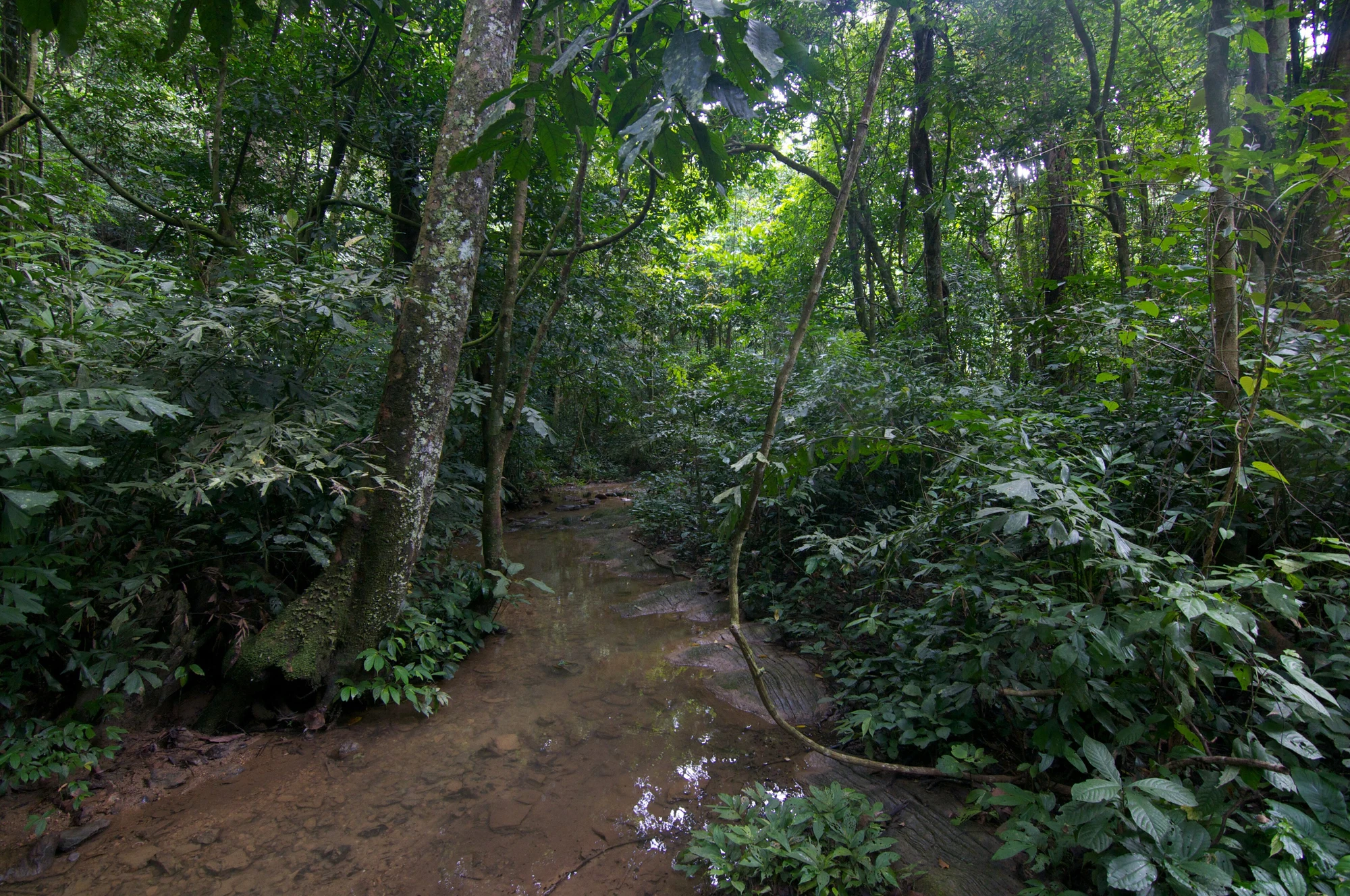
Read Cuc Phuong from the ground upwards. Start with the rock and the shallow-looking soil, then the wall-like buttresses of old trees, then the lianas climbing through the storeys, and finally the canopy gaps above. The park’s forest is described as multi-layered, with giants of about 45 metres on its well-known trails, and its most famous tree is dead but still standing. Allow slow time, stay on the path, and expect leaf litter and shadow rather than panoramas. This is a forest for close attention.
Begin with your feet
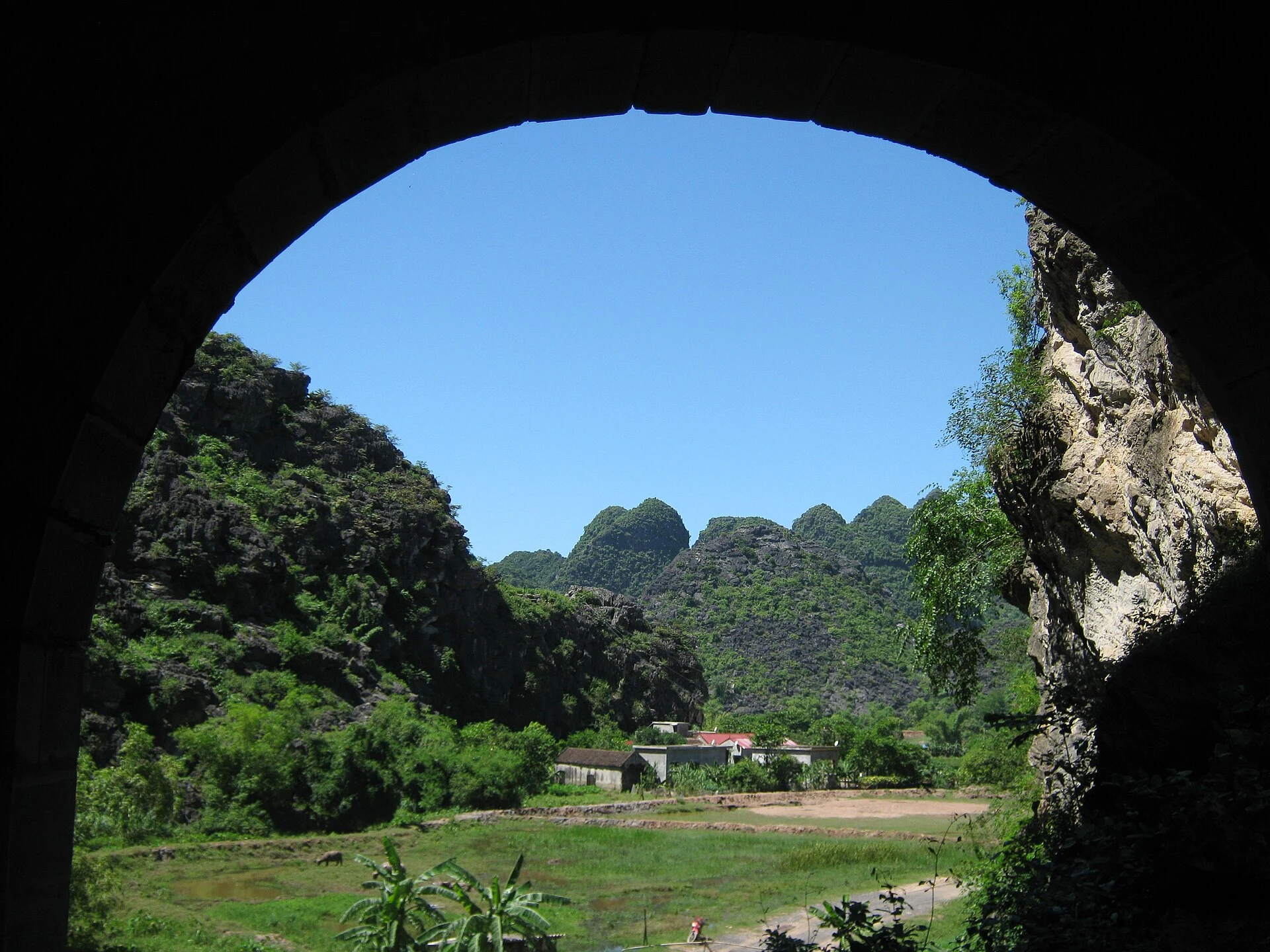
A panorama-seeker can walk through Cuc Phuong and feel nothing has happened. The view is under and around you, so start low. The park lies among karst mountains and valleys between about 150 metres and 656 metres, on Wikipedia’s figures, though a Vietnamese press report gives its best-known summit as 648, so treat the top number loosely. Limestone shows through in places. Bao Quoc te’s reporting from the park notes that many big trees growing on limestone carry roots several metres broad, unlike trees rooted in deeper soil.
Stop at the first exposed root and follow it with your eyes. Where does it go, and what is it gripping? That single question does more than a species list.
Why the trunks grow walls
Vietnamese writers keep reaching for the same image. A VTC News account compares the buttresses of the old sấu tree, about 45 metres tall, to a long defensive wall, and Dai Doan Ket says the same of chò xanh, đăng and sấu. Botanists use “buttress” for those wide flanges, which typically occur on shallow-rooted trees in nutrient-poor tropical soils. The proposed reasons are practical: anchorage, resisting the pull of an uneven crown, and spreading along the upper soil where nutrients sit. The explanations are debated, so hold them as ideas. Compare a buttress on the downhill side with one uphill and see whether the tree seems to be bracing.
A đăng on the park road is described by VTC as 45 metres tall and five across; Tap chi Cong Thuong adds surface roots running some 20 metres. These measurements come from press articles and differ from one to another, so use them as a sense of size.
The middle storey is where the fights happen
Wikipedia summarises the structure as a multi-layered canopy, with some trees bearing flowers directly on the trunk, a habit called cauliflory. Check trunks at eye level for it. No reliable published count of Cuc Phuong’s storeys was opened for this guide, and popular figures vary, so do not worry about numbering them. Watch instead for the competition: lianas heading for light, and young stems waiting in the shade.
Dai Doan Ket describes woody lianas with bases about half a metre across running about a kilometre through the forest, and Bao Quoc te records a guide’s account of bàm bàm vines that climb, fall, root and climb again. That same Dai Doan Ket report mentions strangler figs, whose seeds germinate in a hollow of another tree. If you find a tree wearing a cage of roots, you may be looking at a slow takeover in progress.
A famous tree with an unclear label
The park’s best-known giant shows why careful reading matters. Vietnam Airlines’ guide says the thousand-year chò has died yet still stands, about 50 metres tall and five across, with a warning sign at the base because branches can fall. VnExpress gives about 45 metres and notes that much of the tree has decayed. Sources also differ on species, naming chò xanh (Terminalia myriocarpa) or chò chỉ (Parashorea), and the thousand-year age is a popular figure rather than a measured one in anything opened here.
Take this as a useful lesson rather than a flaw. Respect the warning sign, do not stand under dead limbs, and read the park’s own label on the day.
Walk it slowly enough to see any of this
Vietnam Airlines’ guide warns of boggy, slippery stretches on the loop around the chò trees and suggests avoiding roughly July to early September. It also advises staying on the path and with your group; it describes that route as about seven kilometres and two to three hours. Plan your own stops into that time, or choose a shorter line. Confirm trail status and guide availability with the park first.
Take a small notebook. Sketch one buttress, one liana and one trunk with flowers on it. Noticing depends less on how far you walk than on how often you stand still.
Questions travellers ask
Is the thousand-year tree at Cuc Phuong still alive?
Vietnam Airlines’ destination guide says it has died but remains standing, with a warning sign about falling branches. Check on-site notices and keep clear of the base where signs ask you to.
Do I need a guide to notice these things?
Not for buttresses and lianas on a marked path, though a guide will name species and may be safer in a large forest. Ask the park about current options.