Tra Kieu, Dong Duong, Thap Mam: telling Cham sculpture styles apart in Da Nang
A viewer’s guide to the Da Nang Museum of Cham Sculpture: how the style names work, what to compare in three galleries, and why published dates still disagree.
 Cat Ba Connect4 min read
The short answer
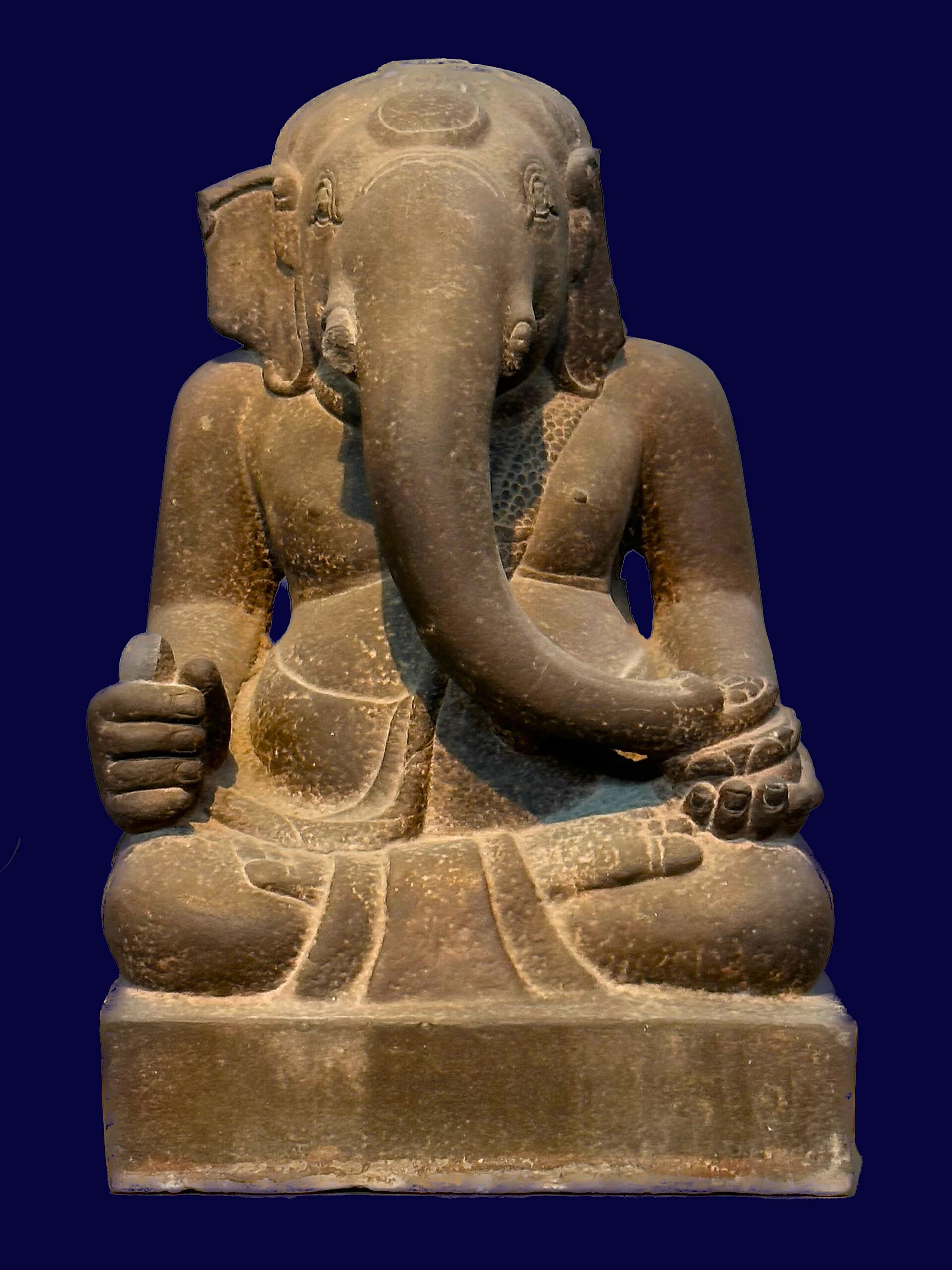
At the Da Nang Museum of Cham Sculpture, treat Tra Kieu, Dong Duong and Thap Mam as both places and style labels. Rooms are organised by where objects were found, while style names describe shared traits and rough periods. Thap Mam is the clearest, with detailed and rigid forms of the 12th to 13th centuries. Tra Kieu is prized for softer, livelier figures. Dates differ across sources, sometimes by centuries, so compare forms first and treat the numbers as provisional.
A room name is a findspot; a style name is an argument
The museum’s regional rooms carry place names: Trà Kiệu, Mỹ Sơn, Đồng Dương, Quảng Trị, Thua Thien Hue, Thap Mam, Bình Định and others. That is a practical legacy of how the French School of the Far East and Henri Parmentier assembled the collection. A place name tells you where something came from. A style name is a later judgement that some objects belong together because of how they look.
The city’s Thap Mam page says this outright: the site’s name was later given to a style sharing the same characteristics. So an object could, in principle, be displayed under one place and be discussed in terms of a style named after another. Reading the label’s findspot and date separately is the first habit worth building.
Do not memorise the chart until you have seen how it wobbles
A Vietnam National Museum of History catalogue page sets out a clear sequence: My Son E1 before the 8th century, Dong Duong from the 9th to the early 10th, Tra Kieu in the 10th and 11th, Chanh Lo in the 11th and 12th, Thap Mam in the 12th and 13th. That is a sound working chart, and the disagreement lies mostly at its edges.
The best-known example is the Trà Kiệu pedestal. Its scholarly dating is split between the 7th century and the early 10th, with the earlier view leaning on an inscription of King Prakāśadharma. Da Nang’s gallery text admits dating gaps of three or four centuries on some Tra Kieu artefacts. When a label and a guidebook disagree, you have probably found a real debate rather than a mistake.
Tra Kieu: watch the dancers on the pedestal
Trà Kiệu has been identified as Simhapura, the Lion City, an early Champa capital. The city’s gallery text praises Tra Kieu figures for softness, liveliness and variety of costume, jewellery and pose. Test that on the pedestal: walk round all four sides and find the eleven apsaras on one side singing, cheering and dancing.
The panels are also a lesson in how interpretation shifts. Scholars have read them as the legend of Funan’s founder, as scenes from the Bhāgavata Purāṇa and, most widely now, as the wedding of Rama and Sita from the Rāmāyaṇa, following Trần Kỳ Phương. French archaeologists placed the linga-yoni on top in the 1930s, so that part of the silhouette may never have belonged there.
Dong Duong: a Buddhist turn in the middle of the story
Most visitors arrive expecting Hindu gods throughout, so the Đồng Dương room is where the collection changes key. Indravarman II built his capital of Indrapura around 875 and commissioned a Mahayana complex dedicated to Lakṣmīndra Lokeśvara. US bombing in August 1969 reduced what remained there to brick ruins, which makes these museum objects unusually important as survivors.
The museum’s own artefact list gives a statue linked to Lakṣmīndra-Lokeśvara and Tara. A newspaper account notes that Tara is the only bronze on show, attributed to the 9th or 10th century. Look at it after the Tra Kieu dancers and ask what a change of material and religion does to a figure’s stillness. If a label offers a different date or identification, trust the label over this page.
Thap Mam: the animals are the way in
The Thap Mam objects come from a Bình Định site excavated at large scale in 1934, when about 58 tons of artefacts were collected, with a second excavation in 2011. The city’s description is unusually candid: complex and detailed, but stereotyped and less soft than earlier work, with decline to follow. Do not accept that verdict unexamined.
The Thap Mam altar, with lions and Garuda birds at its corners, and the gajasimha, part elephant and part lion, give you strong subjects for comparison. Set a Thap Mam figure beside a Tra Kieu figure and decide for yourself whether stiffness reads as loss or as a different ambition. Museum hours and prices were published on the city portal at the time of checking; confirm them before you go.
Questions travellers ask
Which gallery should I see if I only have half an hour?
Tra Kieu and Thap Mam make the sharpest comparison, one praised for softness and the other for dense detail. Add the Dong Duong room if you want the Buddhist chapter of the story.
Why do dates differ between labels and books?
Many pieces are dated by style, not by a firm inscription, and researchers revise those judgements. The Trà Kiệu pedestal is the obvious case, with proposals three centuries apart.