The Cham brick puzzle: what is known, and unknown, about how the towers were bonded
How did Cham builders bond brick towers with almost no visible mortar? What research on resin and fired brick has found at My Son, and what is still unproven.
 Cat Ba Connect4 min read
The short answer
Nobody can yet say exactly how Cham towers were bonded. Restorers and laboratories point to natural resin, with dầu rái from Dipterocarpus alatus the leading candidate, and to brick so finely fitted that joints almost vanish. But the Italian team at Mỹ Sơn said it had not found the ancient adhesive itself, only striking resemblances. Treat any guide’s confident recipe with caution. What can be stated firmly is how modern teams have tried to match it, and where they disagree.
Start with the joint, not the legend
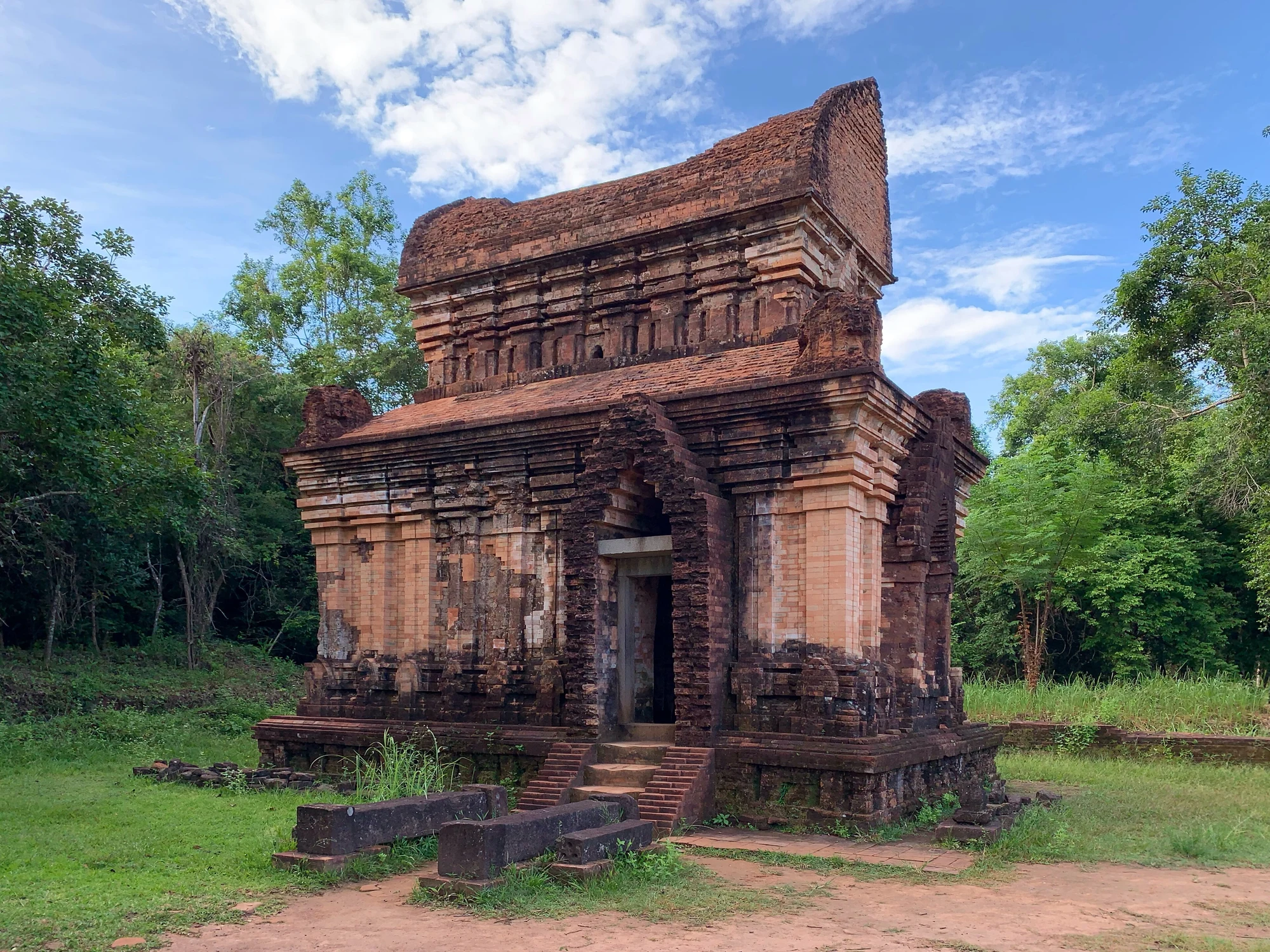
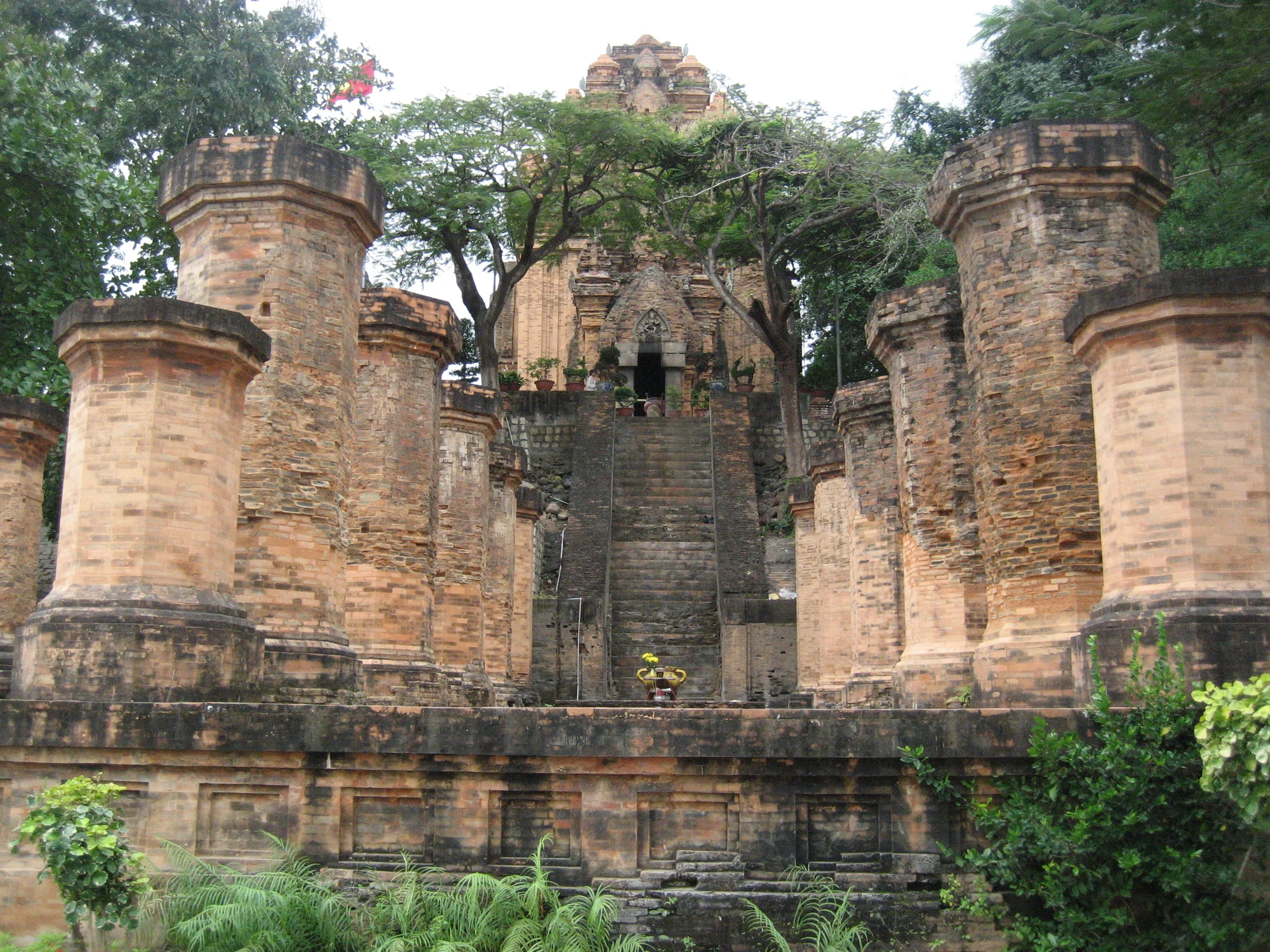
Stand close to a surviving wall at Mỹ Sơn or Po Nagar and look for the mortar line. You will struggle to find one. A Vietnamese report on Po Nagar describes brick towers built without mortar, and a published explainer on Mỹ Sơn describes fired bricks laid with no visible mortar. That phrasing matters: “no visible mortar” is an observation about a surface, not proof of how the wall was made.
Theories have filled the gap. Proposals include half-baked bricks set with natural resin, or a vegetable compound, and the same explainer says these remain unconfirmed. Keep the tidy version of the story at arm’s length, including any version you hear on site.
What the Italian team actually said about dầu rái
Group G at Mỹ Sơn produced the clearest evidence, and the clearest caution. Researchers studied dầu rái, a tree that grows near the site, and reported striking resemblances between a chemical in the plant and the adhesive in the towers, with the same chemical appearing inside the bricks. Then the team’s Landoni made a point that many later retellings lose: they had not found the ancient Cham adhesive, despite newspaper claims that they had.
Resemblance is a real result, and a limited one. Viet Nam News has also quoted Mỹ Sơn managers and specialists describing resin as the bonding agent, and noted that fishermen use the same resin for boats, so the material has a plausible working history in the region. A scientific match and a confirmed recipe are still different things.
The brick itself is part of the question
Russian researchers who sampled bricks at Mỹ Sơn found varied origins, uneven firing, and sand and plant material in the clay. Their lead cause of decay was water intrusion. Local craftsmen working on the Group G project fired clay bricks in wood-burning kilns, aiming for something “not too hard, but not too soft”.
That phrase explains why this is more than an antiquarian riddle. A new brick stronger than its neighbours can behave differently through wet and dry seasons. Conservators are therefore chasing compatibility, not simply strength, and Dr Zolese’s team analysed original bricks to devise a formula that would sit alongside them.
Four generations of repair, four philosophies
Each team leaves a different mark. Kazimierz Kwiatkowski and Polish colleagues strengthened towers with cement between 1981 and 1995. The Italian-funded project at Group G, from 2003 to 2013, aimed to minimise new material and chose not to rebuild a collapsed section. Dr Cucarzi acknowledged others might criticise the methods but argued the relic had to be rescued. Indian specialists at Groups K, A and H from 2017 to 2021 say they rebuilt to the original design and replaced only damaged or missing bricks.
The newest public example is outside Mỹ Sơn. At the Dương Long towers, 2026 reports describe about 340,000 new bricks made to match the originals, each stamped with the year, plus resin bonding and a lime mortar containing crushed old brick. The stamp is a tidy idea, since it tells the future which brick is which.
Questions that make a tower visit sharper
Bring three questions to any Cham site. Which part of this wall is original, and how can you tell? What was used to bond the repairs? Is the colour change a sign of new brick, cleaning or weathering? A good guide will happily say “we do not know” to at least one of them.
Look along a repaired wall in low light, when joints and texture show more clearly. Do not press, scrape or lean on brick surfaces, since damp and contact are exactly what conservators are trying to manage. If you read that the secret of Cham brick has been solved, check who says so and what they measured.
Questions travellers ask
Was resin definitely the Cham binder?
It is the leading explanation, not a closed case. The Italian team reported resemblances between dầu rái chemistry and the tower adhesive but said it had not found the ancient adhesive itself.
Can I tell new brick from old?
Sometimes, by colour, texture or sharper edges, but appearance alone can mislead. Ask a guide or site staff which sections were repaired, and by which project.