Ngán, tu hài, bề bề: telling Cat Ba’s shellfish and crustaceans apart on the menu
Ngán, tu hài, bề bề, ghẹ and sam blur together on a Cat Ba menu. Learn what each word means, how it is sold, and the look-alike that must never be eaten.
 Cat Ba Connect4 min read
The short answer
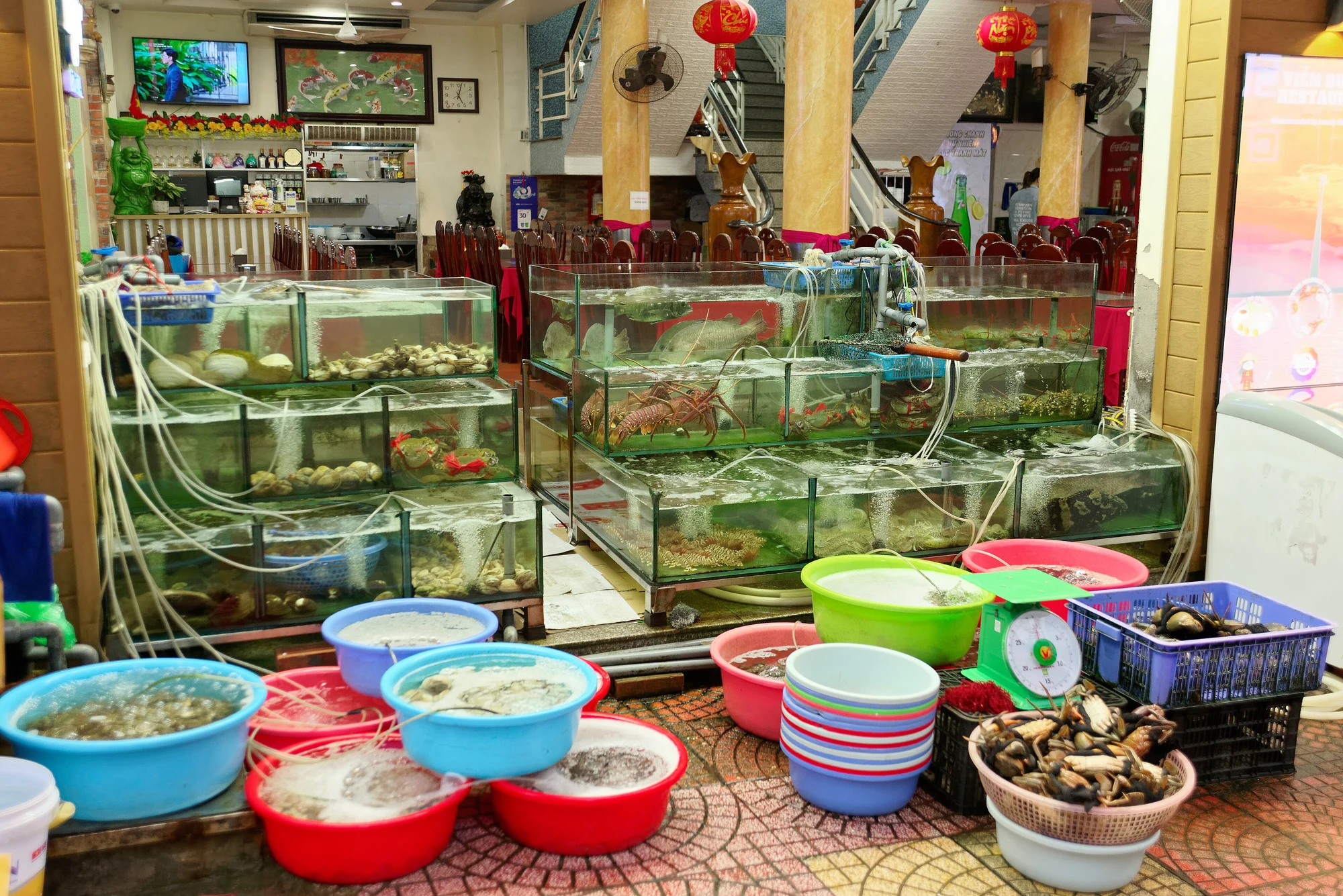
On a Cat Ba menu, tu hài is a long-siphoned clam, bề bề is mantis shrimp, ghẹ is a swimming crab and sam is a horseshoe crab sold by the pair. Ngán is a prized shellfish that guides tie mainly to Quảng Ninh’s Vân Đồn and Quan Lạn waters, so ask where it came from. Units differ by animal, so confirm each one. Refuse anything offered as so: this small horseshoe crab is banned as food because it can kill.
One mantis shrimp, four names
Bề bề causes more menu confusion than any other animal here, simply because it travels under several names. VnExpress lists it as bề bề, tôm tít, tôm tích and tôm thuyền. If a board shows two of those words at different prices, ask whether they are really different items or just different sizes before you assume you are comparing two animals.
English menus usually say mantis shrimp. The same article describes it as thick-bodied with firm, sweet meat, usually with the side fins already cut away. Salt roasting, tamarind and steaming with beer are the common preparations, and it is sold by weight.
Tu hài: the clam nicknamed for an elephant
Tu hài has a siphon long enough to earn the Vietnamese nickname ốc vòi voi, elephant-trunk snail, although it is a two-shelled clam and not a snail. VnExpress reports that the Cat Ba archipelago suits its growth and says the meat here is held to be softer and sweeter. Treat that as local reputation, not a measured result.
Farming research on the same animal comes mainly from neighbouring Vân Đồn, where a survey names Lutraria rhynchaena as the main species and describes it being raised in cages. So a Cat Ba plate could be wild or farmed, and from either side of the provincial line. The useful question is the count: older press figures put a kilo at roughly 15 to 23 pieces, which tells you how many you will really receive.
Ngán: the name that points across the water
Ngán is the odd one out on this list, since it is not one of the items national press names first for Cat Ba. A MIA travel guide places it most abundantly around Quan Lạn and Vân Đồn in Quảng Ninh, with summer and autumn the easiest harvest and winter supply scarcer and dearer because the animal burrows deeper. That is a travel-guide account, so use it as a prompt for questions rather than a season calendar.
We could not confirm a single scientific name that local cooks and researchers agree on, so this article does not give one. On a menu, expect it grilled, briefly steamed, in porridge or in a salad with banana blossom. If ngán appears, ask where it came from and whether it is sold by the piece or the kilo.
Ghẹ or cua: read the shell before the price
Both may reach the table as crab in English, yet a Vietnamese kitchen treats them as separate things and they are not priced alike. Zing’s guide to telling them apart is practical at the tank. Cua has a rounder, domed shell and swollen claws, and it comes in moss grey, dark blue-green or bronze. Ghẹ has a longer, flatter shell tapering to a point on each side, slimmer claws and a moss colour flecked with white.
Once cooked, ghẹ turns a paler orange with white spots and a slightly grainy shell, while cua goes deep orange and glossy. The meat of ghẹ has finer fibres and a stronger marine smell, and cua generally costs more. Ask the server to name the animal when you point, so the bill and the plate agree.
Sam is sold by the pair; so must be refused
Sam, the horseshoe crab, is the one item on this list usually priced per pair, and VnExpress notes that it appears mostly in restaurants. Its smaller relative is the serious issue. Vietnam’s Food Safety Department asked 28 coastal provinces and cities in 2015 to bar so biển from food in any form, because it can contain tetrodotoxin. That year’s figures, reported at the time, were 15 people hospitalised and four dead, some of whom had mistaken it for sam.
Published comparisons of sam and so are not a safety test for a diner, and a restaurant’s confidence does not establish a specimen’s identity. Vietnam’s National Institute for Food Control lists both names among animals in which tetrodotoxin has been found, and warns that ordinary cooking or drying does not destroy this toxin. Do not use a short menu guide to identify an animal or make one safe to eat. Choosing another dish is a reasonable way to avoid a mistake with potentially serious consequences.

Questions travellers ask
Is ngán a Cat Ba speciality?
The guides we opened tie it mainly to Quan Lạn and Vân Đồn in Quảng Ninh, not Cat Ba. It may still appear on an island menu, so ask where it came from.
Can I eat horseshoe crab on Cat Ba?
Some restaurants serve sam, but a menu name or a confident identification does not establish safety. Vietnam's National Institute for Food Control lists both sam and so among animals in which tetrodotoxin has been found. Choosing another dish avoids this particular risk.