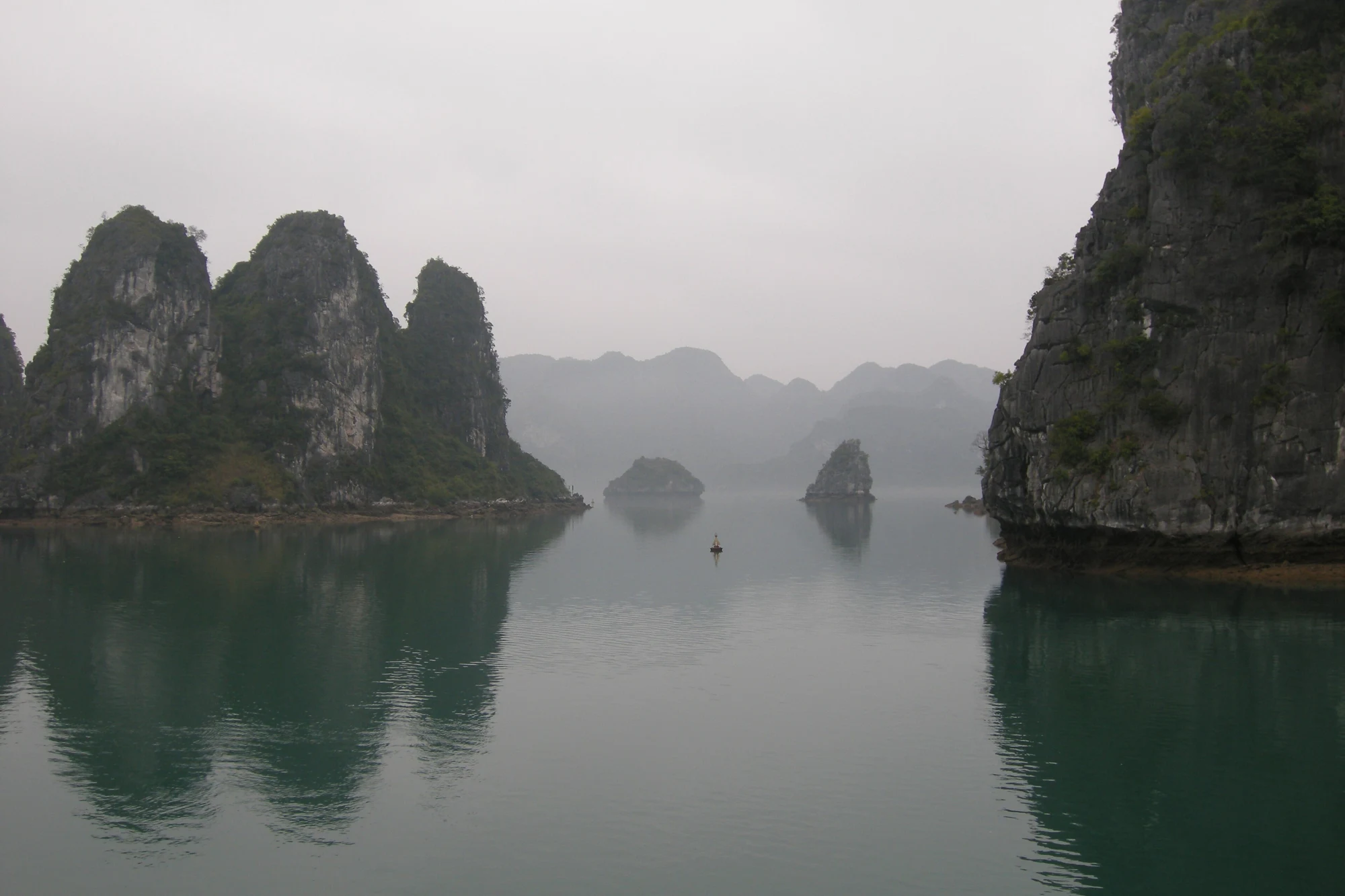
Cat Ba Biosphere Reserve: telling forest, mangrove, reef and karst apart
Cat Ba’s biosphere reserve packs seven ecosystems into one archipelago. How to recognise each from a trail or kayak, and what core and buffer zones mean for you.
 Cat Ba Connect4 min read

The short answer
Cat Ba Biosphere Reserve is a UNESCO-recognised mosaic of limestone forest, mangrove, tidal shore, coral reef, marine lake, soft seabed and cave. You can tell them apart by what sits underfoot or under the hull. The reserve’s core, buffer and transition zones describe how much human activity each area may carry, so the label “biosphere reserve” does not mean open access. Before a trip, ask which ecosystem you will actually enter and which rules apply. Visitors get more from one habitat seen properly than from five glimpsed.
Three labels that are often muddled
Cat Ba carries overlapping titles, and tour copy tends to blur them. UNESCO recognised the biosphere reserve in December 2004, under its Man and the Biosphere programme, a framework for people living alongside conservation. The national park is a separate Vietnamese protected area inside it. The Ha Long Bay–Cat Ba Archipelago World Heritage listing, from September 2023, concerns outstanding natural value. A Hai Phong government page sets out those dates. One place, three questions: who lives here, what is strictly protected, and why does the world care.
The biosphere status is also not permanent by default. Vietnam Agriculture and Environment reports that it was reconfirmed on 27 September 2025 after a second ten-year review.
Seven habitats, sorted by what you stand on
Vietnamese accounts, including the National Defence Journal, count seven tropical ecosystem types. They become easier to remember by surface. On rock and leaf litter, you are in primary forest on limestone. On sharp wet stone between high and low water, you are in the intertidal zone with its attached shellfish and weed. On grey mud threaded with roots, you are in mangrove. Enclosed salt water with cliffs all round is a marine lake. Dark, dripping and overhead-rock means a cave, and these are themselves counted as habitat, not just attractions.
The last two need a mask or a good guide. Coral reef grows on firm surfaces in clear shallows; the soft seabed is the sand and silt between them, easy to dismiss and full of life. The official national count for the reserve lists 4,151 species, while a 2025 journal article gives 4,637. The gap reflects different surveys, so quote either with its source.
Zoning in plain language
That Hai Phong page describes three kinds of zone: core areas for strict conservation with no human impact, buffer zones allowing limited economic use alongside conservation, and transition zones where development is expected. Think of the zones as a dial for how much human activity a place can carry. Most of what visitors do, such as staying in town, boarding boats and eating out, happens away from the strict end of that dial. A kayak near a cliff may feel wild, but the rules around it may differ from one bay to the next.
The numbers shift too. The National Biodiversity Conservation Agency page gives 26,241 hectares, split into 17,041 on the islands and 9,200 at sea. After a 2023 boundary adjustment, the reserve is reported at 26,419 hectares, with the core zone cut by 2,221 hectares and the buffer and transition zones expanded. That is why older zone maps may mislead you; ask your operator or the park which map is current.
Questions that reveal how a trip uses the reserve
“Eco” is a soft word. These are harder to fudge. Which ecosystem do we enter, and is it in a strict area? If we snorkel, is there live coral below, and how do you keep fins off it? If we visit a mangrove, do we stay in the boat or walk on a path? Which caves are bat roosts or closed? Do you hold permission for this route? A confident operator can answer briefly. Vague pride in the UNESCO name proves nothing, because the title belongs to the place, not the company.
Pick one habitat and give it a morning
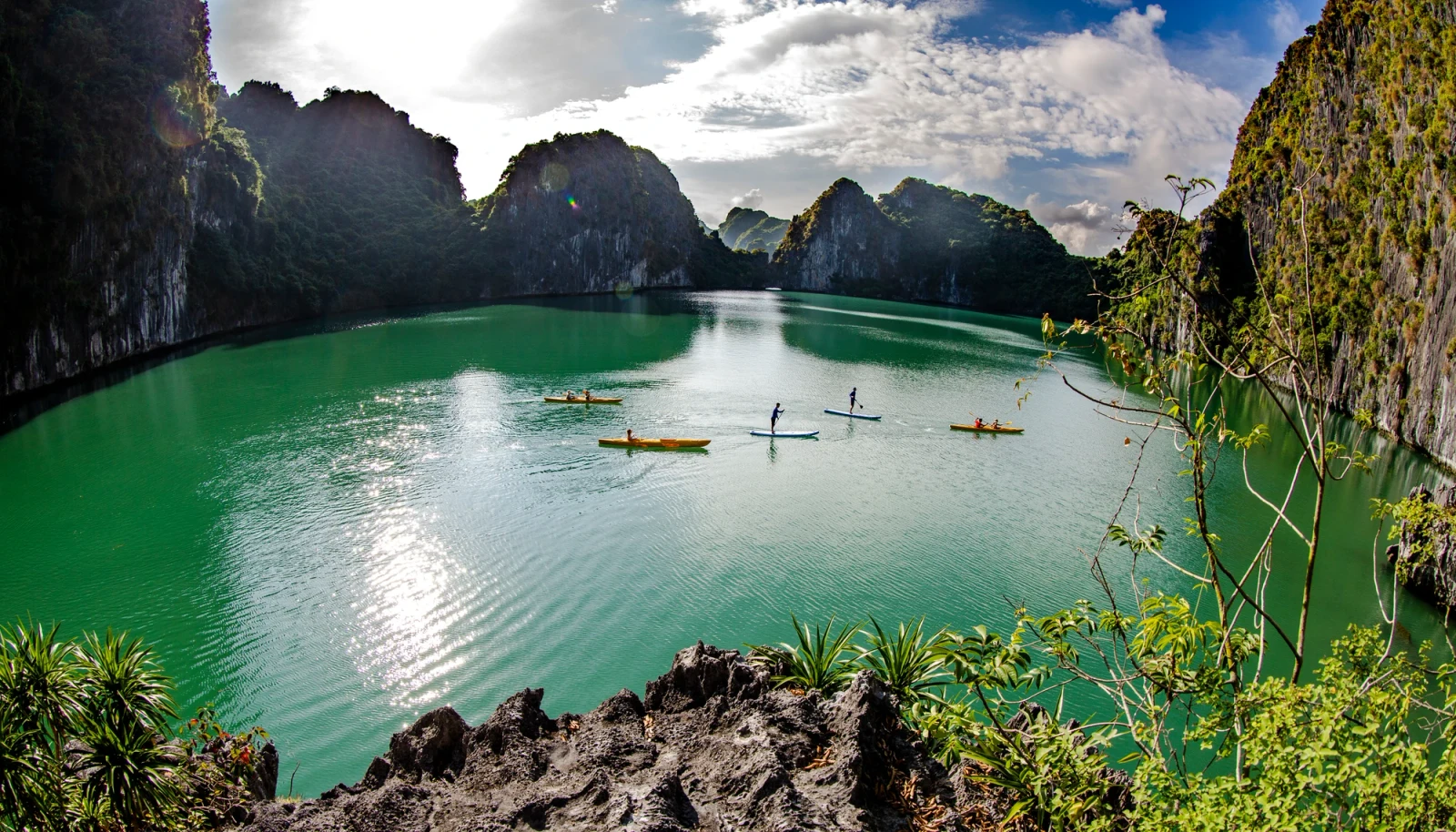
Reading seven ecosystems in a day trip is a fantasy. Choose by interest: limestone forest if you want to walk, a marine lake if you paddle, a tidal shore if travelling with curious children. Tide and weather will govern coastal choices, so ask close to the day rather than trusting a seasonal rule.
People count too. The reserve includes Cat Ba town and several communes, and fishing and farming continue inside it. Treat working boats, nets and rafts as the “biosphere” part of the name in action. They belong in the picture as much as the langur does.
Questions travellers ask
Is the Cat Ba Biosphere Reserve the same as Cat Ba National Park?
No. The national park sits inside a larger reserve that also covers sea areas, Cat Ba town and communes. Rules differ, so check which body manages the place you are visiting.
Is the biosphere reserve the same as the World Heritage site?
No. They are separate UNESCO programmes with different boundaries and purposes. The biosphere listing dates from 2004, and the Ha Long Bay–Cat Ba Archipelago heritage extension from 2023.