Binh Tay Market: how a Cho Lon wholesaler’s courtyard still sets the district’s rhythm
Bình Tây is Chợ Lớn’s wholesale hub, built around a courtyard and credited to Quách Đàm. Read how it trades, where the story is shaky and how to time a visit.
 Cat Ba Connect4 min read
The short answer
Bình Tây Market is Chợ Lớn’s wholesale hub, a Sino-French building from around 1928 arranged about a central courtyard, and press reports credit the merchant Quách Đàm. It serves traders first, so bulk sales rule the early hours, and retail visitors fit in around them. Go in the morning to see the trade and later to shop with more space. Sources disagree sharply on opening hours, and the area’s herbal medicine streets, a short trip away in former District 5, pair well with it.
Start in the courtyard
Most markets are read from the street. Bình Tây is easier to read from the middle. Vietnam Airlines’ guide describes a two-storey complex with a symmetrical plan and an open central courtyard that brings in light and air, and Green SM adds a clock tower and a pond with stone benches. A bust of Quách Đàm stands there; Saigoneer puts it in front of the fountain. Vietnam Airlines says the original statue went to the city’s Fine Arts Museum and that vendors paid for the replacement.
The plan is the point. Goods move through perimeter entrances and aisles, while the courtyard offers one of the few pauses in a crowded building. Find it first, because it gives you a reference point when the aisles start to feel the same.
Quách Đàm, and a date that needs care
The popular version is simple: a rich Chinese merchant built the market in 1928. Saigoneer’s biography complicates that in useful ways. Born in Guangdong in 1863, he traded bottles, buffalo skins and fish bladders before rice made his fortune, and by 1923 his mill was processing about 1,000 tonnes of paddy a day. A market called Bình Tây already existed from the late 1870s, and the Echo Annamite ran his obituary in 1927.
So he seems unlikely to have seen the 1928 building finished, though SGGP’s 2014 figure of 86 years in use supports the date. Vietnam Airlines hedges with the 1920s. What holds up is the shape of the story: a trading fortune rooted in Chợ Lớn’s waterways, and a market on that same commercial network, with a wharf once busy with shipping.
How to read a wholesaler at work
SGGP quotes the district calling this the wholesale hub for the city as well as the district. Vietnam Airlines lists fabric, clothing, herbal goods, dried seafood, kitchenware, spices and more. A stack of bales or a stall that seems to sell only by the dozen is the market doing its real job, and retail is a side business for many traders.
So, as with Hanoi’s Dong Xuan, ask first whether a stall sells single pieces. Stay out of the way of hand carts. Green SM says mornings are busiest with wholesale deliveries, and afternoons quieter and better for retail shoppers. Going in the morning shows you the trade; going later gets you a calmer purchase. Pick according to what you want from the visit.
A building that has been rebuilt without losing its tiles
This is an old structure with a recent repair history. SGGP reported a floor added in 1991, and in 2014 set out a planned full upgrade costing about 105 billion đồng, funded largely by stallholders, with the original roof tile types to be kept and samples approved by the culture department. Pháp Luật TP.HCM reported in 2016 that the work would raise floors by about 30 centimetres, leave over 1,400 stalls and finish by about the end of 2018.
We could not confirm the completion date from the sources we opened. The important detail for a visitor is that the plan set out to preserve the old forms. Look up at the rooflines before you look down at the goods, and see how much of that promise you can read for yourself.
Hours, and the herbal streets next door
Hours need checking. Vietnam Airlines gives 6:00 to 18:00, while Green SM says trading begins about 2:00 and runs to 22:00 or 23:00. Those may describe different things, such as wholesale stalls against the whole precinct, but neither is an official notice. Plan for the morning and do not count on the interior late in the day.
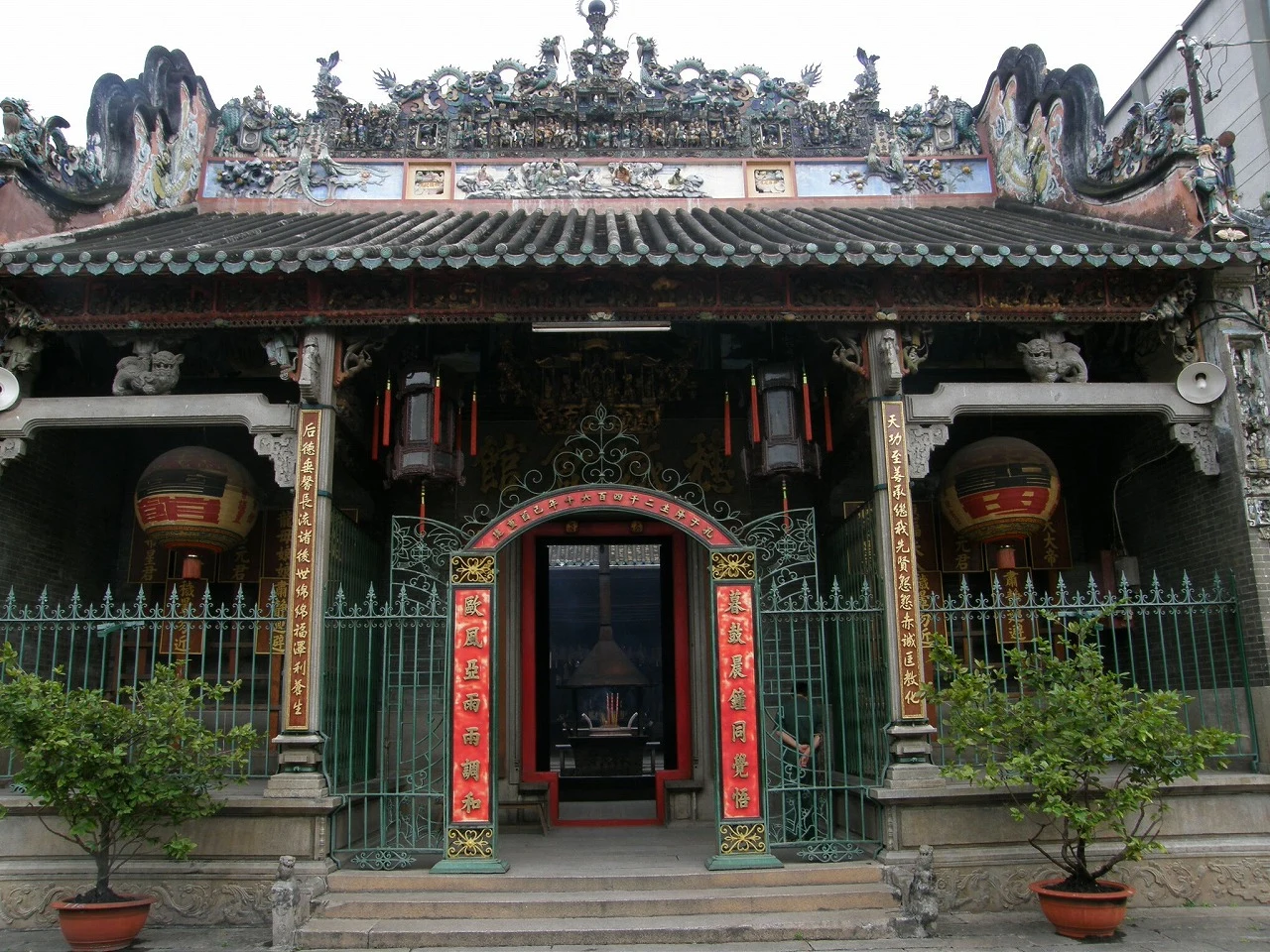
For a wider Chợ Lớn circuit, Viet Nam News described hundreds of Oriental medicine stores around Lương Nhữ Học, Triệu Quang Phục and Hải Thượng Lãn Ông in the former District 5, in a 2017 report. City tours were linking those streets with Thiên Hậu Temple and Bình Tây itself. The herbal trade is a close cousin of the market’s own, so the two make a logical half day.
Questions travellers ask
Did Quách Đàm build Bình Tây Market?
Press sources credit him, but a market of that name existed from the late 1870s, and his obituary appeared in 1927, before the 1928 date often given for today’s building.
When is the best time to visit Bình Tây Market?
Morning shows the wholesale trade at its busiest; afternoon is reported as calmer for retail buying. Published hours conflict, so avoid planning around a late visit.